Demanding Coffee Supplier Transparency and Reporting for Strategic Advantage
Dec
In our previous analysis of Case studies of successful coffee partnerships, we demonstrated that the most resilient supply chains in the world are not built on transactional friction, but on shared value and deep collaboration. We proved that when a buyer and a Vietnamese green coffee beans supplier align their incentives—whether through vertical integration, price stabilization, or social investment—both parties thrive despite the volatility of the global C-Market.
However, “Trust” is an abstract concept. In the high-stakes world of international trade, trust cannot be a feeling; it must be a metric.
How do you know your “Direct Trade” premium actually reached the farmer? How do you verify that the “Grade 1” coffee isn’t being blended with old crop? How do you ensure that your supply chain complies with the rigorous new EU Deforestation Regulation (EUDR)?
The answer lies in Coffee supplier transparency and reporting.
For the modern professional buyer, transparency is no longer a “nice-to-have” ethical bonus. It is a hard-edged operational requirement. It is the data stream that allows you to manage risk, audit quality, and tell a verifiable story to your consumers. This guide is your executive manual for establishing a data-driven relationship with your Vietnamese partners. We will dismantle the “Black Box” model of traditional trading and replace it with a “Glass Pipeline,” detailing exactly what reports you should demand, how to read them, and how to use this data to future-proof your business.
The Death of the “Black Box” Trader
Historically, the coffee trade operated on a “Black Box” model. You paid a price to an exporter in Ho Chi Minh City, and a container arrived. What happened inside the box—the farm gate price, the milling yield, the storage conditions—was considered a “trade secret.”
This model is obsolete.
Three forces are killing the Black Box:
- Regulatory Pressure: Laws like the EUDR and the German Supply Chain Due Diligence Act now criminalize opacity. You are legally required to know the geolocation of the farm.
- Quality Economics: As roasters move upmarket to “Fine Robusta” and Specialty Arabica, they need to know technical details (fermentation hours, drying curves) that only transparent reporting can provide.
- Consumer Cynicism: The end consumer no longer believes marketing claims. They demand proof.
Therefore, Coffee supplier transparency and reporting is the mechanism by which a supplier proves they are not just a trader, but a manufacturer with control over their supply chain.
Pillar 1: Financial Transparency (The Open-Book Protocol)
The most sensitive, yet most transformative, aspect of Coffee supplier transparency and reporting is financial disclosure.
In a traditional negotiation, the supplier hides their costs to protect their margin. In a transparent partnership, the supplier shares their cost structure to protect the sustainability of the chain.
The “Open Costing” Model
A progressive Vietnamese green coffee beans supplier (like the model we observed with Halio Coffee Co., Ltd) should be willing to discuss the breakdown of the FOB price.
The Equation:
FOB Price=Farm Gate Price+Logistics/Milling+Overhead+Net Margin
What to Ask For:
- The Farm Gate Receipt: Ask for redacted receipts or weighbridge tickets showing what was paid to the farmer. This proves your “Fair Trade” or “Loyalty Premium” was actually delivered.
- The Yield Report: Green coffee production involves weight loss (hulling parchment to green bean). A transparent supplier shares the “Outturn” ratio (e.g., 80%). If they hide this, they might be blending in defects to artificially boost yield.
Why This Matters: If you squeeze a supplier’s price too low without knowing their costs, they will eventually cut corners (usually by lowering the price paid to the farmer). By seeing the open cost structure, you can negotiate a price that ensures the farmer is paid well and the supplier makes a healthy margin, securing your supply for the long term.
Pillar 2: Operational Transparency (The Quality Audit)
Trusting a “Grade 1” label is not enough. You need the data that proves the grade. Operational Coffee supplier transparency and reporting involves sharing the technical logs of production.

1. The Drying Log
In the Central Highlands of Vietnam, rain during harvest is the enemy.
- The Report: Ask for the Daily Moisture Log for your specific lot.
- What to Look For: A steady decline in moisture from 50% to 12%.
- The Red Flag: If the log shows a sudden spike (re-wetting) or a flat line followed by a sharp drop (mechanical flash-drying at too high heat), the quality has been compromised. A transparent supplier shares this “ugly” data and explains how they mitigated it.
2. The Milling & Sorting Report
- The Report: The “Reject Analysis” from the color sorter.
- What It Tells You: This report shows the percentage of Black Beans, Sour Beans, and Foreign Matter removed from your lot.
- The Insight: If the input material had 10% black beans and they sorted it down to 0.1%, the coffee is clean, but the risk of hidden internal defects is higher than if the input material only had 1% black beans. You need this data to assess the “Internal Quality” risk.
3. Inventory Aging Report
Coffee fades.
- The Report: A monthly “Stock Age Report” detailing when each lot in the warehouse was milled.
- The Value: This prevents the supplier from shipping you “First-In, First-Out” (FIFO) old stock. You can demand specific lot codes based on freshness.
Pillar 3: Regulatory Transparency (The EUDR Compliance)
As of late 2024 and entering 2025, Coffee supplier transparency and reporting has become synonymous with EUDR compliance. If you are selling to Europe, this is non-negotiable. Even if you are in the US or Asia, these standards are becoming the global benchmark for “Clean Supply.”
The Geolocation Data
Your supplier must provide a Polygon Map of every farm contributing to your container.
- The Requirement: GPS coordinates with 6-decimal precision.
- The Verification: This data must be cross-referenced against satellite imagery to prove the land was not deforested after December 31, 2020.
The “Due Diligence Statement” (DDS)
A transparent supplier does not just dump raw CSV files on you. They provide a drafted Due Diligence Statement that aggregates the risk assessment.
- The Halio Advantage: A supplier like Halio Coffee, located at 193/26 Nguyen Van Cu, has a physical advantage here. Because they are close to the source, they can physically map the farms. A trader in Ho Chi Minh City relies on second-hand data, which is often inaccurate and legally dangerous for the importer.
The Reporting Rhythm: Establishing a Cadence
Transparency is not a one-time document dump. It is a rhythm. You must establish a reporting schedule with your Vietnamese green coffee beans supplier.
1. Pre-Harvest (October – November)
- The “Crop Outlook” Report:
- Rainfall analysis (was there enough water for flowering?).
- Disease pressure (cherry borer, rust).
- Yield forecast (estimated volume vs. previous year).
- Strategic Value: Helps you plan your purchase volume and pricing strategy.
2. Mid-Harvest (December – January)
- The “Quality Intake” Report:
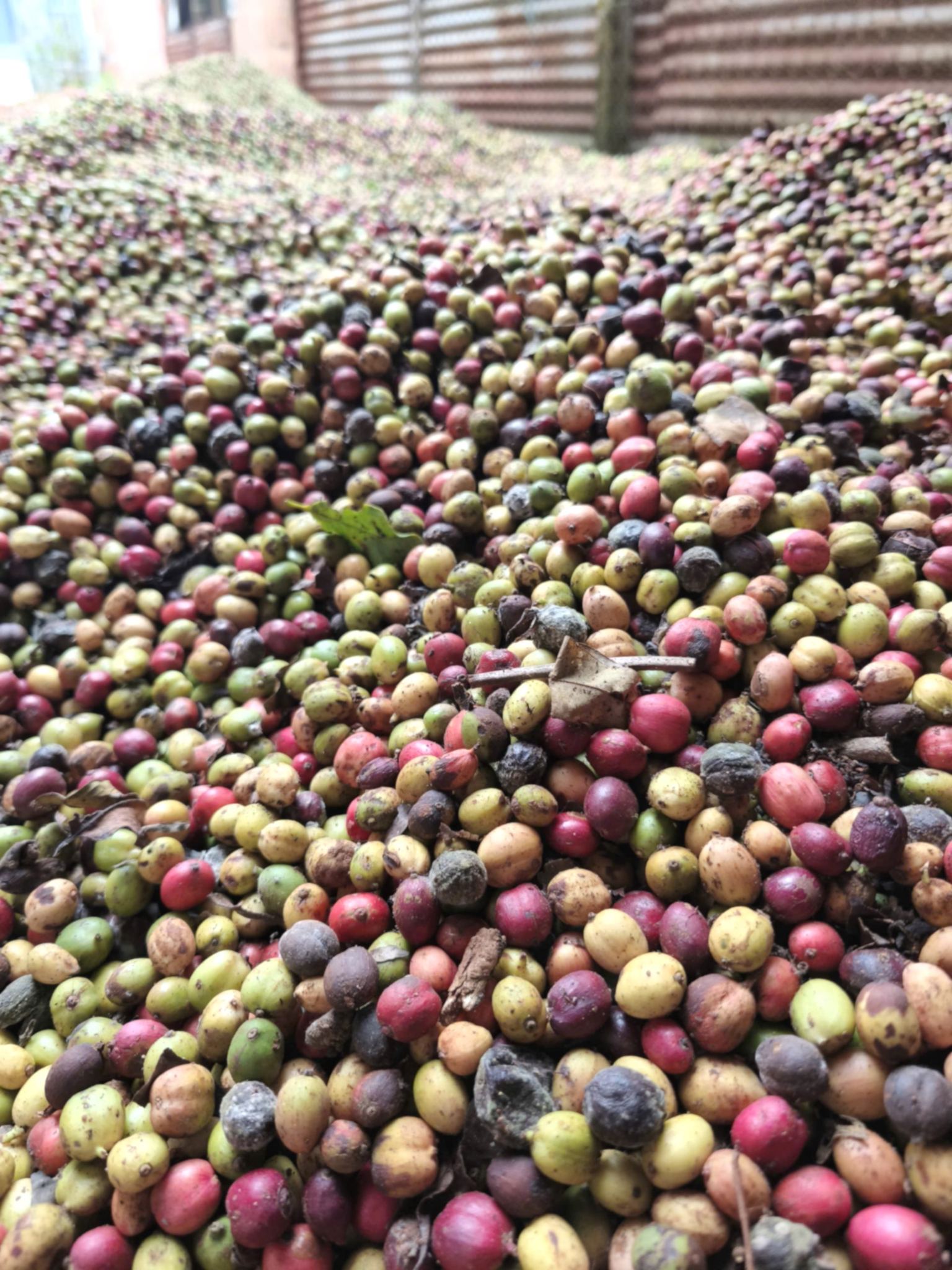
- Average “Ripe Cherry Rate” being received at the station.
- Current Farm Gate price trends.
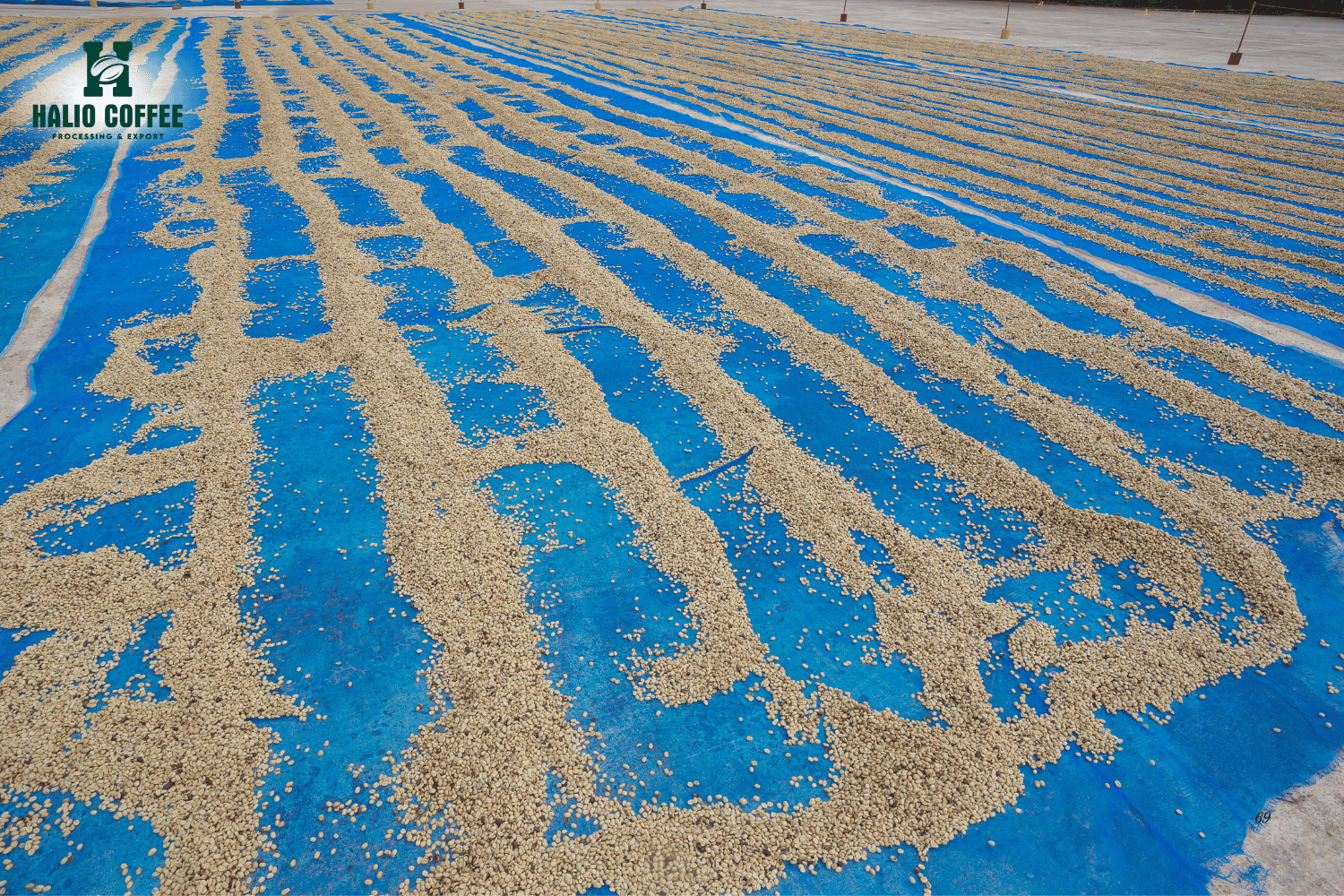
- Photos/Videos of the drying patios.
- Strategic Value: Gives you a real-time pulse on the vintage quality.
3. Pre-Shipment (Year-Round)
- The “PSS Dossier”:
- Cupping Score Sheet.
- Physical Grading Grid (Sieve analysis).
- Moisture & Water Activity readings.
- Strategic Value: The data backing up the sample approval.
4. Post-Shipment
- The “Traceability Passport”:
- A consolidated PDF or QR code link containing the story of that specific container: Farmer profiles, harvest dates, and location maps.
- Strategic Value: Marketing assets for your sales team.
Case Study: Digital Transparency at Halio Coffee Co., Ltd
How does this theoretical framework look in practice? Let’s examine the workflow of a modern, transparent supplier like Halio Coffee Co., Ltd.
The Problem: Traditional traceability in Vietnam stops at the “Commune” level. The Solution: Halio implements a “Batch-Flow” reporting system.
- Input: Every truck of cherries arriving at their facility in Dak Lak is weighed and assigned a digital Lot ID.
- Process: As that lot moves to the drying patio, the daily moisture logs are tagged to that ID.
- Output: When you buy “Lot #XYZ,” Halio can generate a “Journey Report.”
- Page 1: The name and photo of the farmer (Mr. Nam).
- Page 2: The date of harvest and the weather conditions that week.
- Page 3: The moisture curve showing the slow, 12-day drying process (proving it wasn’t flash-dried).
- Page 4: The EUDR-compliant GPS polygon of Mr. Nam’s farm.
This level of Coffee supplier transparency and reporting transforms the product from a commodity into a premium experience. It allows the buyer to look their customer in the eye and say, “I know exactly where this came from, and I can prove it.”
The Tools of Truth: Technology in Reporting
You do not need a complex blockchain to achieve transparency, although it helps. Simple tools, used consistently, are effective.
1. The “Proof of Life” Photos
Demand time-stamped, geotagged photos via WhatsApp or Telegram.
- Request: “Please send a photo of my specific lot on the drying bed today.”
- Verification: Check the metadata. If the photo was taken 3 months ago, you have a problem.
2. Digital Loggers
Encourage your supplier to use Bluetooth Data Loggers (like Cropster or Hobo) inside the warehouse.
- The Report: These devices generate a read-only PDF showing the temperature and humidity of the warehouse over the last 30 days. This proves your coffee wasn’t cooked in a hot metal shed.
3. ERP Integration
Advanced suppliers give you “View Access” to a portal in their ERP system (like Odoo or SAP), allowing you to see your stock levels in real-time without emailing “Where is my coffee?”
The Buyer’s Transparency Audit Checklist
Before renewing a contract, grade your supplier on this Transparency Index.
| Transparency Metric | Basic (C Grade) | Advanced (A Grade) |
| Price | FOB Price only. | Open Costing (Farm Gate vs. FOB breakdown). |
| Traceability | “Region: Dak Lak”. | Farm/Cluster Level with GPS Coordinates. |
| Quality Data | “Grade 1” Certificate. | Sieve Analysis & Defect Count Sheet provided. |
| Processing | “Washed”. | Fermentation Logs (Time/pH/Temp) provided. |
| Inventory | Verbal confirmation. | Monthly Stock Report with Lot Aging. |
| Communication | Reactive (Answers when asked). | Proactive (Weekly/Monthly Status Reports). |
Red Flags: The Sounds of Silence
The absence of Coffee supplier transparency and reporting is a loud signal. Watch for these excuses:
- 🚩 “That is proprietary information.”
- Reality: In 2025, farm gate prices and processing methods are not secrets. They are standard industry data. Hiding them usually means the supplier is taking an excessive margin or underpaying farmers.
- 🚩 “It’s too complicated to track.”
- Reality: If a supplier cannot track a lot from farm to bag, they are not EUDR compliant and are a legal liability to your business.
- 🚩 Generic Photos.
- Reality: Receiving the same “perfect farm” photo that is on their website. Use Google Image Search to check if it’s a stock photo.
Strategic Conclusion: Data as the Foundation for Planning
Coffee supplier transparency and reporting is the rigorous discipline that converts a chaotic supply chain into a predictable engine. It gives you the “X-Ray Vision” needed to see potential risks—whether they are ethical, financial, or quality-related—before they become disasters.
When you have a partner like Halio Coffee who provides this data, you are no longer guessing. You know the farm costs, you know the stock age, and you know the quality trends.
Possessing this data unlocks the final, most strategic capability of a coffee buyer. You are no longer reacting to the harvest; you can now anticipate it. You can move from tactical purchasing to strategic forecasting. With clear visibility into the past and present, you are ready to design the future.
How do you take all this data—the price history, the quality logs, the farmer feedback—and synthesize it into a coherent roadmap for the next 12 months?
Read Next: Annual planning with your coffee supplier
- Analyzing Raw Coffee Beans for Sale in a Divergent Market
- Your Logistics Quarterback: A Consultant’s Guide to Choosing a Freight Forwarder for Coffee
- Coffee Prices Today, September 25: Prices Rebound Sharply as Inventories Hit Multi-Month Lows
- A Consultant’s Guide to Vietnam Coffee Export Documentation
- A Buyer’s Master Guide to Vietnam Green Coffee Beans