Why the Best Green Coffee Beans Are Often a World Away
Dec
In our previous guide, we deconstructed the strategic imperative of how to buy green coffee beans at the wholesale level. We explored the mechanics of full-container purchasing and the power of direct-to-origin partnerships. Yet, for many growing roasters and distributors, the immediate reflex is still local. The search query “green coffee beans near me” remains one of the most common entry points into the sourcing world.
It is a natural impulse. You want to see the beans. You want to touch the bags. You want the security of knowing your inventory is just a short truck ride away.
However, as a professional consultant in the global coffee trade, I must challenge this impulse. While local convenience has its place, building a scalable, high-quality, and profitable coffee business often requires looking beyond your zip code. The search for “green coffee beans near me” is often a search for a middleman, a markup, and a limited selection.
This guide is your strategic analysis of the local vs. global sourcing dilemma. We will dissect the true cost of local convenience, evaluate when it makes sense to buy locally versus globally, and provide a framework for finding the best partners—whether they are down the street or in the Central Highlands of Vietnam.
The Economics of Proximity: What “Near Me” Actually Costs You
When you type “green coffee beans near me” into a search engine, you are essentially looking for a spot market importer. This is a business that has done the hard work of importing for you. They have taken the risk, paid the freight, cleared customs, and stored the coffee.
In exchange for this service, they charge a premium. To make a smart sourcing decision, you must understand the components of this premium.
1. The “Convenience Fee”
A local importer’s business model is built on holding inventory. Their price includes:
- Warehousing Costs: Rent, utilities, and insurance for storing coffee in a Western country (where costs are high).
- Financing Costs: The interest on the capital tied up in that inventory.
- Risk Premium: A buffer against market volatility and quality degradation while the coffee sits unsold.
- Profit Margin: Typically 15-30% on top of their landed cost.
The Math:
- Direct-from-Origin Price (FOB Vietnam): $2.50/lb
- Landed Cost (if you imported it): ~$2.80/lb
- “Near Me” Spot Price: ~$4.00 – $4.50/lb
By buying locally, you are often paying 40-60% more for the same bean. This is the cost of convenience.
2. The “Blind Spot” of Traceability
When you buy from a local warehouse, you are often buying a “lot number” rather than a relationship. The importer may have traceability data, but the connection is diluted. You are one step removed from the farmer.
- Direct Model: You speak to Ms. Eli at Halio Coffee in Dak Lak. You know the harvest date. You know the specific farm cluster.
- Local Model: You speak to a sales rep who reads from a spec sheet.
3. The “Staleness” Factor
Coffee ages. A container sitting in a New Jersey warehouse for 9 months is not the same product as a container freshly milled and shipped from Vietnam.
- “Near Me” Risk: You are often buying the “tail end” of an importer’s inventory—beans that have been sitting through a summer and winter cycle.
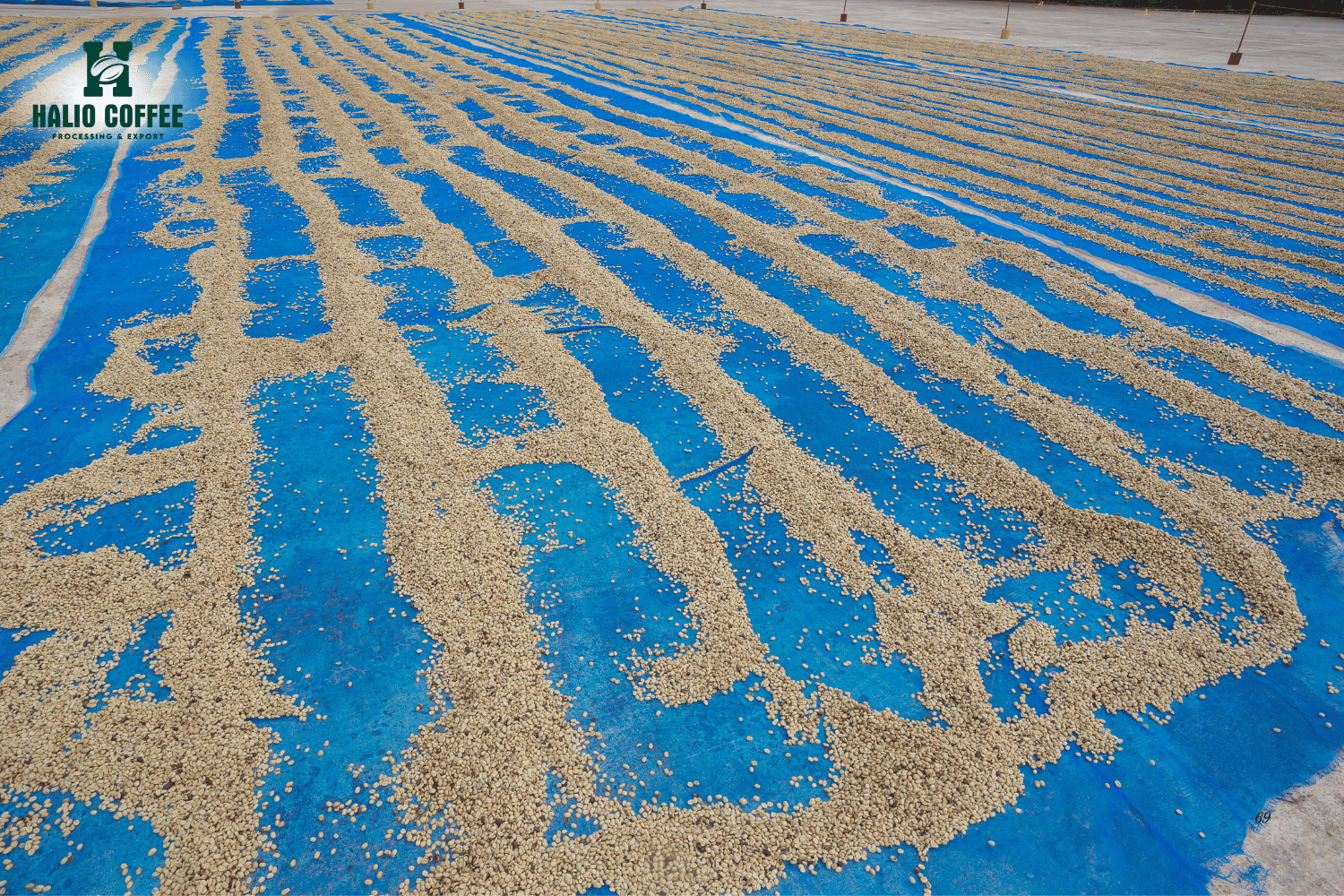
- Origin Advantage: When you source direct, you time your shipment to align with the harvest, ensuring you get the freshest crop available.
When “Green Coffee Beans Near Me” Is the Right Strategy
Despite the costs, there are specific business scenarios where sourcing locally is the correct strategic choice. Do not dismiss local importers; use them wisely.
Scenario 1: The Startup Phase (Volume < 50 Bags/Year)
If you are roasting 100kg a week, you cannot afford a 19-ton container. The cash flow requirement ($100k+) and storage needs are too high.
- Strategy: Use local importers to minimize capital tie-up. The higher price per pound is cheaper than the cost of renting a warehouse or letting a container go stale.
Scenario 2: Emergency Inventory (The “Safety Valve”)
Even large roasters use local spot markets as a backup.
- The Crisis: Your direct container from Vietnam is stuck in the Suez Canal. You have 2 weeks of stock left.
- The Solution: You buy 20 bags from a local importer to bridge the gap. You pay a premium, but you keep your roaster running.
Scenario 3: Micro-Lot Experimentation
You want to try a geisha variety or an experimental anaerobic process, but you only need 2 bags for a limited release.
- Strategy: It is inefficient to import 2 bags directly. Let a specialty importer consolidate these high-value micro-lots and buy them locally.
The Hybrid Sourcing Model: The Professional’s Approach
The most successful coffee businesses do not choose between “Local” and “Direct.” They use a Hybrid Model.
- Core Volume (80%): Sourced directly from origin partners (like Halio Coffee) in Full Container Loads (FCL). This secures your margins on your main blends and best-sellers.
- Specialty/Seasonal (15%): Sourced from specialized importers who bring in unique, high-risk lots you couldn’t find yourself.
- Emergency Buffer (5%): Bought from local “green coffee beans near me” suppliers to smooth out logistical bumps.
This approach maximizes profitability while maintaining flexibility.
How to “Shop Local” Like a Pro: A Vetting Checklist
If you must source locally, do not just pick the nearest warehouse. Vet your local importer with the same rigor you would use for an origin partner.
1. Storage Conditions Audit
- Question: “Is your warehouse climate-controlled?”
- Why: Green coffee degrades rapidly above 25°C or 60% humidity. Many local warehouses are just metal sheds. If your “local” beans have baked in the summer heat, they are ruined.
2. The “Arrival Cupping” Rule
- Question: “When did this lot land?”
- Action: Request a current sample, not the “pre-shipment” sample they received 6 months ago. Cup it immediately. Coffee fades. The sample they approved in January might taste like wood in July.
3. Transparency Check
- Question: “Can you tell me the FOB price paid to the producer?”
- Why: Progressive importers will share this to prove they paid the farmer fairly. If they refuse, they are treating coffee as a commodity, not a partnership.
The Global Neighborhood: Making Vietnam “Near Me”
Technology and logistics have shrunk the world. Today, a supplier in Dak Lak can be just as responsive and integrated into your business as a supplier in your home city.
How do you make a remote partner feel like they are “near me”?
1. Digital Proximity
- Halio Coffee, for example, lists a direct CEO number (+84 853 344 568) and email. In the age of WhatsApp and Zalo, you can get a response from Vietnam as quickly as from a local office.
- Virtual Visits: Use video calls to walk the warehouse or see the drying patios. You don’t need to fly there to see the operation.
2. Logistical Integration
- Door-to-Door Service: You don’t need to be a logistics expert. You can hire a freight forwarder to handle everything. From your perspective, you place an order, and a truck arrives at your door. The only difference is the lead time.
3. Sample Speed
- DHL/FedEx: A sample from Vietnam takes 3-4 days to reach almost anywhere in the world. The “testing” phase is just as fast as working with a local lab.
Red Flags: The “Local” Traps to Avoid
- 🚩 The “Re-Bagged” Lot: A local supplier sells you coffee in plain bags with no original markings. They may have blended old, leftover coffee from different lots. Always ask to see the original tags.
- 🚩 The “Mystery” Blend: “South American Blend” or “Breakfast Blend” green coffee. Never buy pre-blended green coffee. You have no way of knowing the quality of the components. Blend it yourself.
- 🚩 The “No-Sample” Policy: If a local seller says, “Trust us, it’s standard,” walk away. Never buy without cupping.
Conclusion: Redefining “Near”
The search for “green coffee beans near me” is understandable, but it is often a search for a comfort zone, not a business solution.
True “closeness” in the coffee trade is not measured in miles. It is measured in transparency, communication, and alignment.
A supplier in Vietnam who shares their farm-gate prices, sends you weekly harvest updates, and customizes your processing is “closer” to your business than a local importer who treats you like a transaction number.
By shifting your mindset from “geographic proximity” to “strategic alignment,” you open your business to the world. You gain access to the best green coffee beans—not just the ones that happened to be stored down the street.
To find those beans, you need to know exactly what defines “the best.” What makes one bean worth $3.00 and another worth $10.00? It’s time to dive into the objective metrics of quality.
Read Next: best green coffee beans
- The Strategic Pivot: Vetting Vietnam Robusta Green Bean Suppliers in 2026
- Coffee Prices Today, Dec 9: Robusta Hits 2.5-Month Low as Vietnam Harvest Accelerates
- Navigating the Market: A Professional’s Guide to Vetting Green Coffee Beans for Sale
- Demanding Coffee Supplier Transparency and Reporting for Strategic Advantage
- Coffee Prices Today, Nov 18: Robusta Skyrockets $260/Ton in a Single Session