Navigating the Diverse Landscape of Green Coffee Bean Sellers
Dec
In our previous analysis, we detailed the essential logistical function of green coffee bean distributors, recognizing them as the critical bridge for roasters who cannot commit to full container loads (FCL). However, the term “distributor” is just one node in a vast, fragmented, and sometimes volatile network.
This network is populated by a variety of entities, collectively referred to as green coffee bean sellers.
Understanding the nuances between these seller types is the ultimate act of supply chain intelligence. Your choice of partner dictates your price stability, your access to quality control data, and the speed of your inventory replenishment. Do you need a dedicated manufacturer who controls the milling process? A large financial intermediary who hedges against currency risk? Or a boutique broker who specializes in small, experimental lots?
This guide provides the definitive strategic map for the B2B buyer. We will dissect the three primary categories of green coffee bean sellers, analyze the specific value—and risk—each one introduces, and provide an expert framework for vetting them to ensure you secure the best green coffee beans for your business model.
Category 1: The Origin Seller (The Manufacturer/Exporter)
These are the primary producers of the physical asset. They control the bean from the parchment stage to the container door. This is the starting point for building a transparent, strategic supply chain.
The Manufacturer/Processor
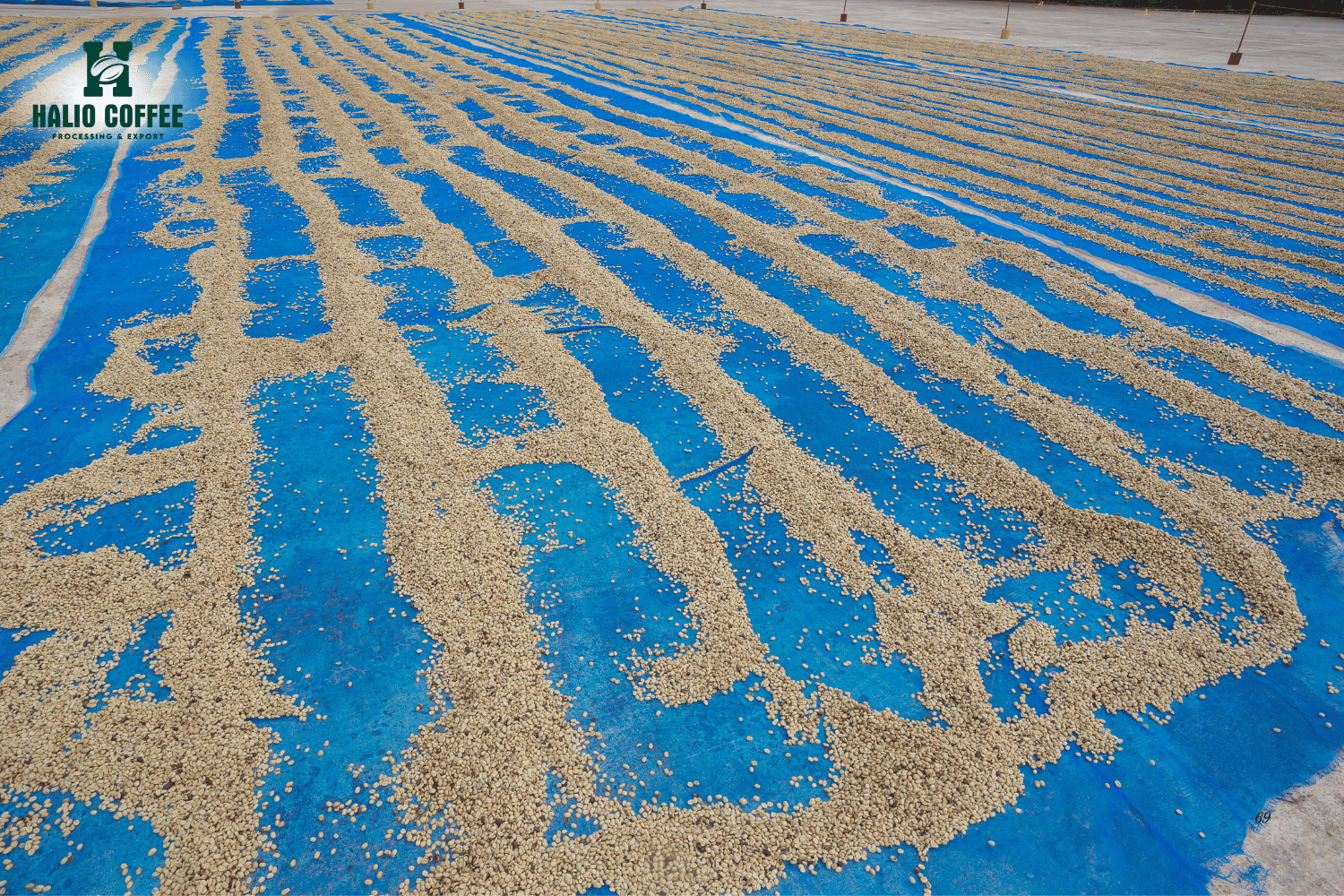
This is the entity that owns the physical infrastructure: the drying patios, the hullers, the optical sorters, and the warehouses.
- Role: To convert raw parchment/cherry into the stabilized, graded, export-ready green bean. They are the quality control gate.
- Value Proposition: Maximum Transparency and Control. They can provide granular data on defects, moisture curves, and specific processing methods (Honey, Wet Polished, etc.).
- Example: A vertically integrated facility like Halio Coffee Co., Ltd in Dak Lak. They are capable of customizing specs (e.g., Max 0.5% Black Beans) that a standard trader cannot guarantee.
- Buyer Requirements: They require FCL volume commitment and typically work on a Forward Contract basis, requiring the buyer to manage their own financial hedging (PTBF).
The Local Exporter/Trader
These green coffee bean sellers are based in the origin country but may not own the mill.
- Role: They aggregate lots from smaller mills and farmers and handle the complex final export documentation (Customs, Certificate of Origin, Phytosanitary).
- Value Proposition: Ease of Documentation and Local Liquidity. They are masters of Vietnamese logistics and currency arbitrage.
- Risk: They are one step removed from the manufacturing process. Quality control can be inconsistent, as they rely on the mill owner’s standards rather than their own.
Category 2: The Intermediary Seller (The Distributor/Importer)
These green coffee bean sellers control the supply chain in the consuming country (USA, Europe, Japan). They manage the ocean, the customs, and the warehousing. This is the model of convenience and spot purchasing.
The Broadline Distributor (The Warehouse)
This seller buys vast amounts of coffee from multiple origins and stores it in high-cost, state-of-the-art warehouses near major ports.
- Role: To finance the inventory and manage the import risk.
- Value Proposition: Spot Accessibility and Liquidity. They allow roasters to buy 1 to 50 bags immediately, without a 60-day shipping lead time.
- Cost: They charge the highest premium (30-50% over FOB) to cover freight, financing, warehousing, and inventory degradation risk.
- Connection: Their primary focus is logistics, not necessarily the farm story. Transparency is often limited to the exporter’s name. This is where the term green coffee bean distributors is most accurately applied.
The Hedging House / Financial Importer
These are the large, traditional trading houses (e.g., the global commodity traders) who operate at parity with the futures market.
- Role: To manage global commodity risk (Futures, FX, interest rates) for multinational buyers.
- Value Proposition: Price Stability and Scale. They allow large roasters to lock in prices years in advance, offering sophisticated financial instruments (options, swaps).
- Risk: They deal in high volumes and are usually less focused on specialty or boutique microlots. Their minimum volume is often far above FCL.
Category 3: The Micro-Volume Seller (Specialization and Niche Access)
These green coffee bean sellers bypass traditional logistics to target small, niche segments of the market—often where the search for experimentation outweighs the need for scale.
The Boutique Broker/Agent
This seller often operates as a consultant who specializes in a specific niche (e.g., female-produced Ethiopian Naturals, or high-altitude Vietnamese Arabica).
- Role: They connect a few specialized producers directly with several high-end roasters. They do not hold inventory; they arrange the container split and facilitate the transaction.
- Value Proposition: Curated Quality and Storytelling. They provide deep knowledge and excellent cupping feedback, and their sales model is focused on the ethical narrative.
- Risk: Limited volume; often require a high price premium due to the small lot size and the intensity of the brokerage service.
Online Auction and Marketplace Platforms
These are digital meeting places that facilitate peer-to-peer selling.
- Role: To provide a transparent platform for price discovery, often for high-end microlots (e.g., Cup of Excellence winners).
- Value Proposition: Access to Exclusivity. They are the only way to buy certain prize-winning coffees.
- Risk: The buyer assumes full liability for shipping, quality control, and customs clearance. This is not a service for the novice importer.
The Buyer’s Strategic Checklist: Vetting Green Coffee Bean Sellers
Before committing to any of the green coffee bean sellers described above, conduct a professional due diligence audit.
| Seller Type | Strategic Question | Necessary Proof/Verification |
| Origin Seller (Manufacturer) | Do you own the mill and sorters? | HACCP/ISO Certificate, Photos of Mill/Warehouse Zoning, Milling Capacity Report. |
| Intermediary Seller (Distributor) | What is your stock rotation schedule? | Landing Date on the Lot Certificate (must be recent), Climate Control Logs for the warehouse. |
| Micro-Volume Seller (Broker) | Who issues the Pre-Shipment Sample (PSS)? | The PSS must be drawn and sealed by a Third-Party Inspector (SGS, CafeControl), not the seller. |
| All Sellers | What is your dispute resolution clause? | Must specify VIAC or SIAC Arbitration (for Origin), or your country’s jurisdiction (for Distributors). |
Red Flags: Identifying High-Risk Green Coffee Bean Sellers
Regardless of the seller category, certain behaviors signal danger.
- 🚩 The “No Visit” Policy: A seller who actively discourages you from visiting the mill or warehouse (whether in Dak Lak or New Jersey) is hiding a flaw—poor hygiene, old inventory, or inadequate equipment.
- 🚩 Unrealistic Pricing: A price significantly below the current C-Market + Differential indicates a desperate seller who is likely short-selling or dealing in compromised quality (e.g., water-damaged coffee).
- 🚩 Vague Quality Specs: The refusal to provide TCVN 4193 (Vietnam) or SCA standards. If the seller says, “It’s just Grade 1,” without providing the
Max 2% Black/Brokenspec, they are deliberately creating ambiguity. - 🚩 Unprofessional Documentation: Missing or incorrect Certificate of Origin (C/O) or Phytosanitary Certificate. This signals incompetence in handling logistics and legal compliance.
Conclusion: The Path to Partnership
The landscape of green coffee bean sellers is complex, but the strategic choice is simple: select the seller who gives you the most control over your risk variables.
For a scaling business looking for consistency, price stability, and maximum traceability, the focus should shift to the Origin Seller (Manufacturer) for core volume and the specialized Distributor for seasonal needs.
You have now broken down the fragmented market and identified the players. However, to formalize your procurement strategy, you must move beyond the transactional term “seller” to the professional and collaborative term that encompasses all functions: supplier.
The ultimate goal is to find a long-term partner who provides the financing, the logistics, the quality control, and the necessary transparency. This requires a dedicated focus on the concept of the green coffee bean supplier.
- Identifying and Vetting Raw Coffee Beans Suppliers
- Strategies for Negotiating with Vietnamese Coffee Suppliers
- Specialty Arabica Coffee Vietnam: Elevating Quality in Global Coffee Trade
- Mastering the Art of Building Relationships with Coffee Farmers in Vietnam
- Coffee Prices Today, October 24th: Sharp Reversal Lower, Robusta Plunges Nearly 4%