Global Green Coffee Market Report 2025: Production Dynamics, Technical Processing, and Regulatory Transformation
Jan
Executive Summary
The global green coffee sector in 2025 is navigating a period of profound structural transformation, characterized by the convergence of climatic volatility, unprecedented regulatory intervention, and a radical shift in processing technology. This report provides an exhaustive analysis of the “raw coffee bean” landscape, moving beyond the traditional binary of commodity trading to explore the nuanced emergence of high-value segments such as Fine Robusta, the technical exigencies of the European Union Deforestation Regulation (EUDR), and the biochemical frontiers of green coffee extracts.
Our analysis draws upon a comprehensive dataset ranging from macro-economic trade statistics to granular farm-level agronomy in Vietnam’s Central Highlands. We observe that while global production is forecast to reach a record 178.8 million bags in the 2025/26 marketing year , the market remains fundamentally tight. This paradox is driven by “farmer retention” strategies in Vietnam, logistical bottlenecks in the Red Sea, and the bifurcation of the market into “compliant” (EUDR-verified) and “non-compliant” supply chains.
A central theme of this report is the ascent of Vietnam—the world’s second-largest producer—from a supplier of industrial filler to a pioneer in fermentation science and processing consistency. Through the lens of entities like Halio Coffee and Simexco Daklak, we examine how local enterprises are leveraging “Wet Polished” and “Anaerobic” protocols to capture higher value. Furthermore, the report delineates the chemical properties of the green bean, specifically the commercialization of Chlorogenic Acids (CGA) for the nutraceutical industry, a sector now valued at over USD 1.1 billion.
The following sections provide a deep-dive technical and economic roadmap for stakeholders operating within this complex ecosystem, offering actionable intelligence on sourcing, quality control, and regulatory compliance.
1. Global Green Coffee Market Architecture 2025-2026
The architecture of the global green coffee market is undergoing a seismic shift in 2025. The historical dominance of Arabica as the sole arbiter of quality is eroding, replaced by a more complex matrix where “Fine Robusta” and processing methods dictate value as much as genetic species.
1.1 Macro-Economic Landscape and Supply/Demand Balance
The global market for Robusta and Arabica beans is projected to reach a valuation of USD 90.03 billion by 2032, expanding at a Compound Annual Growth Rate (CAGR) of 6.3% from 2025. In the immediate term, the 2025/26 crop year is characterized by a delicate balance between recovering supply and robust consumption growth in emerging markets, particularly within the soluble and Ready-to-Drink (RTD) sectors in Asia.
World coffee production is forecast to hit a record 178.8 million bags in 2025/26. This surge is primarily driven by a robust recovery in Southeast Asian output, specifically Vietnam and Indonesia, which offsets climate-induced volatility in Brazil’s Arabica belt. Despite record production, global ending stocks are on a downward trajectory for the fifth consecutive year, projected to fall to 20.1 million bags. This tightening of inventory underpins sustained high prices, with the International Coffee Organization (ICO) Composite Indicator Price (I-CIP) averaging 330.44 US cents/lb in November 2025, a 1.2% increase from the previous month and remaining range-bound near historic highs.
The divergence between Arabica and Robusta pricing dynamics is narrowing significantly. While Arabica remains the benchmark for specialty coffee (projected to account for 69.3% of market value in 2025) , Robusta’s role has expanded beyond soluble coffee into espresso blends and single-origin offerings. This “premiumization” is driven by supply constraints in Arabica and improved processing quality in Robusta.
Table 1: Global Production and Market Share Forecast 2025/26
| Metric | Arabica (Coffea arabica) | Robusta (Coffea canephora) |
| Global Market Share (Value) | 69.3% | 30.7% |
| Production Share (Volume) | ~55% | ~45% |
| Key Producers | Brazil, Colombia, Ethiopia, Peru | Vietnam, Brazil, Indonesia, Uganda |
| Major Consumption Markets | USA, Europe (Specialty/Retail) | Europe (Espresso/Instant), Asia |
| Price Trend (Late 2025) | High Volatility ($3.50/lb range) | Historical Highs ($2.00-$2.50/lb range) |
| Growth Drivers | Premiumization, Single Origin demand | Inflationary pressure, Soluble demand, Climate resilience |
The persistence of high prices is not merely a function of supply and demand but also of financial speculation and currency arbitrage. The tightening of the London-New York arbitrage (the price difference between Arabica and Robusta) signals a structural change in the industry’s perception of Robusta’s value. Roasters, faced with high financing costs and consumer price sensitivity, are altering their blend formulations to include higher percentages of high-quality Robusta, thereby structurally increasing demand for the species.
1.2 Regional Production Dynamics
1.2.1 Vietnam: The Robusta Powerhouse
Vietnam remains the undisputed leader in the Robusta sector, accounting for approximately 40% of global Robusta supply and 15% of total global coffee supply. For the 2025/26 marketing year, production is forecast to rise to 31 million bags (Green Bean Equivalent – GBE), up from 29 million bags in 2024/25. This growth is attributed to favorable weather patterns and increased investment in fertilizer and irrigation, spurred by record farm-gate prices that have emboldened farmers to invest in yield optimization.
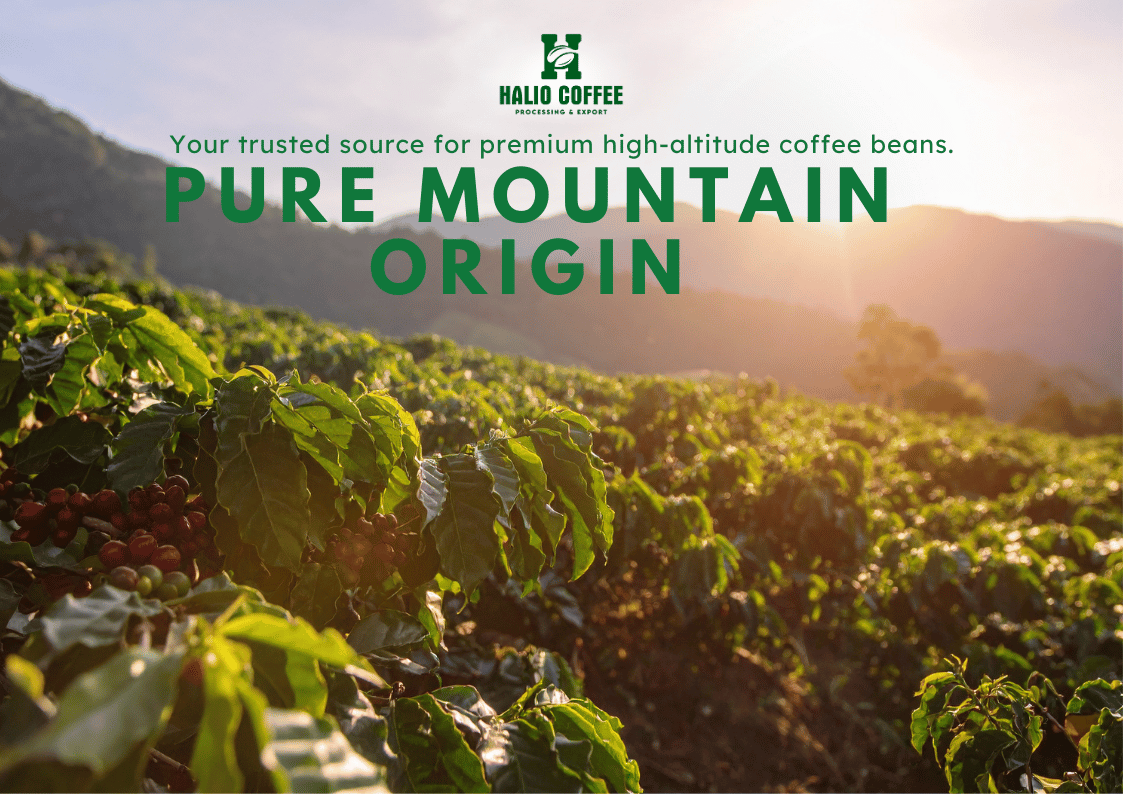
The Central Highlands—comprising Dak Lak, Lam Dong, Dak Nong, Gia Lai, and Kon Tum—continue to contribute over 90% of national output. Despite agricultural competition from high-value crops like durian, coffee cultivation area has remained stable or slightly expanded to 730,000 hectares, with 92% actively harvested. The resilience of the Vietnamese sector is further bolstered by state-supported replanting initiatives led by the Western Highland Agriculture and Forest Science Institute (WASI), which supplies 4–5 million seedlings annually to rejuvenate aging plantations.
However, the 2025 harvest has not been without challenges. Erratic weather, including drought followed by typhoons, has hampered production in some specific micro-climates, leading to localized yield reductions of 10-20% in areas like Lam Dong. This variability underscores the vulnerability of even the most resilient origins to climate change.
1.2.2 Indonesia: Recovery and Expansion
Indonesia is staging a significant recovery in 2025/26, with Robusta production forecast to increase by 1.7 million bags to reach 11.0 million bags. This rebound is critical for global supply stability, as Indonesia serves as the third-largest Robusta producer. Yield improvements are being driven by better weather conditions and higher labor utilization during harvest periods in southern Sumatra, the country’s primary growing region. Unlike Vietnam, Indonesia’s coffee area remains flat at 1.2 million hectares, with growth achieved through yield intensification rather than area expansion.
The interplay between Vietnamese and Indonesian harvests is crucial. Indonesia’s harvest typically begins in April/May, providing fresh supply just as Vietnam’s peak harvest stocks (harvested November-January) begin to dwindle. In 2025, the robust Indonesian crop has acted as a buffer, preventing a total supply squeeze during the inter-harvest period.
1.2.3 Brazil: The Dual-Species Giant
Brazil continues to dominate the overall market, though its 2025/26 crop faces challenges from adverse weather. The 2026/27 crop is projected between 71 and 74.4 million bags, with a split of 46.5-49 million bags for Arabica and 24.6-25.4 million bags for Robusta (Conilon). Brazil’s Conilon production is increasingly competing with Vietnamese Robusta, particularly in the soluble market. The expansion of Conilon cultivation into non-traditional areas and the use of clonal varieties have allowed Brazil to maintain high productivity despite weather shocks.
1.3 Trade Flows and Export Logistics
Global green bean exports face significant headwinds from logistical disruptions and regulatory barriers. In late 2024 and early 2025, exports from major origins like Vietnam slowed despite high production. This was due to “farmer retention” or hoarding—a phenomenon where producers hold back stocks in anticipation of higher prices—and exporter hesitation to commit to forward contracts amidst volatile local pricing.
Table 2: Vietnam Green Coffee Export Statistics (Forecast 2025/26)
| Metric | Volume/Value | Year-on-Year Change | Context |
| Total Coffee Exports | 27 million bags | +8% | Includes Green, Roasted, and Soluble. |
| Green Bean Exports | 23.7 million bags | +4-5% | Strong global demand for raw material. |
| Export Revenue (Est.) | ~$8.0 Billion USD | Record High | Driven by price unit value increase. |
| Average Export Price | ~$5,670 per ton | +53% | Reflects scarcity and inflation. |
| Key Markets | Germany, Italy, USA, Japan, Spain | – | Europe remains the largest buyer. |
The export landscape is also shifting toward processed goods. Vietnam is forecasting strong growth in roasted and soluble coffee exports to Asian markets, reducing the proportion of raw green bean exports. This moves the country up the value chain but tightens the supply of green beans available for European and American roasters.
Further complicating the trade landscape is the issue of “basis risk” for exporters. With domestic prices in Vietnam decoupling from the London Futures market (Liffe) at times, exporters face significant financial risk. The workspace data regarding Halio Coffee indicates typical SME behavior in this environment: focusing on cash flow management (“Debt Reconciliation”) and diversifying into value-added branding (“Website Ideas”) to escape the commoditized volatility of the raw bean trade. The sales records showing transactions of 100+ million VND suggest active, high-volume domestic trading, likely serving as aggregation points for larger export consolidators.
2. Technical Anatomy of the Green Bean
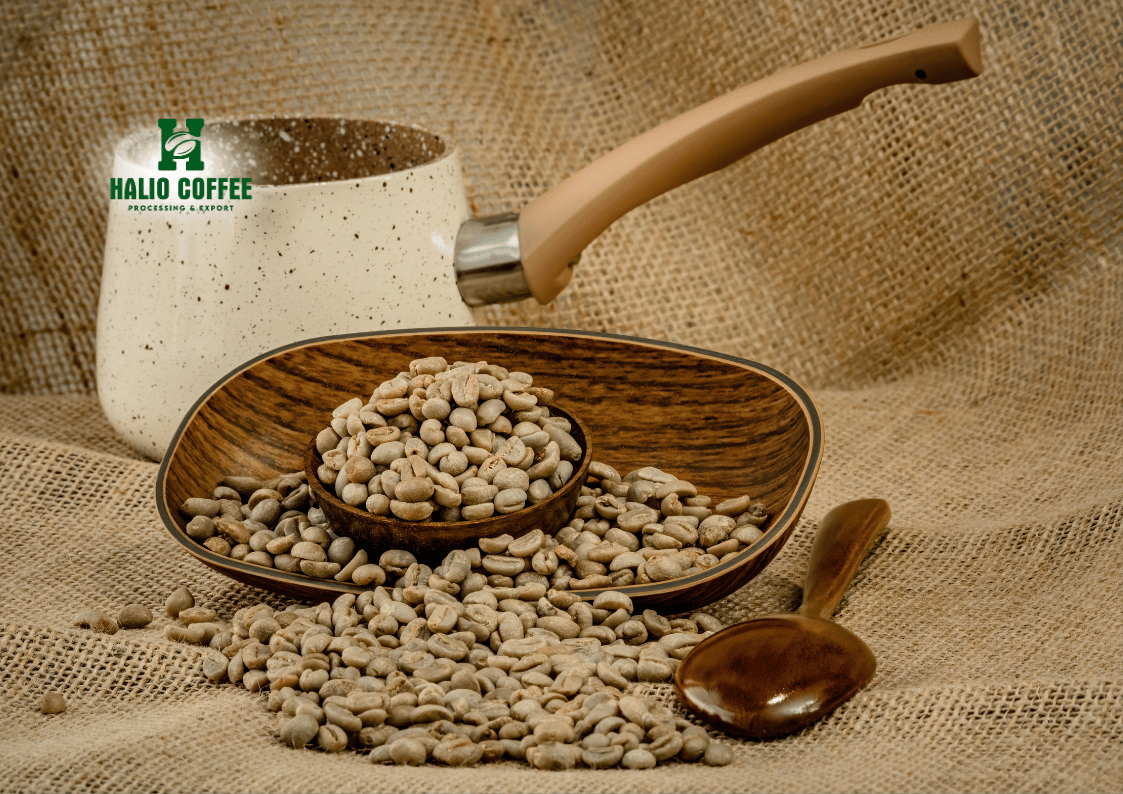
To understand the commercial reality of 2025, one must understand the physical and chemical specifications that define “quality” in the modern trade. The grading of green coffee is no longer a simple matter of size; it is a complex assessment of defect count, moisture activity, and screen calibration.
2.1 The Divergence of Grading Systems
There is no universal grading system for green coffee. Instead, the industry operates on a fragmented landscape where the Specialty Coffee Association (SCA) protocols coexist with national standards like Brazil’s New York (NY) method and Vietnam’s TCVN 4193. This lack of standardization requires buyers to be fluent in multiple “languages” of quality.
2.1.1 SCA Grading (Global Specialty Standard)
The SCA Green Arabica Classification System (GACCS) is the gold standard for specialty coffee and is increasingly applied to Fine Robusta. It categorizes defects into:
- Primary Defects: Full black, full sour, dried cherry (pod), fungus damage, severe insect damage, and foreign matter. One single primary defect disqualifies a sample from “Specialty Grade” (Grade 1) status.
- Secondary Defects: Broken beans, immature beans, withered beans, shells. These are tallied using equivalencies (e.g., 5 broken beans = 1 full defect). A Specialty Grade sample allow for no more than 5 full defects (composed of secondary defects) in 350g.
- Implication: This strict standard drives the high price premiums for specialty coffee. Achieving this requires optical sorting and meticulous hand-picking.
2.1.2 Brazilian Classification (NY Method)
Brazil, and much of the commercial trade, uses the “New York” method, often denoted as “NY 2/3”. This system counts defects in a 300g sample.
- NY 2/3 Specification: This is the standard for high-quality commercial Arabica. It allows for 9 to 12 defects. It ensures consistency but acknowledges that mass production cannot achieve zero defects.
Defect Equivalencies: The weighting differs from SCA. For instance, 1 large stone counts as 5 full defects, while 3 shells count as 1 defect.
- Market Utility: This grade is the workhorse of the espresso blend market, offering a balance between cup cleanliness and volume availability.
2.1.3 Vietnam TCVN 4193:2014 Standard
Vietnam’s national standard (TCVN 4193) governs the massive Robusta trade. Unlike SCA, which uses a 350g sample, or Brazil (300g), commercial contracts often reference percentages.
Table 3: Vietnam Robusta Export Grades (Standard TCVN 4193)
| Grade | Screen Size (mm) | Max Moisture | Max Black/Broken | Max Foreign Matter | Market Terminology |
| Grade 1 (Screen 18) | 7.1mm (90% min) | 12.5% | 2% | 0.5% | “Clean, Wet Polished” |
| Grade 1 (Screen 16) | 6.3mm (90% min) | 12.5% | 2% | 0.5% | “Standard Export” |
| Grade 2 (Screen 13) | 5.0mm (90% min) | 13.0% | 5% | 1.0% | “FAQ” (Fair Average Quality) |
The workspace documents regarding Halio Coffee explicitly mention “Robusta Clean Grade 1 (S18/S16)” and “Wet Polished Grade 1.” This indicates that even smaller players are adhering to the highest tier of this national standard. The “Wet Polished” designation is critical; it implies an additional mechanical friction stage using water to remove the silverskin, resulting in a cleaner cup profile preferred by European and Japanese buyers.
2.2 Moisture Content and Preservation
Moisture content is the single most critical technical parameter for green coffee storage and transport. It is the boundary between a stable food product and a rotting commodity.
- Ideal Range: 10.0% to 12.5%.
The Danger Zone (>12.5%): Moisture above this level creates a breeding ground for filamentous fungi, specifically Aspergillus carbonarius and Aspergillus ochraceus, which produce Ochratoxin A (OTA). OTA is a potent nephrotoxin and carcinogen regulated strictly by the EU. Additionally, high moisture accelerates enzymatic activity, causing the “fading” of flavor compounds, turning fruit notes into woody, straw-like flavors.
The Brittle Zone (<9.0%): Over-dried beans become brittle and shatter during the roasting process (in the roaster drum). They also lose their cellular integrity, resulting in a flat, empty cup profile.
Storage Best Practices & Packaging: To mitigate moisture migration—a phenomenon where beans absorb or release water to reach equilibrium with the environment—hermetic packaging is becoming the industry standard for high-value lots.
- GrainPro / Ecotact: These are multi-layer plastic liners with gas-barrier properties. They stabilize relative humidity (RH) inside the bag, preventing the entry of external moisture (vital in humid ports like Ho Chi Minh City) and trapping the bean’s own respiration gases to create a modified atmosphere.
Vacuum Packing: Used for ultra-premium microlots (e.g., Geisha or Fine Robusta), vacuum packing removes oxygen entirely, effectively pausing the aging process. It preserves volatile aromatics for years rather than months.
- Jute/Burlap: The traditional sack allows airflow. It is cheap and biodegradable but offers zero protection against “container rain” or ambient humidity. It is now largely reserved for standard commercial grades where turnover is rapid.
2.3 Logistics: The Peril of “Container Rain”
A major cause of insurance claims in the coffee trade is moisture damage during sea freight. As a container travels from a tropical origin (30°C, high humidity) to a temperate destination (5°C), the temperature differential causes moisture in the air to condense on the steel roof of the container. This “rain” drips onto the top layer of bags, causing mold and rot.
- Mitigation: The use of desiccant poles (Calcium Chloride), Kraft paper lining on the roof to absorb condensation, and ensuring coffee is loaded at the correct moisture content are essential protocols.
3. The Rise of Fine Robusta and Processing Innovation
The most significant qualitative shift in the 2025 market is the destigmatization of Robusta, driven by the “Fine Robusta” movement. As climate change threatens Arabica suitability in traditional regions, Fine Robusta is emerging not just as a cheaper substitute, but as a resilient, high-quality species with its own distinct sensory merits.
3.1 Defining Fine Robusta
Fine Robusta is to commercial Robusta what Specialty Arabica is to commodity coffee. It is graded using specific protocols developed by the Coffee Quality Institute (CQI) and the Uganda Coffee Development Authority (UCDA).
Criteria for Fine Robusta:
- Defects: Zero primary defects; fewer than 5 secondary defects in a 350g sample.
Cup Score: 80+ points on the R-Grader scale (distinct from the Q-Grader scale for Arabica). The R-Grader sheet penalizes “salty,” “rubbery,” and “earthy” notes heavily.
Flavor Profile: The goal is to eliminate the harsh pyrazines associated with commercial Robusta. A Fine Robusta should exhibit sweetness, perceptible fruit acids (citric, malic), and a clean finish. Tasting notes often include dark cocoa, caramel, black tea, spices (clove, cinnamon), and dried fruits.
3.2 Advanced Fermentation in Vietnam
Vietnamese producers are pioneering advanced processing techniques to elevate Robusta flavor profiles. The focus is on anaerobic fermentation, a method borrowed from the wine industry and adapted for coffee to modulate the bean’s biochemistry.
3.2.1 Anaerobic Natural and Honey Processes
- Methodology: Ripe coffee cherries are strictly selected (Brix > 20%) and sealed in airtight tanks (stainless steel or high-density plastic) for 24 to 96 hours. Oxygen is removed or naturally displaced by CO2 produced during fermentation.
Microbial Action: The oxygen-deprived environment suppresses mold and aerobic bacteria (like Acetobacter, which produces vinegar flavors) while encouraging the growth of lactic acid bacteria and specific yeasts.
Yeast Inoculation: Advanced producers are moving beyond spontaneous fermentation. They inoculate tanks with specific yeast strains such as Saccharomyces cerevisiae (Strain Y612), Torulospora delbrueckii, and Candida parapsilosis. Research indicates that these strains can metabolize mucilage sugars into esters and higher alcohols, imparting fruity and floral notes that are not native to the Robusta bean.
Carbonic Maceration: A variant where CO2 is injected into the tank to pressurize the fermentation. This intracellular fermentation forces juices and mucilage into the bean’s cellular structure, resulting in intense, wine-like, and boozy profiles.
Market Impact: Brands like Soul Specialty Coffee, Mori Farm, and The Married Beans are leading this wave. Their Fine Robusta lots are scoring 83-85+ points and commanding premiums of 200-400% over commercial prices. For instance, Soul Coffee’s “Anaerobic Fine Robusta” retails for significantly higher than standard grades, positioning it as a luxury good.
Table 4: Commercial vs. Fine Robusta Comparison
| Feature | Commercial Robusta | Fine Robusta |
| Primary Use | Instant coffee, fillers, energy drinks | Espresso blends, Single Origin pour-over |
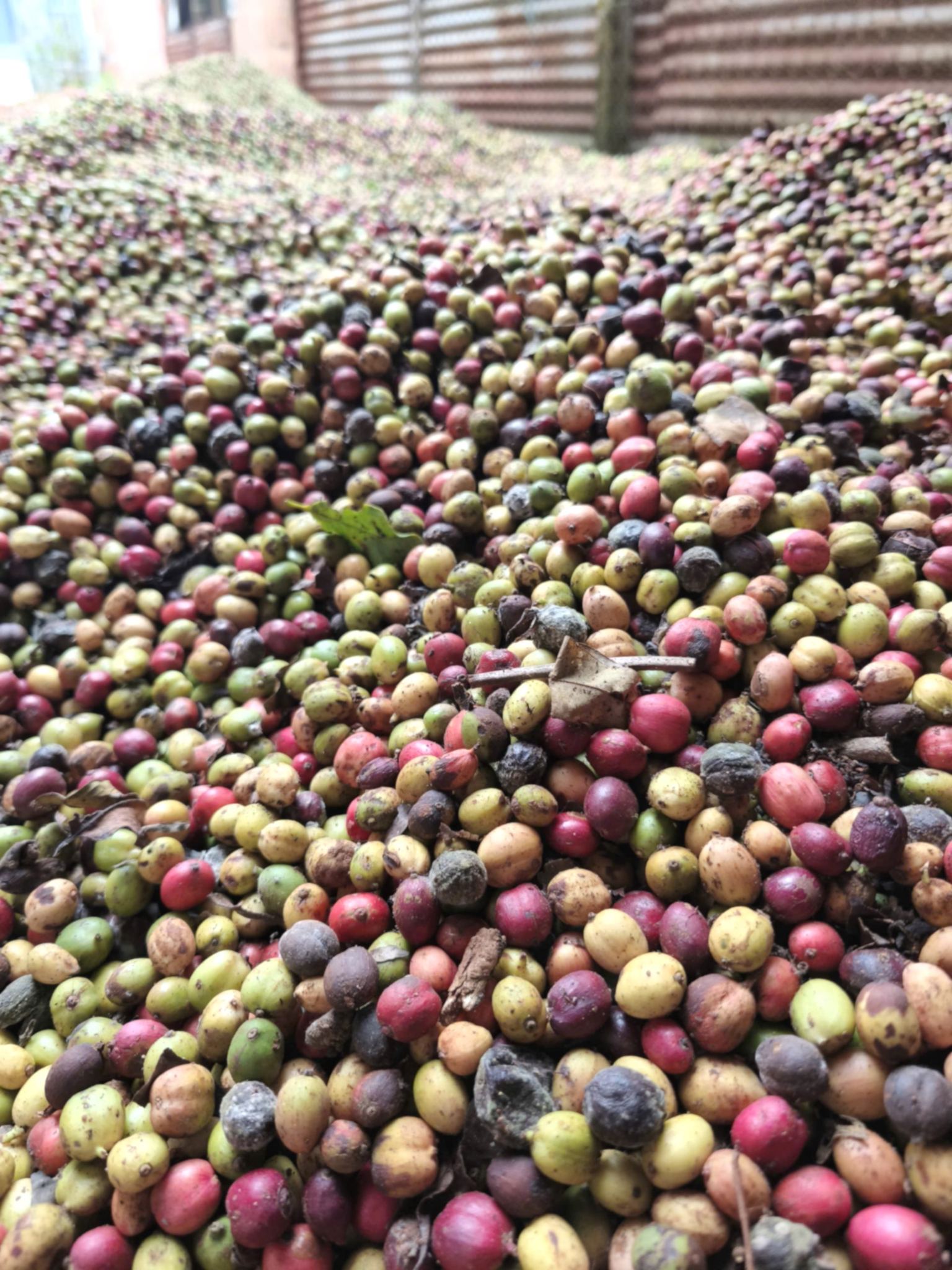
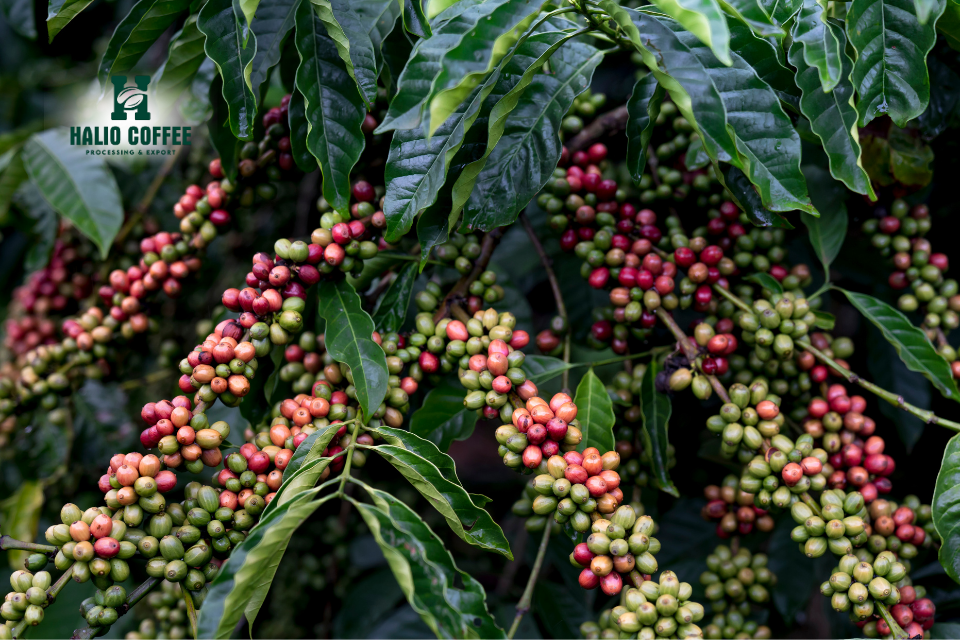
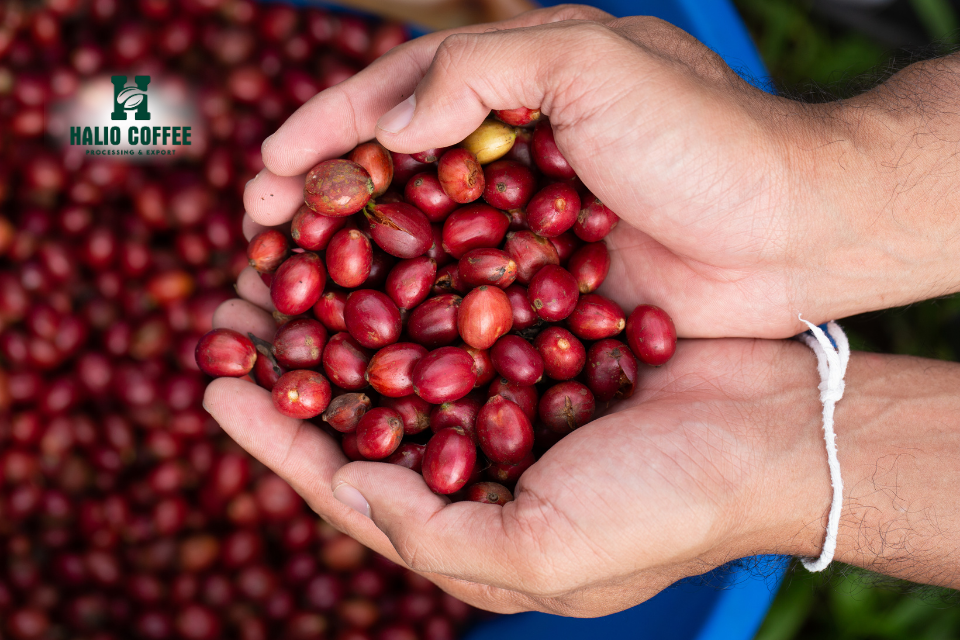
| Harvest | Strip picking (mixed ripeness) | Selective hand-picking (100% red ripe) |
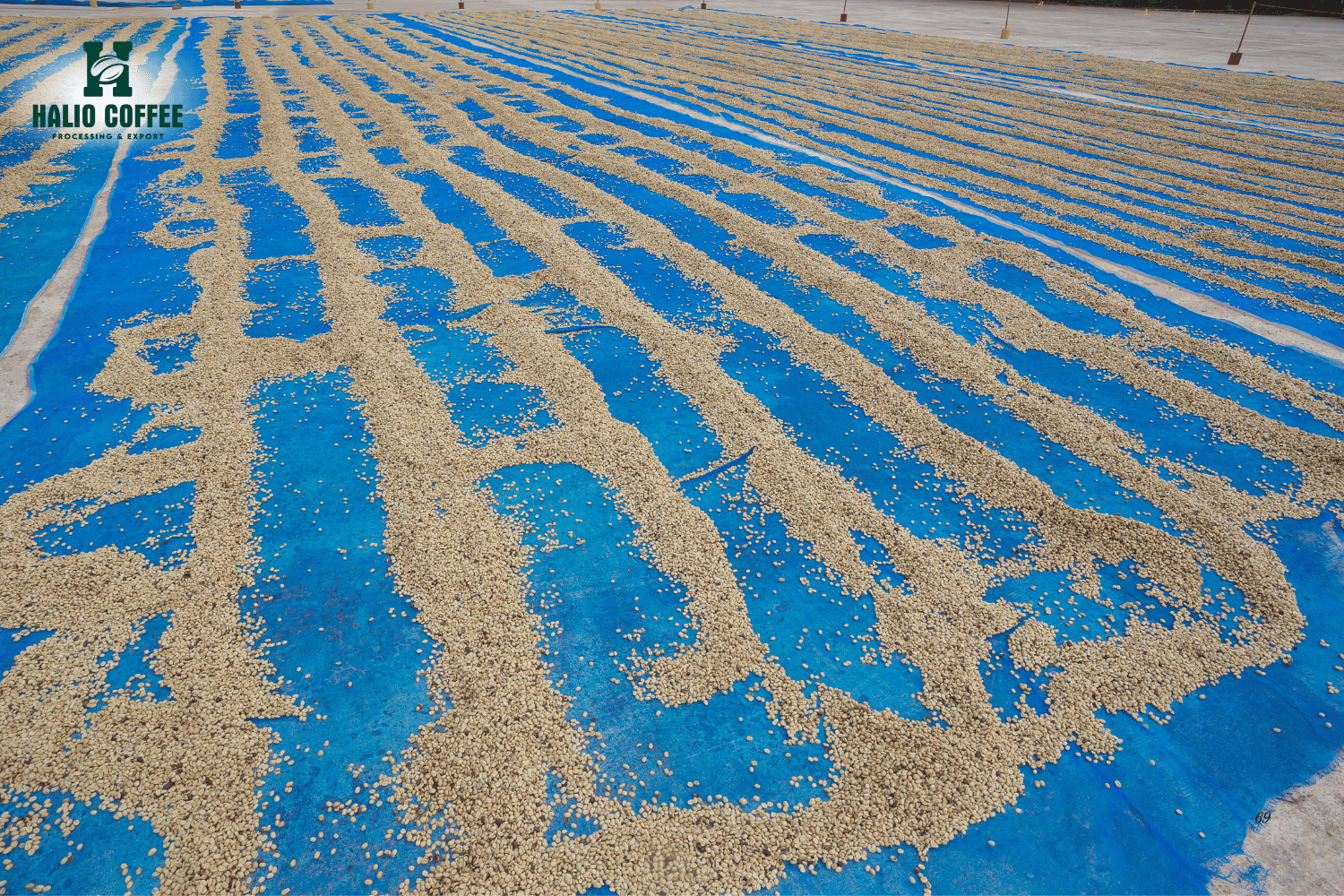
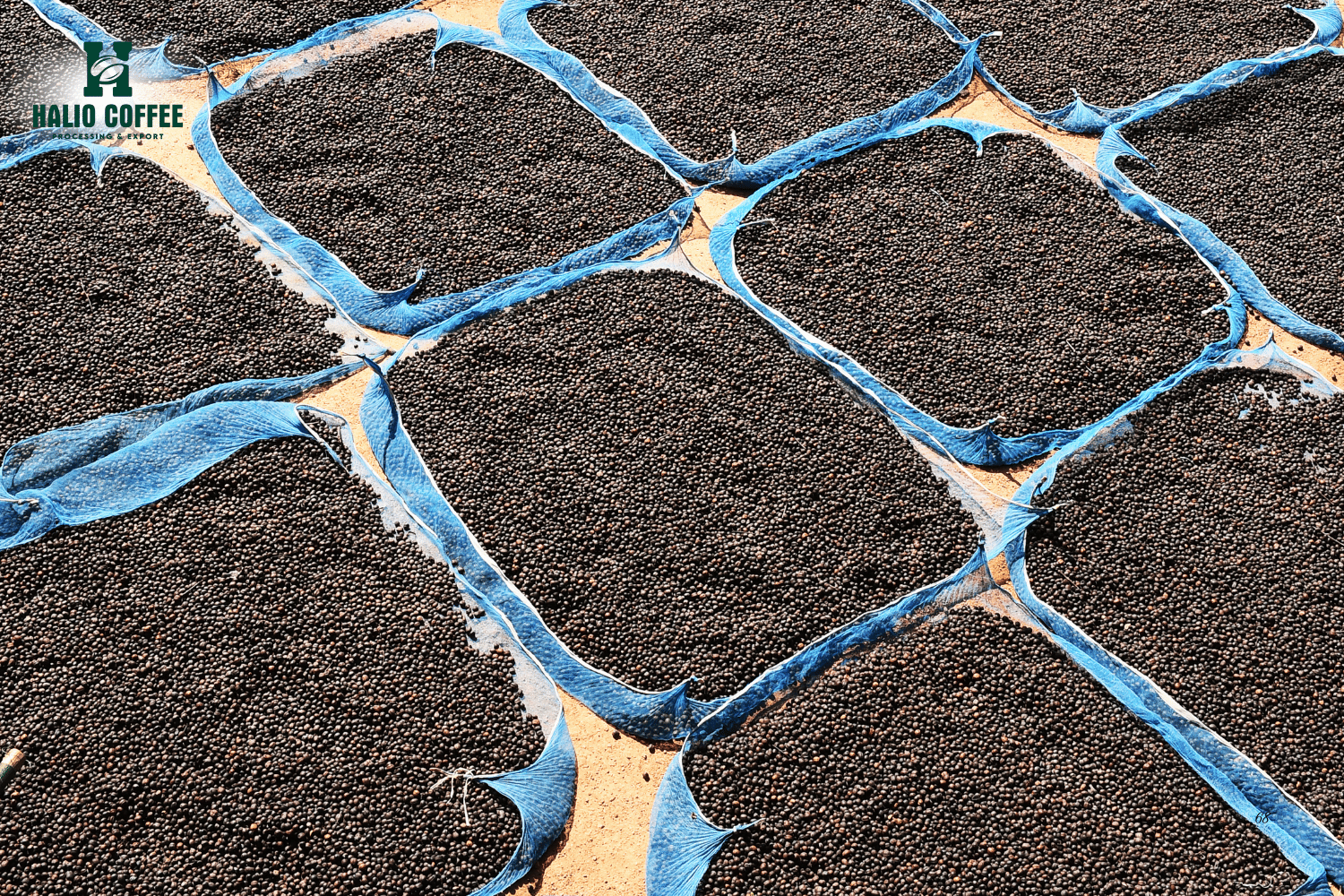
| Processing | Dry/Natural (Sun drying on patios) | Anaerobic, Honey, Carbonic Maceration |
| Price (FOB) | ~$4,500 – $5,000 / ton | ~$8,000 – $12,000+ / ton |
| Cup Profile | Bitter, woody, rubbery, heavy body | Sweet, clean, fruity, spicy, nutty |
3.3 Case Studies in Innovation
- Mori Farm (Gia Lai): Led by Tran Thi Bich Ngoc, this farm has proven that Robusta can have “fruity, flowery” notes. By using shade-grown techniques and meticulous hand-sorting, Mori Farm’s lots have won awards at the Vietnam Amazing Cup.
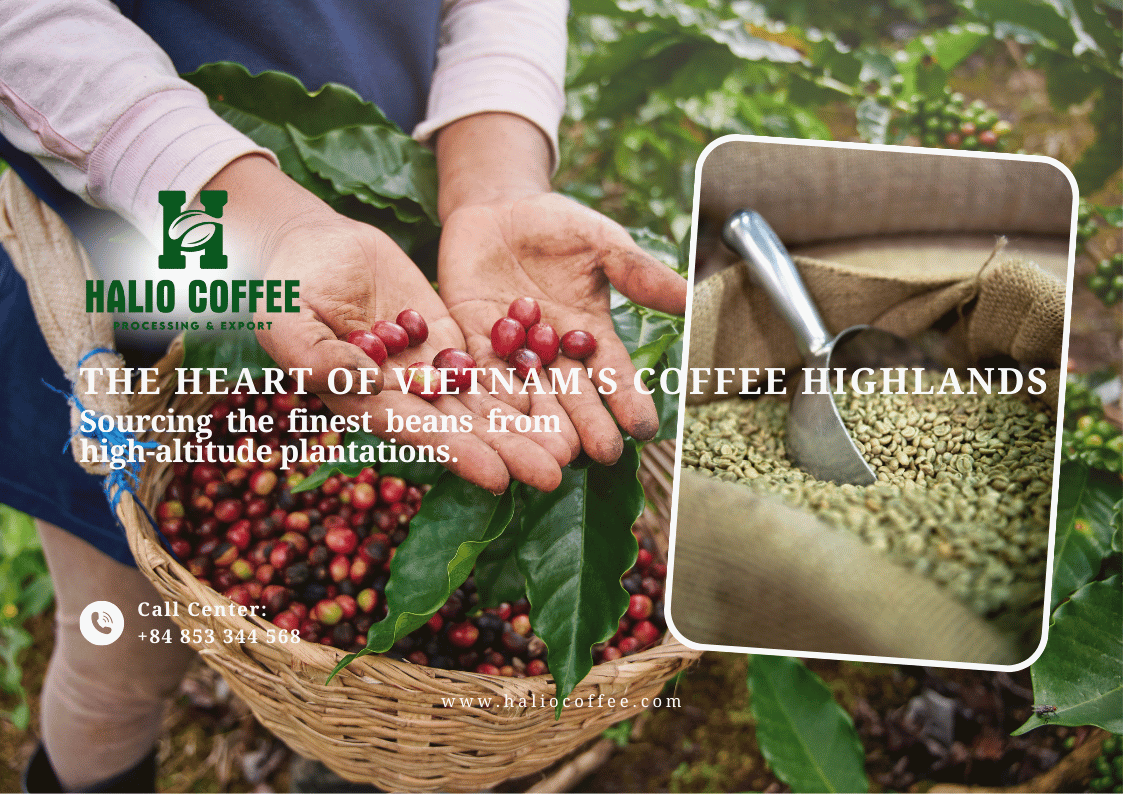
- Halio Coffee (Dak Lak): As indicated in the workspace snippets, Halio sources “Honey Processed” Robusta. This indicates a middle ground—using the honey process (depulping but leaving mucilage on drying beans) to increase sweetness and body without the extreme funk of anaerobic fermentation. This makes the coffee accessible to traditional espresso drinkers.
4. Regulatory Compliance: The EUDR Challenge
The European Union Deforestation Regulation (EUDR) is the single most disruptive legal framework affecting the green coffee trade in 2025. It mandates that no commodities (including coffee, cocoa, and rubber) produced on land deforested after December 31, 2020, can enter the EU market.
4.1 Requirements for Exporters
For Vietnamese and other non-EU exporters, compliance requires three pillars of evidence :
- Geolocation Data:
- Plots < 4 Hectares: A single GPS point (latitude/longitude) is sufficient. This applies to the vast majority of Vietnamese smallholders.
- Plots > 4 Hectares: A polygon map of the farm boundary is mandatory. This requires walking the perimeter of the farm with GPS equipment.
- Deforestation-Free Verification: Cross-referencing geolocation data with satellite imagery (e.g., Sentinel-2, Landsat) to prove forest cover has not been lost since the cutoff date.
- Legality: Proof that the land use rights are legal under national laws and that labor laws (including prohibitions on child labor) are respected.
4.2 Implementation in Vietnam
Vietnam is classified as a “low-risk” country, which simplifies some due diligence procedures (reducing the audit percentage from 9% to 1%), but the data requirement remains absolute. With over 600,000 smallholder farmers averaging 1.3 hectares each, the logistical burden of mapping every plot is immense.
Solutions and Tools:
- National Database: The Ministry of Agriculture and Rural Development (MARD), in partnership with JDE Peet’s and IDH, has launched a national database system to manage forest and coffee growing areas. This centralized system aims to provide a unified compliance mechanism for the sector, creating a “digital passport” for Vietnamese coffee.
Digital Platforms: Tech providers like Koltiva, BanQu, and TraceX are deploying farm management information systems (FMIS) to collect and verify data. These platforms integrate mobile apps for ground-level mapping with satellite analysis for deforestation monitoring.
Pilot Success: Pilot projects in Lam Dong and Dak Lak have successfully mapped over 137,000 hectares, proving the feasibility of the “Protection-Production-Inclusion” (PPI) model.
4.3 Cost Implications and Market Access
The cost of compliance is significant. While large estates can absorb technology costs, smallholders face a high barrier to entry. There is a risk that non-compliant smallholders will be excluded from the lucrative EU market (which accounts for ~40% of Vietnam’s exports) and forced to sell to less regulated markets like China or Russia at a discount. Conversely, EUDR-compliant coffee is expected to command a structural premium. “Clean” coffee—verified as deforestation-free—will likely trade at a separate price tier, effectively creating a two-tiered market for green beans.
5. Strategic Sourcing and Vietnam’s Competitive Landscape
For buyers, researchers, and trade analysts, understanding the supplier landscape in Vietnam is essential for securing reliable green coffee in a tight market.
5.1 Key Export Players
The market is bifurcated into massive commercial aggregators and specialized quality-focused entities.
Top Commercial Exporters (Volume Leaders):
- Intimex Group: The largest exporter, handling nearly 30% of Vietnam’s volume. Known for efficiency and massive scale in standard Grade 1 and 2 Robusta. They are the backbone of the global soluble coffee supply chain.
Simexco Daklak: A state-owned giant with a strong pivot toward sustainability. They manage a network of 40,000 farmers and are a key partner in sustainability initiatives like the PPI compact. Unlike many bulk traders, Simexco actively markets “Fine Robusta” and promotes the region’s terroir.
Vinh Hiep: A major player with strong processing infrastructure and organic certifications, exporting to over 40 countries.
Specialty/Fine Robusta Suppliers (Quality Leaders):
- Halio Coffee: Sourced from Dak Lak (Robusta) and Cau Dat (Arabica). Focuses on clean, wet-polished, and honey-processed lots. The workspace data reveals a focus on web presence and branding, positioning them as a modern, digitally-native exporter targeting the mid-market roaster who wants quality without the complexity of direct farm negotiation.
- The Married Beans: Based in Da Lat/Cau Dat, specializing in high-quality Arabica (Catimor) and Fine Robusta. Known for experimental processing (Honey Red, Natural) and strong farmer relationships.
Mori Farm: A boutique producer in Gia Lai led by female entrepreneur Tran Thi Bich Ngoc. Famous for award-winning Fine Robusta with floral and fruity profiles.
Soul Specialty Coffee: Focuses on high-end Robusta from Buon Ma Thuot, utilizing advanced yeast fermentation and maintaining strict SCA/CQI standards.
5.2 Sourcing for Home Roasters and SMEs
For smaller buyers (home roasters, micro-roasteries), direct trade with massive exporters is impossible due to Minimum Order Quantities (MOQs) of container loads (19.2 tons).
- Direct-to-Consumer (DTC) Importers: Companies like Nguyen Coffee Supply (USA) and Lens Coffee specialize in importing Vietnamese Fine Robusta in smaller bags for the Western market.
B2B Marketplaces: Platforms like Algrano connect roasters directly with producers. They aggregate demand, allowing a small roaster in Europe to buy a single pallet (10-20 bags) from a Vietnamese cooperative. The platform handles the shipping consolidation, customs, and documentation, solving the logistics barrier for SMEs.
Specialty Green Coffee Merchants: Coffee Bean Corral and Green Coffee Collective stock Vietnamese origins specifically for the home roasting demographic, selling in 1lb to 5lb quantities.
6. Green Coffee Extracts and Functional Applications
Beyond the beverage market, green coffee beans are a critical raw material for the nutraceutical and cosmetic industries. This sector offers a high-value outlet for beans that may not meet the visual standards for roasting but possess high chemical potency.
6.1 The Extract Market
The global green coffee bean extract market is valued at USD 1.1 billion in 2025, growing at a CAGR of 8.2%. The primary driver is Chlorogenic Acid (CGA), a potent antioxidant that is largely destroyed during the roasting process.
- Applications:
- Weight Management: CGA is marketed for its thermogenic properties (fat burning) and ability to regulate blood sugar.
Cosmetics: Used in anti-aging creams and anti-cellulite formulations due to its antioxidant protection against free radicals.
Functional Energy Drinks: Green coffee extract provides natural caffeine without the “coffee” flavor, making it ideal for fruit-flavored energy beverages.
6.2 Chemical Advantages of Robusta
Vietnam is a preferred source for extraction-grade beans because Robusta beans typically contain higher levels of Chlorogenic Acid (7-10% dry weight) and Caffeine (1.7-4.0%) compared to Arabica.
- Sourcing Strategy: Extract manufacturers often source “Culi” (Peaberry) or broken beans that are rejected from premium export lots. These beans are chemically identical (or superior in density) to Grade 1 beans but are visually imperfect. This provides an essential secondary market for producers, monetizing what would otherwise be waste.
Extraction Technology: Research in Vietnam is optimizing extraction methods using ethanol and water solvents to achieve standardized CGA contents of 50%.
Conclusion
The “raw coffee bean” of 2025 is a product of immense complexity. It is no longer sufficient to speak of coffee as a generic commodity. It is a data-rich asset defined by its genetic species, its processing history, its chemical composition, and its regulatory compliance status.
For Vietnam, the path forward is clear: value over volume. The transition from exporting raw material to exporting “Fine Robusta” and processed goods is the only hedge against climate volatility and rising production costs. The successful implementation of EUDR compliance systems will consolidate the market, favoring organized supply chains (like Simexco and Intimex) while squeezing out non-compliant small traders.
For global buyers, the strategy must shift from spot buying to long-term partnerships. Securing supply in a tight market requires transparency, pre-financing for compliance costs, and an openness to Robusta as a premium component in blends.
As the industry moves toward 2030, the “green bean” will be defined not just by its screen size or moisture content, but by its digital passport—verifying its origin, its carbon footprint, and the legality of the land it was grown on.
- Coffee Prices Today, October 31st: Robusta Surges Past $4,600/Ton on Adverse Weather in Vietnam
- Case Studies of Successful Coffee Partnerships for Supply Chain Resilience
- Arabica Coffee Beans for Roasting: Unlocking Quality and Consistency in Global Coffee Supply
- The Strategic Pivot: Vetting Vietnam Robusta Green Bean Suppliers in 2026
- Sun-Dried Robusta Coffee Beans: An In-Depth Industry Guide for Producers, Roasters, and Distributors