The Engine Room of the World: A Strategic Sourcing Guide to Central Highlands Coffee
Jan
In the global coffee trade, there are origins that provide flavor, and then there are origins that provide the foundation. Central Highlands coffee is the latter—the seismic bedrock upon which the modern caffeine economy rests. As we stand in Buon Ma Thuot in January 2026, the air is thick with the scent of drying cherries and the dust of heavy trucks. The harvest is entering its final phase, and the data paints a picture of a region that has not only recovered from the volatility of previous years but is aggressively asserting its dominance as the world’s liquidity engine.
For the professional green bean buyer, the Central Highlands coffee sector is no longer just a source of “cheap filler.” It is a sophisticated landscape of industrial-scale agriculture, evolving processing technology, and—crucially for 2026—a unique pricing opportunity. With domestic prices correcting by approximately 18% compared to last year, and export volumes surging by 51.9%, the region offers a strategic window for buyers to secure volume at a competitive basis.
This guide is your executive manual to the Central Highlands. We will move beyond the generalities of “Vietnam Robusta” to dissect the specific terroirs of Dak Lak, Lam Dong, and Gia Lai. We will analyze the “Wet Polished” revolution that is upgrading the region’s cup profile, and we will provide a rigorous due diligence framework to ensure your supply chain is resilient, compliant, and profitable.
The Geography of Power: Mapping Central Highlands Coffee
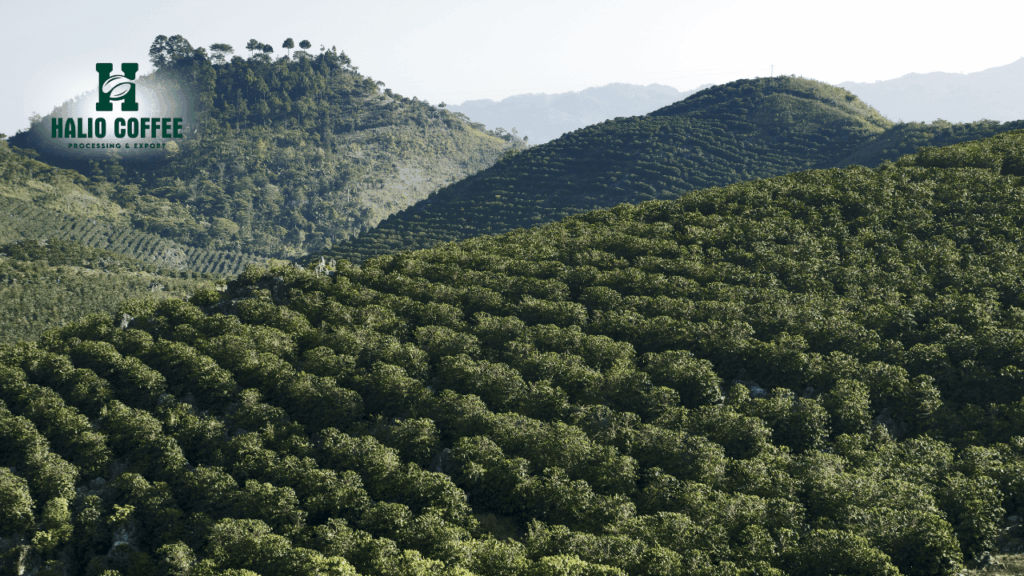
To source effectively, one must treat Central Highlands coffee not as a monolith, but as a diverse archipelago of micro-climates and administrative zones. Each province plays a distinct role in the blending matrix.
1. Dak Lak: The Robusta Capital
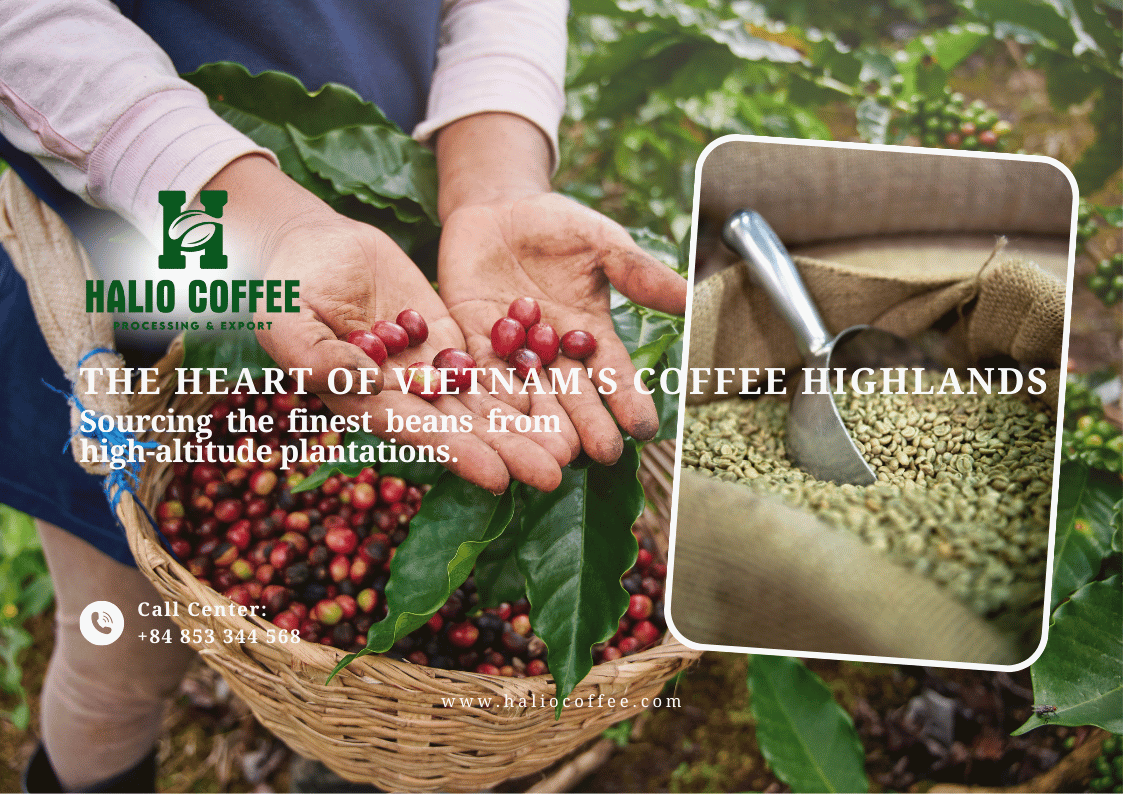
Dak Lak is the heavyweight champion. Centered around Buon Ma Thuot, this province accounts for the lion’s share of Vietnam’s output.
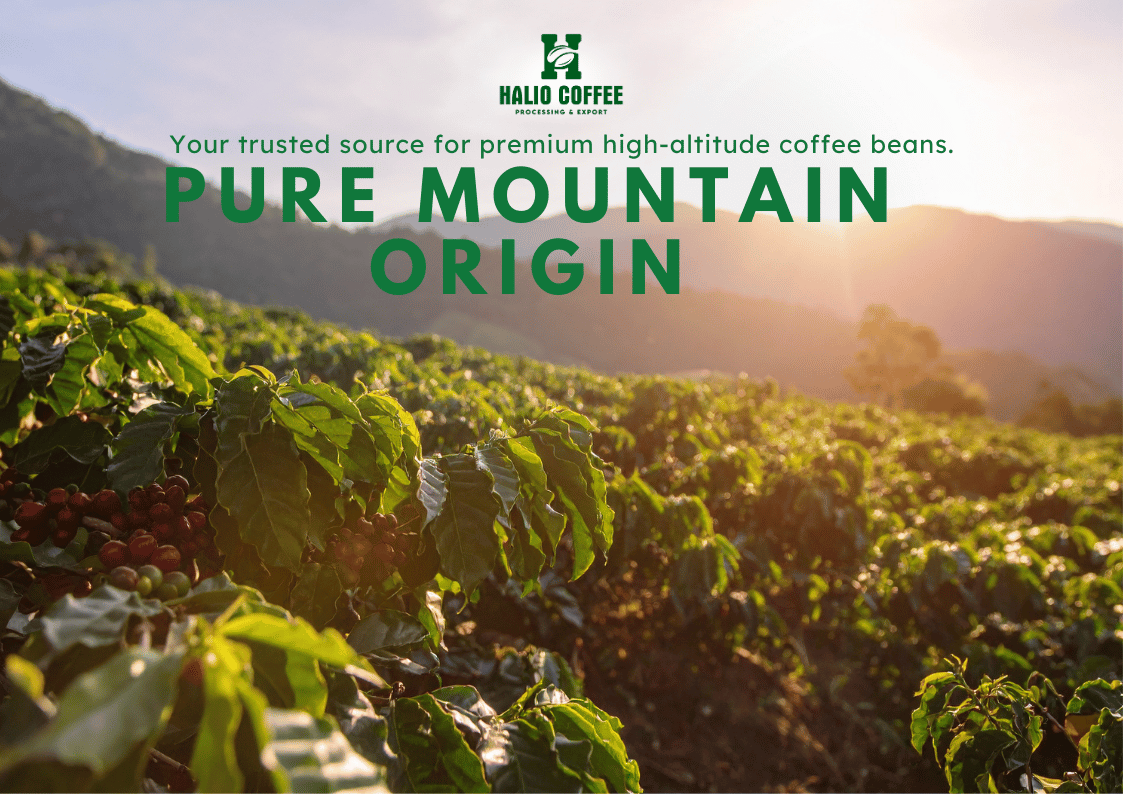
- Terroir: Characterized by flat, basaltic plateaus at 500–800 meters above sea level (MASL).
- The Bean: This is the home of the classic, bold Robusta used in instant coffee and high-caffeine espresso blends.
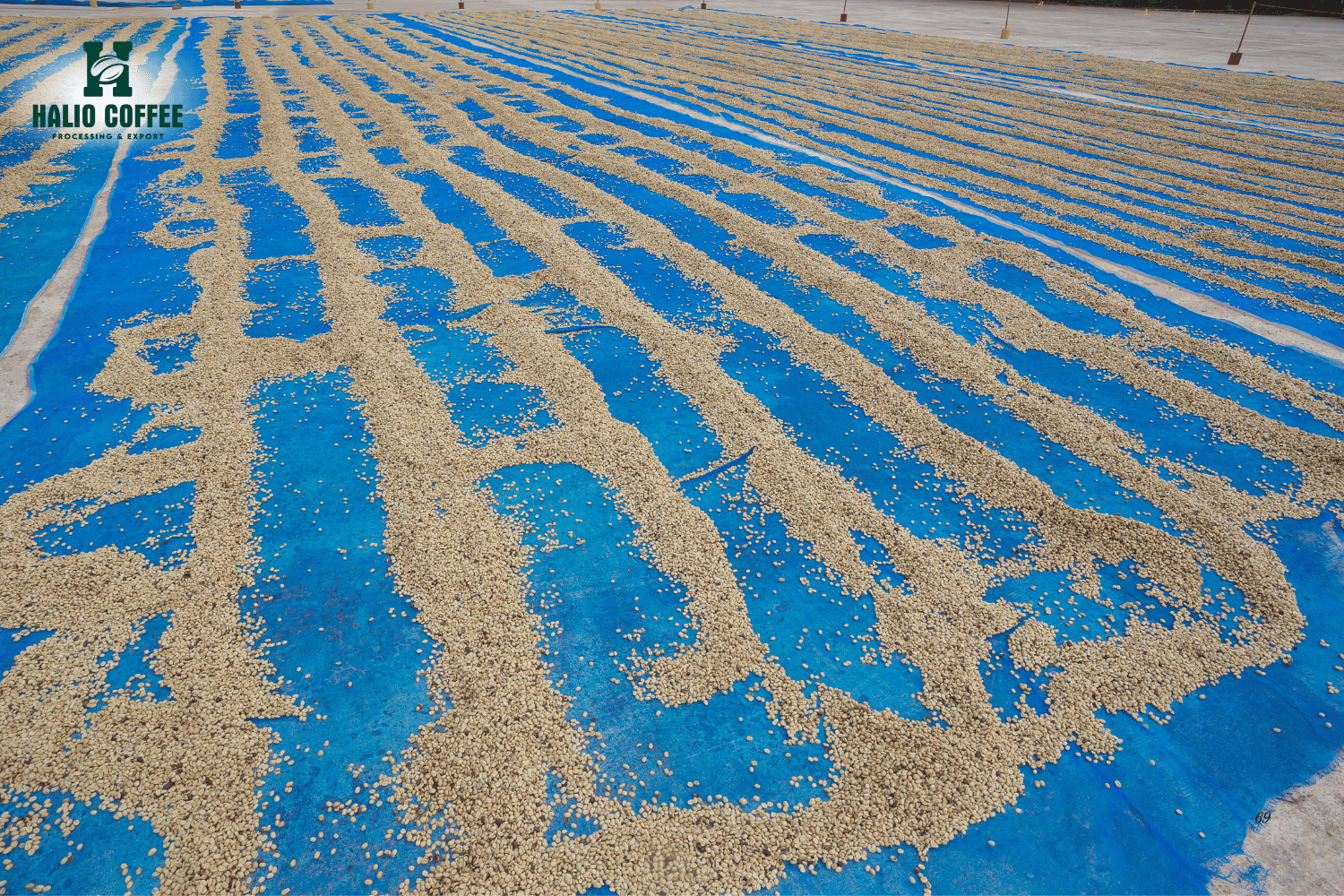
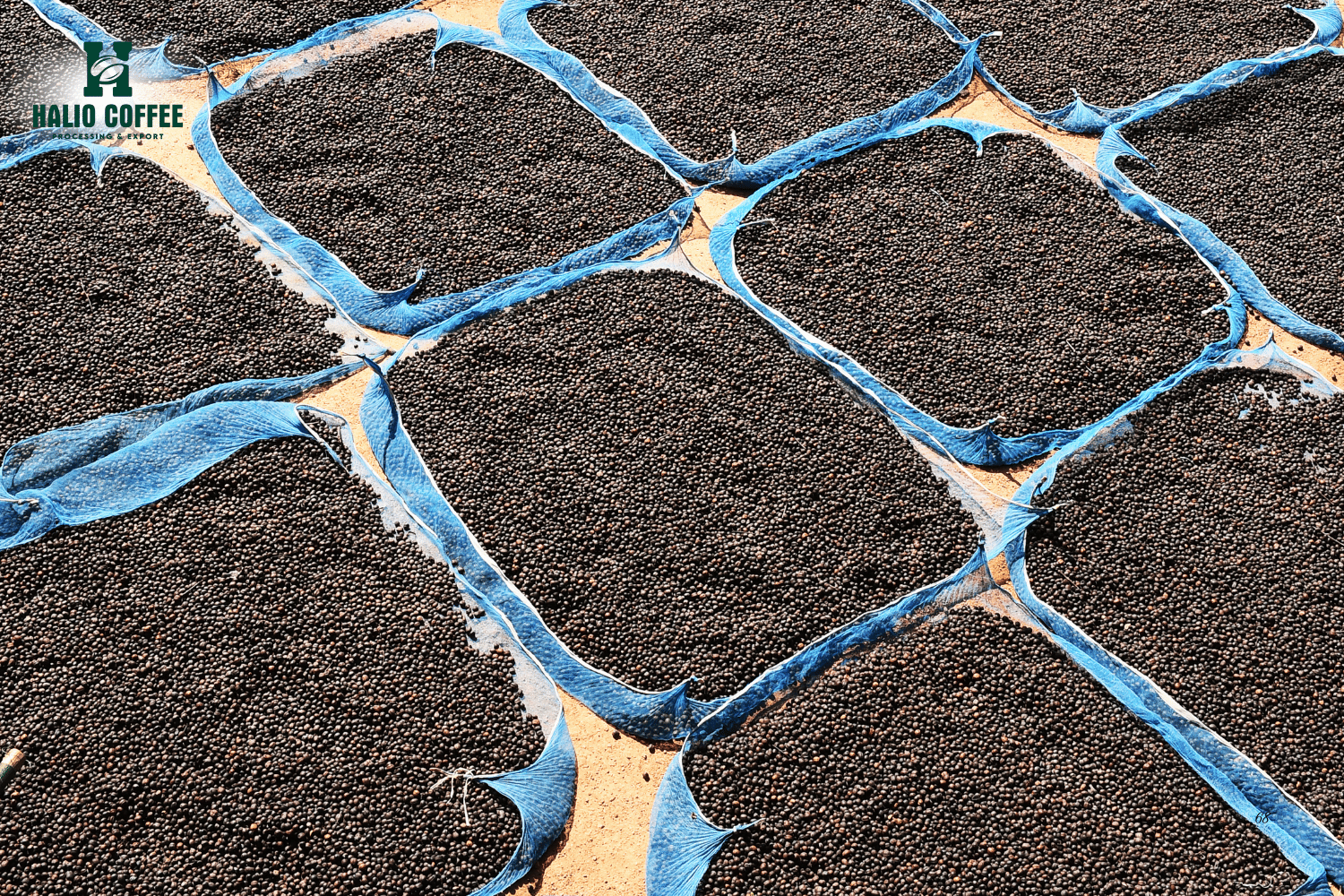
- 2026 Status: The weather here has been exceptionally favorable. Dry and sunny conditions in early January are allowing for optimal sun-drying, ensuring that the massive volume currently hitting the market is of stable moisture content.
2. Lam Dong: The Arabica Enclave and High-Yield Robusta
Situated at a higher elevation (800–1,600 MASL), Lam Dong (specifically Dalat and Cau Dat) is the only scalable source of Central Highlands coffee that includes Arabica.
- The Arabica Factor: As we discussed in our analysis of the “Lam Dong Arabica” sector, this region provides the acidity and complexity that Dak Lak lacks. With global Arabica prices rising due to Brazilian climate risks, Lam Dong is becoming a strategic alternative.
- The Robusta: Lam Dong also produces high-yield Robusta (Di Linh district), which tends to be slightly denser and more acidic than Dak Lak beans due to the cooler nights.
3. Gia Lai and Dak Nong: The Expansion Zones
These provinces are the frontiers. Often offering slightly lower farm-gate prices than Buon Ma Thuot, they are the engines of volume expansion.
- Gia Lai: Known for large-scale industrial farms and a drier climate, producing beans with low moisture and high screen retention.
- Dak Nong: Leveraging its proximity to Ho Chi Minh City ports, this region is a logistics hub, though it faced some weather challenges earlier in the season.
Market Dynamics 2026: Why Source Central Highlands Coffee Now?
The argument for sourcing Central Highlands coffee in Q1 2026 is driven by a convergence of three critical data points: Price, Volume, and Global Scarcity.
The “Buyer’s Window” (Price Correction)
The most compelling metric for 2026 is the price correction. After the historic highs of 2024-2025, the internal price in the Central Highlands has softened.
- The Data: As of January 2, 2026, fresh green coffee is trading at 97,500 – 98,300 VND/kg.
- The Analysis: This represents a drop of 21,100 – 21,400 VND/kg (approx. 18%) compared to the same period in 2025. This correction is not due to a lack of demand, but rather “aggressive selling” by farmers and agents eager to cash in on the harvest. For the international buyer, this is a clear signal to lock in long-term contracts before the supply tightens post-harvest.
The Liquidity Surge
While other origins struggle, Central Highlands coffee is flowing freely.
- Export Velocity: In the first two months of the crop year, Vietnam exported 2.63 million bags, a staggering 51.9% increase year-on-year.
- Logistics: The logistical paralysis that often plagues high-volume harvests has been avoided. The dry weather is speeding up the supply chain, allowing beans to move from farm to port at record speeds.
The Global Buffer
The world needs this coffee. Global consumption is projected to hit a record 169–170 million bags. With Brazil facing heatwaves and Indonesia battling floods that could cut exports by 15%, the Central Highlands coffee belt is currently the only reliable buffer against a global supply deficit.
The Processing Evolution: Moving Beyond “FAQ”
Historically, Central Highlands coffee was sold as “FAQ” (Fair Average Quality)—a euphemism for inconsistent, distinctively earthy beans. In 2026, the narrative has shifted to “Fine Robusta” and value-added processing.
1. The Wet Polished Revolution
To compete with low-grade Arabicas, manufacturers in Dak Lak and Gia Lai have invested heavily in polishing technology.
- The Process: High-pressure water friction removes the silverskin and mucilage residues.
- The Result: A cleaner, brighter cup with reduced bitterness. This “Robusta Wet Polished” is now a standard requirement for premium espresso blends in Europe and Japan.
2. Consistency at Scale
The region’s true power lies in its industrial capability. Large-scale mills in the Central Highlands now utilize optical color sorters (Buhler, Sortex) as a standard.
- The Spec: It is now possible to buy 100 containers of “Grade 1, Screen 18” Central Highlands coffee with near-identical physical and sensory profiles. This consistency is something few other origins can match at this price point.
Technical Specifications: What Defines Premium Central Highlands Coffee?
When issuing purchase orders (POs) for Central Highlands coffee, specificity is your shield against quality fade. Do not simply order “Grade 1.” Define the parameters.
1. Moisture Content: The Critical Control Point
With the massive volume moving through the ports, the risk of “ship’s sweat” (condensation inside the container) is high.
- The Standard: Require 12.0% – 12.5% moisture at the time of loading.
- The Risk: Suppliers may push this to 13% to gain weight. Reject any lot over 12.5%, as the transit time to Europe or the US will likely result in mold growth or OTA formation.
2. Physical Grading (TCVN 4193:2005)
For a premium commercial lot, demand the following:
- Black & Broken: Max 2%.
- Foreign Matter: Max 0.5%.
- Excelsa Beans: Max 0.5% (Excelsa is a different species often intercropped; it roasts differently and can ruin consistency).
- Screen Retention: Min 90% on Screen 18 (7.1mm) or Screen 16 (6.3mm).
3. Sensory Profile (Cupping)
- Commercial Robusta: Should be Neutral, Woody, Peanut, Heavy Body.
- Fine Robusta (Central Highlands): Should be Clean, Chocolate, Caramel, Medium-High Body, with no rubbery or fermented notes.
Strategic Vetting: How to Choose Partners in the Highlands
The ecosystem of Central Highlands coffee suppliers is vast, ranging from smalltime collectors to multinational giants. Vetting is crucial.
1. The Manufacturer vs. The Trader
- The Trader: Buys parchment from collectors and sells to you. They offer liquidity but low traceability.
- The Manufacturer: Owns the dry mill in Dak Lak or Gia Lai. They control the drying patio and the color sorters.
- Recommendation: Always source from the manufacturer. In a year where domestic prices dropped 18%, traders are under margin pressure and more likely to blend in lower-quality beans.
2. EUDR Compliance (The 2026 Mandate)
The European Union Deforestation Regulation (EUDR) is the defining constraint of 2026.
- The Challenge: The Central Highlands has thousands of smallholder farmers.
- The Solution: Professional suppliers are investing in GPS mapping of their farm networks. When buying Central Highlands coffee, demand to see the geolocation data for the specific lot. If a supplier offers a “general region certificate,” they are non-compliant.
3. Financial Resilience
- Terms: Look for suppliers who can offer FOB Ho Chi Minh City terms. This gives you control over the freight.
- Capacity: Ensure the supplier has the warehouse capacity to store beans properly if shipment is delayed. The dry weather is good for harvest, but once beans are bagged, they need cool, dry storage.
Red Flags & Risk Management
Even in a “Buyer’s Market,” risks abound. Be vigilant for these warning signs when sourcing Central Highlands coffee.
- 🚩 The “Past Crop” Blend: With the new crop trading 18% lower, some suppliers may try to mix in unsold old crop (which is faded and woody) to clear inventory.
- The Check: Use a “Smell Test” on the green beans. Old crop smells like straw or burlap. New crop smells fresh and grassy.
- 🚩 The Moisture Scam: A supplier offers a price $20/ton below market but delivers coffee at 13.5% moisture. You are paying for water, and you will receive mold.
- 🚩 Lack of Geolocation: A supplier claims “100% Traceable” but provides a list of communes rather than polygon maps of farms. This will fail an EUDR audit.
Summary: Capitalizing on the Highlands
The Central Highlands coffee sector in 2026 is a powerhouse of opportunity. It offers the rare combination of massive volume, improved quality through wet polishing, and a significant price correction that allows buyers to repair margins damaged by the volatility of previous years.
However, the window is finite. The current abundance is driven by the peak harvest pressure. As the season progresses and domestic stocks move into strong hands, the power balance will shift. The time to lock in core volume—supported by rigorous technical specs and EUDR-compliant traceability—is now.
You have secured the physical asset from the world’s most robust engine room. Now, the question remains: how do you structure the contract to protect that value against currency shifts and future market rallies?
Would you like to explore “Wholesale coffee beans pricing models” to master the financial engineering of your Central Highlands contracts?
- Coffee Prices Today, Dec 31: Robusta Extends Bullish Run as Arabica Adjusts Lower
- Coffee Prices Today, October 7th: Quiet Trading as Market Awaits US-Brazil Tariff Talks
- A 2026 Strategic Guide to Sourcing Green Espresso Beans
- From Bean to Brand: A Strategic Sourcing Guide to Roasted Arabica Coffee for Cafes
- The Definitive Guide to Vetting Suppliers of Vietnam Green Coffee Beans