The Highlands Frontier: A Strategic Guide to Specialty Arabica Producers Lam Dong
Jan
In the grand narrative of the global coffee trade, Vietnam has long been cast as the Titan of Robusta—a provider of caffeine, crema, and industrial consistency. However, as we stand in the early weeks of 2026, a sophisticated sub-plot has emerged that is reshaping the country’s reputation. High in the mist-shrouded peaks of the Central Highlands, a dedicated cadre of specialty Arabica producers Lam Dong is challenging the hegemony of traditional origins like Costa Rica and Colombia.
For the professional green buyer, the emergence of these producers is not merely a story of agricultural romance; it is a critical strategic diversification. As of January 8, 2026, the global Arabica market is fraught with “structural vulnerability.” Brazil is battling heatwaves that threaten the 2026/27 fruit set, and prices on the New York “C” market remain volatile, having closed 2025 up nearly 9%.
In contrast, the Vietnamese market offers a unique stability. While the Robusta sector is seeing an 18% price correction due to a liquidity flush, the Arabica sector in Lam Dong offers a different value proposition: high-elevation terroir, innovative processing, and full traceability at a differential that beats most Central American counterparts. This guide is your executive manual for navigating this niche. We will map the terrain, dissect the agronomy, and provide a rigorous framework for vetting specialty Arabica producers Lam Dong to ensure your supply chain is as resilient as it is flavorful.
1. Mapping the Terrain: The Micro-Climates of Lam Dong
To source effectively, one must understand that “Lam Dong” is not a monolith. It is a province of varied elevations and micro-climates. Specialty Arabica producers Lam Dong are concentrated in specific districts where the altitude supports the slower cellular respiration required for complex flavor development.
Cau Dat (The “Grand Cru”)
Located just outside the city of Dalat, Cau Dat is the historic heart of Vietnamese Arabica, first planted by the French in the 1920s.
- Elevation: 1,550 – 1,650 MASL.
- The Producer Profile: Here, you find the oldest estates and the most experienced cooperatives. The producers here benefit from a cool, misty micro-climate often compared to the Tarrazú region of Costa Rica.
- The Cup: This is the highest density bean in Vietnam. Expect notes of pine, lemon zest, tea-like tannins, and high acidity. Sourcing from specialty Arabica producers Lam Dong in this specific commune guarantees a “Strictly High Grown” (SHG) profile.
Lac Duong (The Volume Driver)
Sitting at the foot of Langbiang Mountain, Lac Duong is the engine of volume for the specialty sector.
- Elevation: 1,400 – 1,500 MASL.
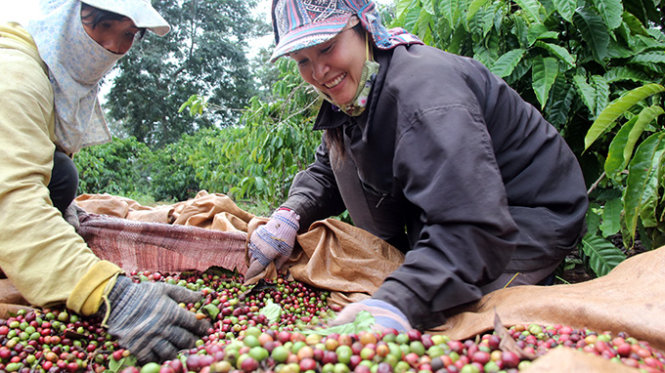
- The Producer Profile: Dominated by ethnic minority smallholders (K’Ho people) organized into modern cooperatives.
- The Cup: Slightly lower acidity than Cau Dat, but often sweeter with notes of stone fruit, caramel, and nuts. This is the “workhorse” specialty Arabica for high-end blends.
Di Linh & Bao Loc (The Caution Zone)
- Elevation: 800 – 1,000 MASL.
- Warning: While some Arabica is grown here, it is technically “Low Grown.” It lacks the density and complexity of the true highlands. Be wary of specialty Arabica producers Lam Dong who blend Di Linh beans into Cau Dat lots to lower the price.
2. The Agronomic Pivot: Beyond Catimor
For decades, the reputation of specialty Arabica producers Lam Dong was hampered by a reliance on Catimor—a rust-resistant hybrid (Timor Hybrid x Caturra) known for high yields but herbal, low-acidity flavor profiles. In 2026, this narrative is outdated. The top producers have executed a massive agronomic pivot.
The Varietal Renaissance
Progressive producers are no longer just farming; they are curating genetics.
- Typica & Bourbon: On the highest slopes of Cau Dat, producers are rehabilitating ancient Typica and Bourbon rootstocks. These low-yield, high-quality varieties are fetching prices upwards of $10/kg at farm gate.
- THA1 & TN1: These are local hybrids developed by the Western Highlands Agriculture and Forestry Science Institute (WASI). They offer the disease resistance of Catimor but with a cup profile significantly closer to Ethiopian heirlooms—floral and fruit-forward.
The “Catimor” Refinement
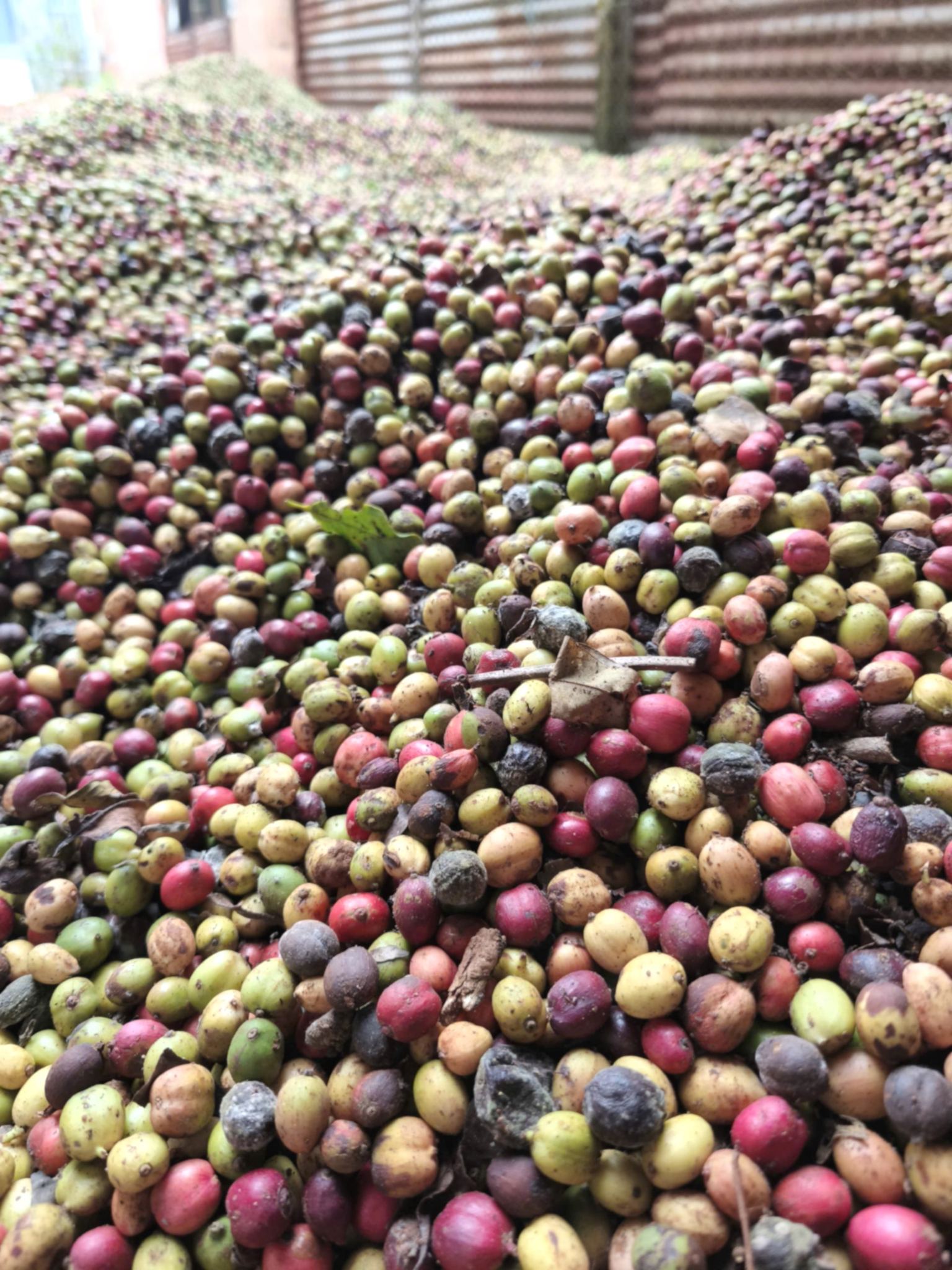
Even the ubiquitous Catimor has been transformed. By improving soil nutrition (reducing nitrogen, increasing potassium) and enforcing strict “ripe cherry only” picking policies, specialty Arabica producers Lam Dong have proven that Catimor can score 83-84 points on the SCA scale, offering a sweet, chocolate-forward profile that is perfect for espresso bases.
3. Processing Innovation: The New Value Driver
In 2026, the value of specialty Arabica producers Lam Dong is largely defined by their mastery of post-harvest processing. The damp, misty climate of Dalat makes traditional sun-drying difficult, forcing producers to innovate.
The Greenhouse Revolution
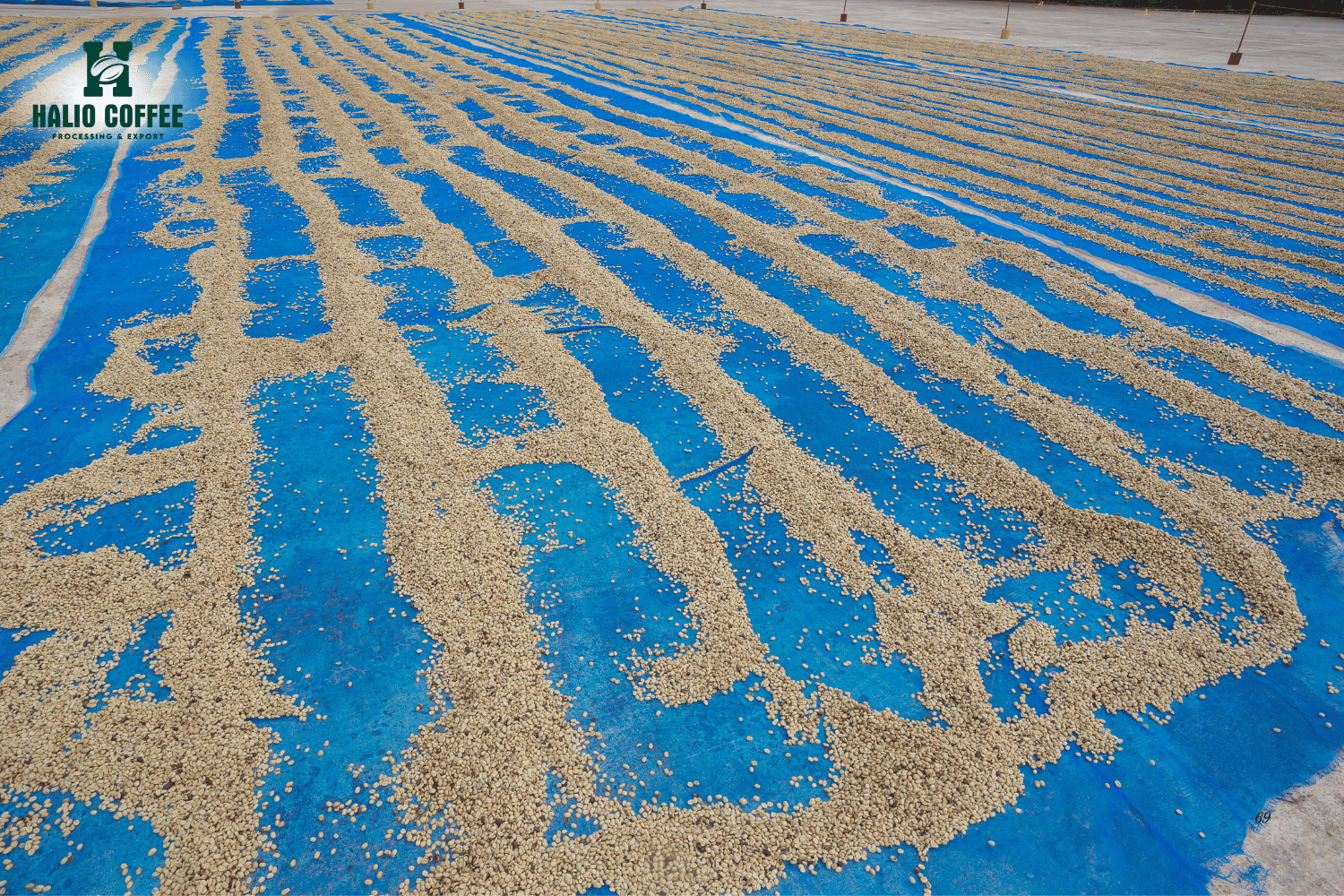
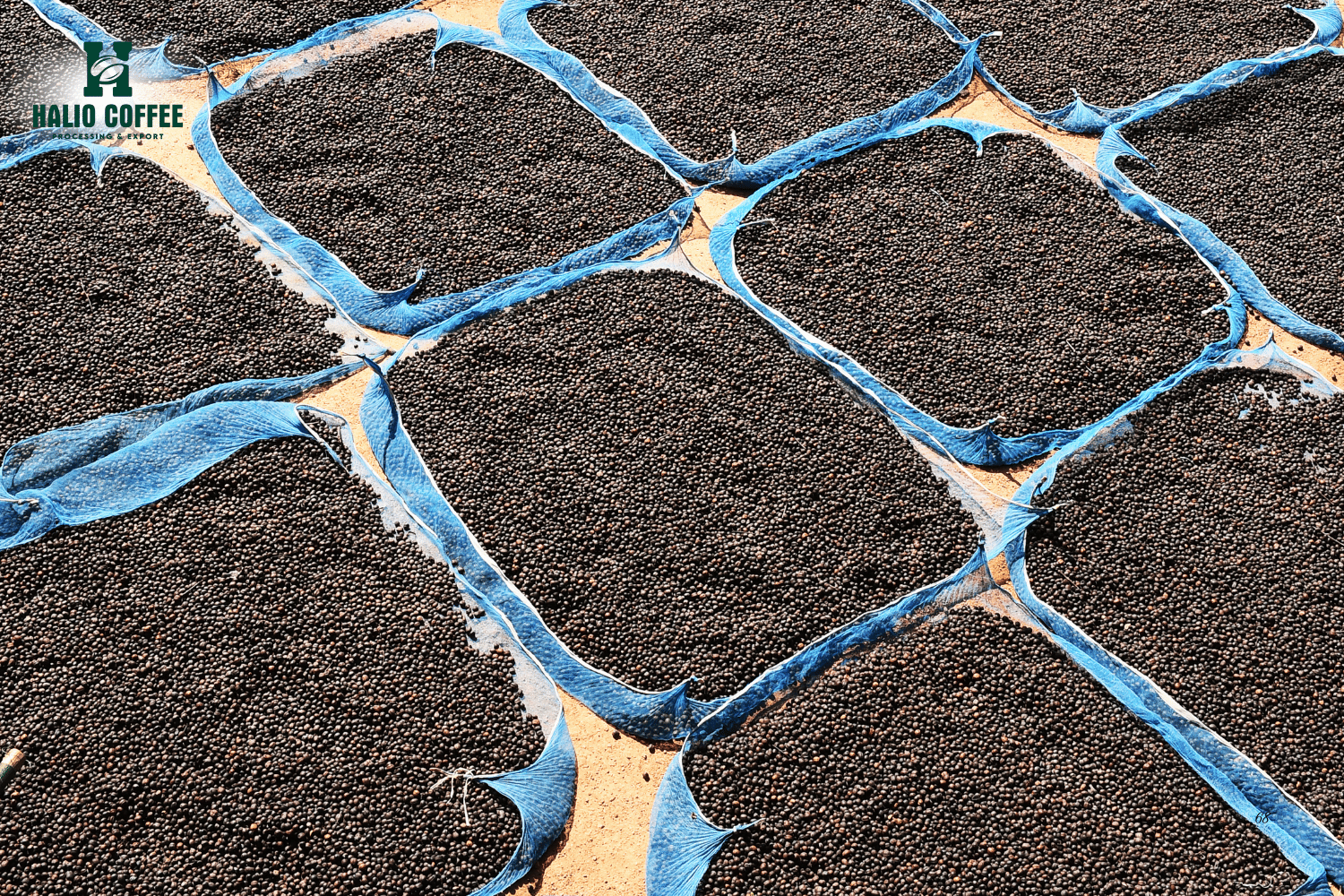
Unlike the open patios of Dak Lak, Lam Dong producers utilize polyethylene tunnel dryers (greenhouses).
- The Function: These structures protect the coffee from the afternoon mist and rain, allowing for a controlled, slow drying phase (15-20 days).
- The Result: Preserves water activity (aw) below 0.60, ensuring the green beans do not fade or develop “baggy” flavors during transit.
Fermentation Protocols
- Fully Washed: The standard for consistency. Producers use mechanical demucilagers followed by a 12-24 hour fermentation. This yields the cleanest cup.
- Anaerobic & Carbonic Maceration: The avant-garde specialty Arabica producers Lam Dong are using sealed stainless steel tanks to ferment cherries in an oxygen-free environment. This unlocks exotic notes of wine, strawberry, and tropical fruit, pushing scores to 86+.
- Honey Process: Yellow and Red Honey methods are popular in Lac Duong, adding body and sweetness to the cup without the risk of mold associated with Natural processing in this humid climate.
4. Sourcing Strategy: Vetting Your Partners
The ecosystem of specialty Arabica producers Lam Dong ranges from sophisticated estates to aggregators masquerading as farmers. To source effectively, you must distinguish between the two.
The Producer Hierarchy
| Entity Type | Description | Strategic Value |
| The Estate | Single owner, >10 hectares. Owns wet & dry mill. | High. Full control, consistent year-over-year. Best for single-origin retail. |
| The Cooperative | Group of 50-200 smallholders sharing a central wet mill. | High. Scalable volume, social impact story. Best for blends. |
| The Processor | Buys cherries from undefined farmers. | Medium/Low. High risk of “region blending” (mixing Low Grown with High Grown). |
The Due Diligence Checklist
When visiting or auditing specialty Arabica producers Lam Dong, use this checklist:
- Traceability (EUDR Compliance):
- As of 2026, can the producer provide polygon GPS coordinates for every farm in the lot?
- Red Flag: If they offer a general “Lam Dong Certificate” without farm-level data, they are non-compliant with European regulations.
- Infrastructure Audit:
- Do they have raised beds inside greenhouses? (Coffee dried on the ground in Lam Dong will almost always have mold issues).
- Do they have an optical color sorter? (Essential for removing “quakers”—immature beans common in Catimor).
- The Cupping Audit:
- Calibrate with the producer. Do their scores match yours? A producer who scores their own coffee at 88 when it is an 82 is a liability.
5. The Economics of 2026: Pricing and Differentials
While Robusta prices in Vietnam have corrected by 18%, specialty Arabica producers Lam Dong operate on a different economic logic. Their pricing is typically pegged to the New York “C” market plus a differential, or a fixed outright price for micro-lots.
The Value Proposition
- Comparative Cost: A washed Arabica from Lam Dong scoring 84 points typically trades at a discount to a comparable Costa Rica or Colombia Excelso, primarily due to lower freight costs to Asian and US West Coast markets.
- Currency Hedging: With the USD/VND rate around 26,141, buying in local currency (if you have a local entity) or fixing the exchange rate early can yield significant savings.
The “Fine Robusta” Synergy
Many specialty Arabica producers Lam Dong also produce high-altitude Fine Robusta. Sourcing both from the same partner allows for consolidated shipping containers, optimizing logistics costs—a crucial factor given the export surge of 51.9% this season.
6. Risk Management: Red Flags in the Highlands
The premium attached to the label “Vietnam Specialty Arabica” attracts bad actors. Be vigilant against these specific risks.
- 🚩 The “Fake Fermentation” Scam: To achieve fruity notes, some unethical processors soak green beans in fruit juice or essential oils during fermentation (“infused coffee”).
- Detection: The flavor is aggressive and chemical-like. The green beans may be stained pink or orange. Demand a “Process Transparency” affidavit.
- 🚩 “Region Washing”: Selling beans grown in Di Linh (800m) as “Cau Dat” (1600m).
- Detection: The Cut Test. High-grown beans are dense and have a closed, crooked center cut. Low-grown beans are softer and have a more open, straight center cut.
- 🚩 Moisture Instability: Because Lam Dong is humid, beans dried too quickly will register 12% moisture but have a water activity (aw) above 0.60.
- Result: The coffee will fade and taste like cardboard/wood within 3 months. Always measure aw.
7. Logistics and Execution
Once you have identified the right specialty Arabica producers Lam Dong, execution is key.
- Packaging: Never ship specialty Arabica in jute bags alone. GrainPro or Ecotact is mandatory to protect against moisture ingress during the journey to Ho Chi Minh City and beyond.
- The “Cold Chain” Concept: For ultra-premium lots (88+ points), some buyers are now using refrigerated trucks for the leg from Dalat to the port to prevent thermal shock, as the temperature difference between the highlands (18°C) and the lowlands (35°C) is extreme.
Summary: The Strategic Pivot to the Highlands
Engaging with specialty Arabica producers Lam Dong in 2026 is a move that combines quality discovery with strategic risk management. By tapping into this region, you access a supply of high-grown, traceable, and distinct coffee that serves as a hedge against the volatility of the Latin American market. The agronomic pivot away from pure yield-driven Catimor toward quality-focused processing has elevated these producers from “emerging” to “essential.”
However, the key to success lies in specificity. You cannot buy “Lam Dong” generically. You must buy “Cau Dat Fully Washed” or “Lac Duong Honey,” and you must partner with producers who have the infrastructure to prove it.
You have now mapped the source of Vietnam’s finest Arabica. The final step in your sourcing journey is to zoom out and look at the macro-picture of the country’s entire production capacity to balance your portfolio.
- Coffee Prices Today, Dec 31: Robusta Extends Bullish Run as Arabica Adjusts Lower
- Coffee Prices Today, Nov 26: Both Markets Rally Strongly; Robusta Surges Over $100/Ton
- Coffee Prices Today, October 10th: Mixed Performance as Front-Month Robusta Ticks Up, Arabica Declines
- The Proximity Paradox: Strategic Sourcing of Raw Coffee Beans Near Me for Small-Batch Roasters
- Coffee Price Today, July 26: Sharp Decline as Brazil Accelerates Harvest