A 2026 Guide to Sourcing Vietnam Arabica Green Beans

Jan
In the historical narrative of the global coffee trade, Vietnam has been cast as the Titan of Robusta—the industrial backbone of the instant coffee and commercial blending world. However, as we navigate the volatile market landscape of early 2026, a sophisticated sub-plot is rewriting this story. High in the mist-shrouded peaks of the Central Highlands, a transformation is underway that has positioned Vietnam Arabica green beans as one of the most strategic assets for the modern roaster.
The context for this shift is global. As of January 9, 2026, the Arabica market on the New York ICE exchange is fraught with “structural vulnerability.” Prices are hovering near 372.35 US cents/lb, driven by fears of supply deficits in Brazil due to adverse weather and a 29.5% production drop in Colombia during Q4 2025. In this environment of scarcity and high prices, the smart money is looking for a hedge—a source of high-quality, traceable, and available mild coffee.
This guide is your executive manual for navigating this opportunity. We will move beyond the common misconceptions to dissect the agronomy, the processing innovations, and the commercial realities of sourcing Vietnam Arabica green beans. We will provide a rigorous framework for vetting suppliers, analyzing the “Catimor vs. Typica” debate, and ensuring your supply chain remains resilient in a year defined by climatic and geopolitical instability.
1. The Agronomic Reality: Mapping the Terroir
To source effectively, one must understand that Vietnam Arabica green beans are not a monolith. They are the product of specific micro-climates that defy the tropical heat associated with the rest of the country.
The Central Highlands: Lam Dong Province
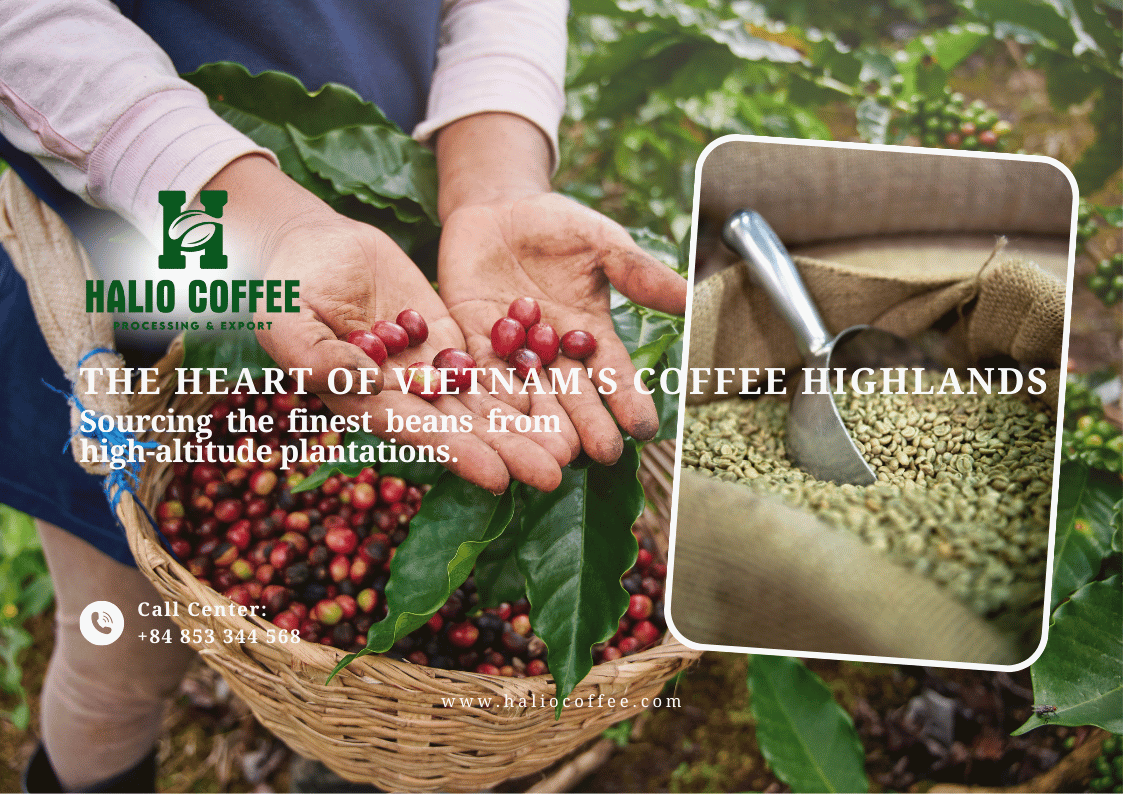
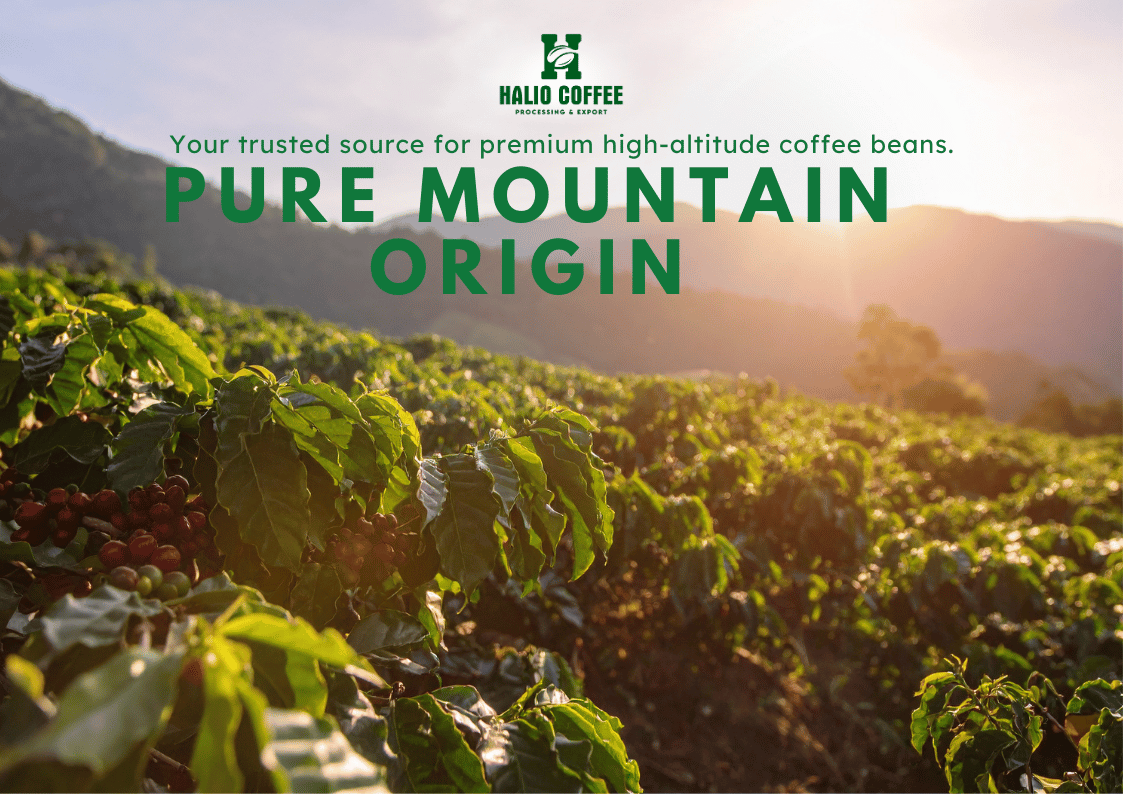
While Robusta thrives in the lower plateaus of Dak Lak, Arabica belongs to Lam Dong. This province, particularly the districts surrounding Dalat, offers an elevation profile ranging from 1,450 to 1,650 meters above sea level (MASL).
- Cau Dat (The “Grand Cru”): This commune is the historic heart of Vietnamese Arabica. The soil is volcanic and rich in nutrients. The climate is cool and misty, often compared to the Tarrazú region of Costa Rica. Sourcing Vietnam Arabica green beans from Cau Dat guarantees high density and complex acidity.
- Lac Duong: Located at the foot of Langbiang Mountain, this district is the engine of volume for the specialty sector. The beans here are characterized by sweet, stone-fruit notes and a heavy body.
The Northern Mountains: The New Frontier
Though smaller in volume, the Northwest regions of Son La and Dien Bien are emerging as sources of distinct profiles. The latitude here (further north) mimics higher altitude, producing beans with distinct floral and tea-like characteristics. However, for 2026, the scalable volume remains in Lam Dong.
2. Market Analysis: The Economic Case for Vietnam Arabica Green Beans
Why pivot to Vietnam for Arabica in Q1 2026? The answer lies in the “Value Arbitrage.”
The Price Divergence
- Global Context: High-grade washed Arabicas from Colombia and Central America are trading at significant premiums due to the 4.1% annual production drop in Colombia and drought concerns in Brazil.
- The Vietnam Advantage: While Vietnam Arabica green beans track the “C” market, their differential is often more competitive than Latin American Milds. Furthermore, the domestic market in Vietnam is currently experiencing an 18% price correction in the general coffee sector. While this is driven by Robusta liquidity, it softens the logistical overhead for Arabica exports as well.
The Availability Factor
Reliability is the currency of 2026.
- Logistics: Vietnam’s export infrastructure is firing on all cylinders, with total coffee exports up 51.9% in the early crop year.
- Security: Contrast this with the logistical bottlenecks in Brazil or the potential geopolitical tensions involving South American suppliers. Buying Vietnam Arabica green beans creates a stable supply line that bypasses the Atlantic trade routes.
3. The Varietal Debate: Catimor and Beyond
For decades, the reputation of Vietnam Arabica green beans was tethered to Catimor—a hybrid of Timor Hybrid (Robusta) and Caturra (Arabica). Chosen for its rust resistance and high yield, Catimor was historically viewed as “herbal” or “low acid.” In 2026, this narrative is outdated.
The Catimor Renaissance
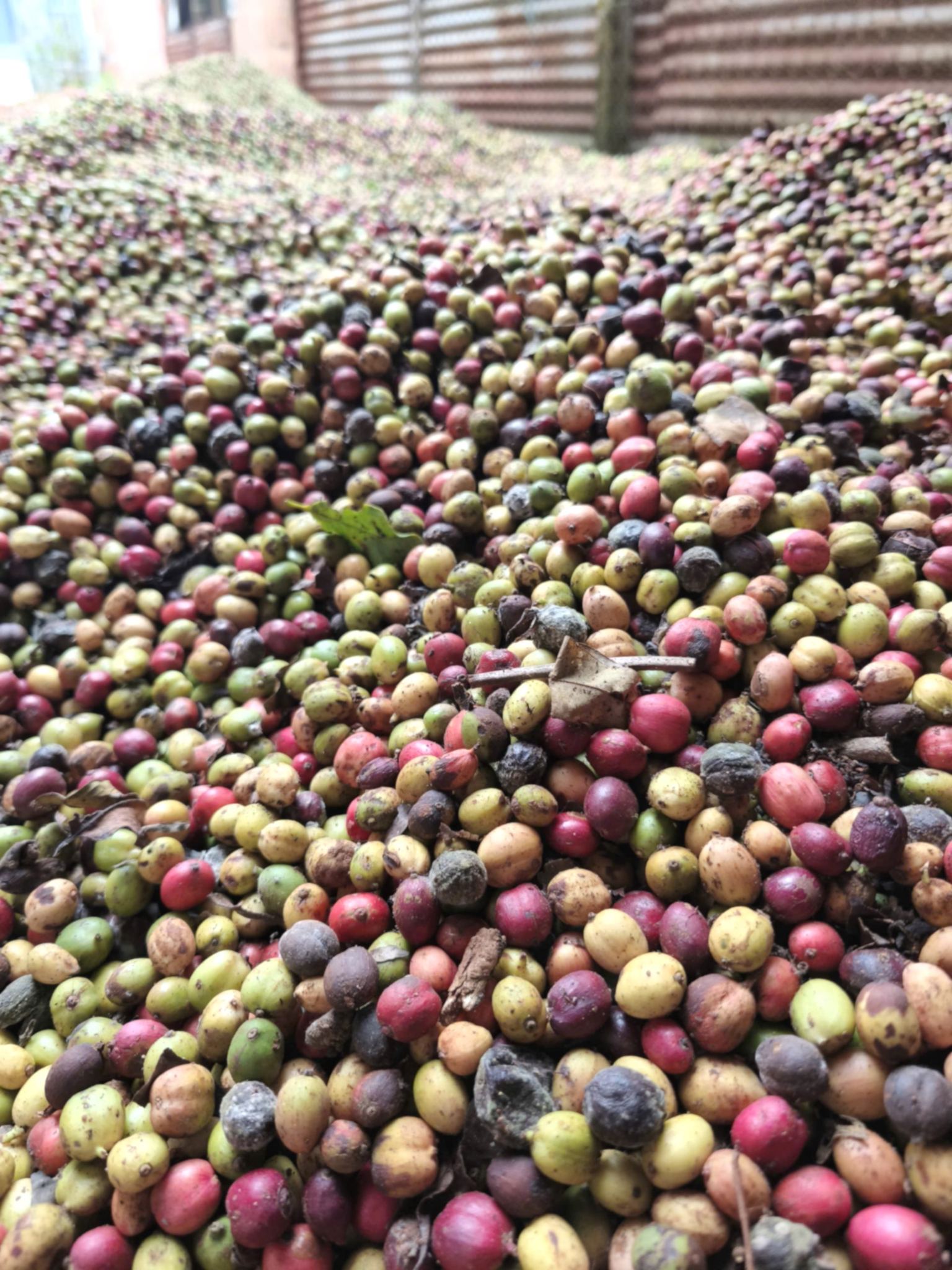
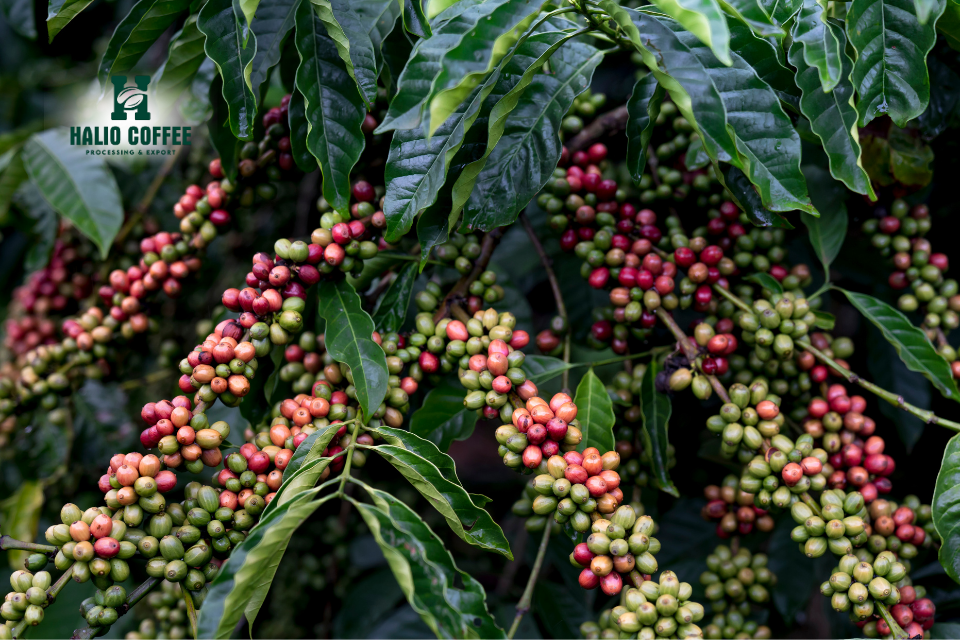
Through improved agronomy (shade management and soil nutrition), producers in Lam Dong have refined the Catimor profile. When harvested at peak ripeness (purple cherry), modern Vietnamese Catimor exhibits notes of brown sugar, hazelnut, and citrus. It serves as an excellent, cost-effective base for espresso blends, providing crema and body that pure Typica often lacks.
The Genetic Diversification
Progressive farms are moving beyond monoculture.
- Typica & Bourbon: On the high slopes of Cau Dat, ancient rootstocks are being rehabilitated. These Vietnam Arabica green beans offer the classic floral and lemon-zest profile of high-end specialty coffee.
- THA1 & TN1: Local hybrids developed by the Western Highlands Agriculture and Forestry Science Institute (WASI) are gaining traction, offering disease resistance with a cup profile closer to Ethiopian heirlooms.
4. Processing Innovations: Elevating the Cup
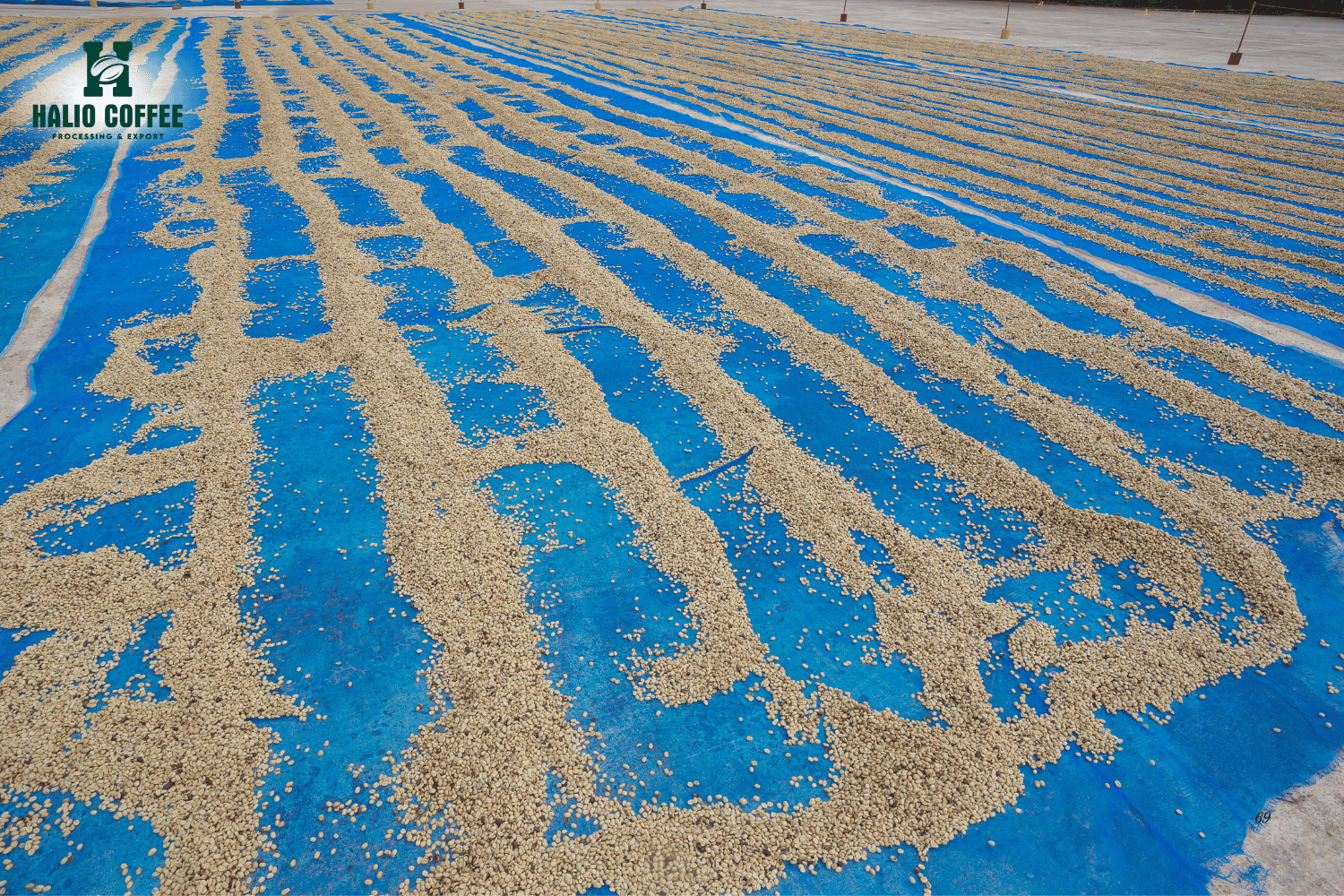
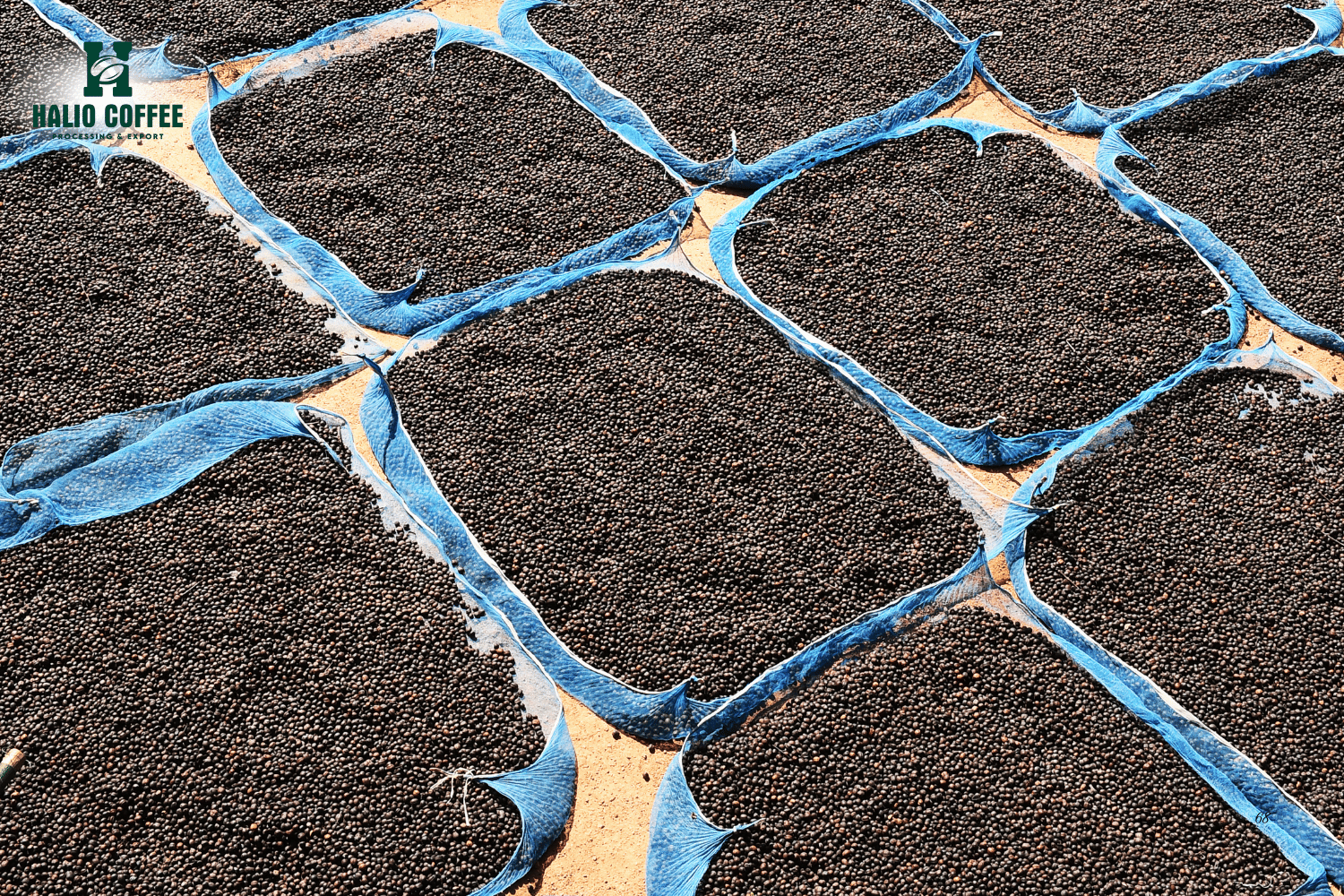
In 2026, the value of Vietnam Arabica green beans is defined in the mill. The humid climate of Lam Dong has forced producers to innovate, moving away from simple patio drying to controlled environments.
Fully Washed (The Standard)
To compete with Central American HG/SHG, the standard protocol is now mechanical demucilage followed by a 12-24 hour fermentation.
- The Result: A clean, crisp cup. This process highlights the acidity and removes any “earthy” defect.
The Greenhouse Revolution
Unlike the sun-drenched plains of Dak Lak, Lam Dong is often misty.
- Technology: Top-tier producers use polyethylene tunnel dryers (greenhouses).
- Impact: This protects the parchment from rain and allows for a slow, even drying phase (15-20 days). This is critical for stabilizing water activity (aw) below 0.60, ensuring the beans do not fade during shipping.
Anaerobic Fermentation
For the ultra-premium market, producers are utilizing sealed stainless steel tanks. By fermenting Vietnam Arabica green beans in an oxygen-free environment, they are unlocking exotic notes of wine, strawberry, and tropical fruit, pushing cup scores above 85 points.
5. Technical Specifications: A Buyer’s Checklist
When issuing a Purchase Order (PO) for Vietnam Arabica green beans, specificity is your only defense against quality fade. Do not rely on generic grade descriptions.
Physical Grading (The TCVN Standard and Beyond)
- Grade 1: Max 1.5% defects.
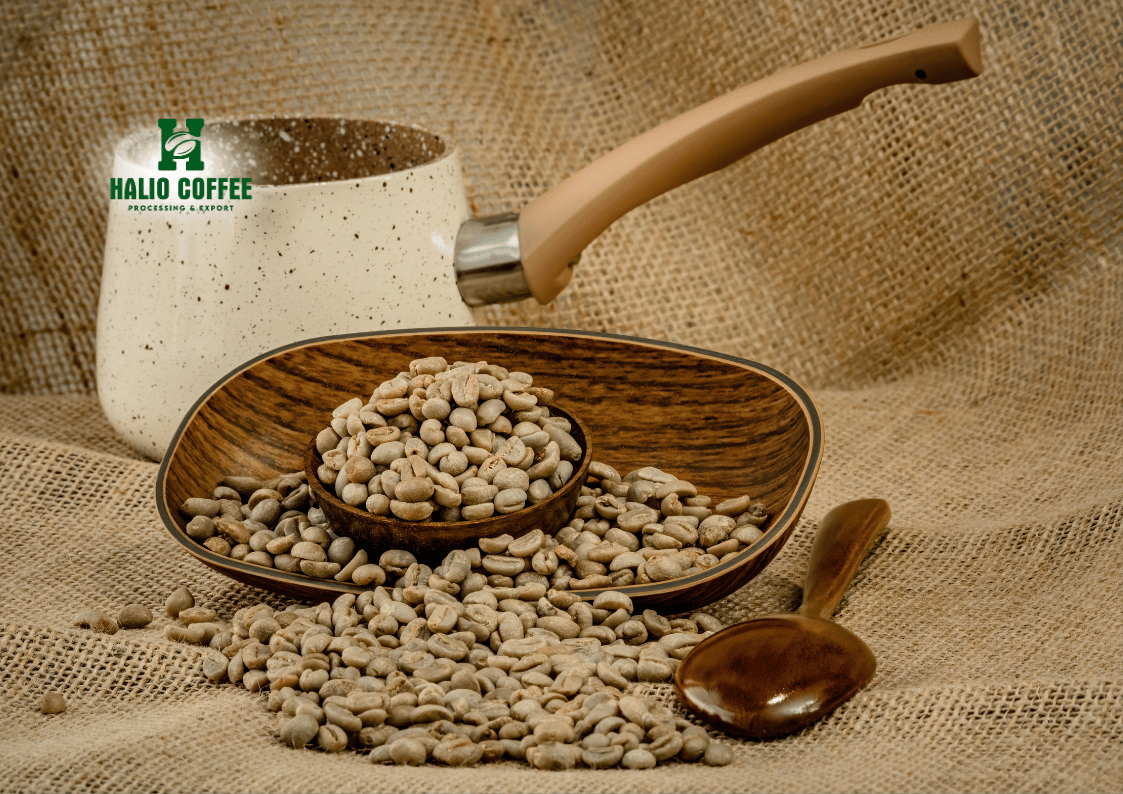
- Screen Size: While Robusta standard is S18, for Arabica, Screen 16/18 is the sweet spot. S16 often has higher density than the very large beans.
- The Cut Test: This is non-negotiable. Slice 50 beans. Look for “Quakers” (immature beans). Catimor trees can overproduce; if farmers strip-pick green cherries, they will appear as quakers in the roast (tasting of peanut skins). Strict rejection of quakers is mandatory.
Moisture and Water Activity
- Moisture: 11.0% – 12.0%. Note the lower ceiling compared to Robusta (12.5%). Arabica is more sensitive.
- Water Activity: Must be < 0.60. If aw is high, the acidity will flatten out within 3 months of arrival.
Traceability (EUDR)
- The Mandate: As of 2026, you cannot import into the EU without polygon data proving zero deforestation.
- The Clause: Ensure your contract for Vietnam Arabica green beans includes the “EUDR Data Pack” as a document required for payment.
6. Sourcing Strategy: Vetting Your Partners
The ecosystem of suppliers ranges from sophisticated estates to commercial aggregators.
The Estate vs. The Aggregator
- The Estate/Co-op: Entities that own the farm or manage a tight network of smallholders in a specific commune (e.g., Cau Dat).
- Pros: Full traceability, consistent processing, “Single Origin” credibility.
- Best For: Specialty programs, single-origin retail.
- The Commercial Aggregator: Buys parchment from anywhere in Lam Dong.
- Pros: Volume, lower price.
- Cons: High risk of “Region Blending” (mixing low-grown Di Linh beans with high-grown Cau Dat beans).
- Best For: Commercial blends where price is the primary driver.
The “Process Transparency” Audit
Be wary of “Infused Coffee.” Some producers, in an attempt to mimic high-scoring naturals, soak green beans in fruit juice or essential oils.
- Detection: The green beans smell like candy or artificial fruit. The flavor in the cup is aggressive and chemical.
- Strategy: Require a signed affidavit of “No Additives” for all Vietnam Arabica green beans.
7. Logistics: Preserving the High Notes
Arabica is fragile. The logistics of moving it from the cool highlands to the hot port must be managed carefully.
Packaging
- GrainPro/Ecotact: Mandatory. Jute bags are insufficient for preserving the volatile aromatics of Arabica.
- Vacuum Packing: For micro-lots scoring 86+, consider 15kg or 30kg vacuum boxes.
Transport
- The Cold Chain: The temperature differential between Dalat (18°C) and Ho Chi Minh City (35°C) is extreme. For premium lots, consider refrigerated trucking to the port to prevent thermal shock and condensation (“ship’s sweat”) inside the container.
8. Risk Management: Red Flags in 2026
Be vigilant. The current market volatility attracts opportunistic behavior.
- 🚩 The “Too Cheap” Offer: If Vietnam Arabica green beans are offered at a massive discount to the “C” market, suspect “Past Crop.” Old Arabica loses its acidity and tastes woody. Use UV light to detect fluorescence (sign of aging).
- 🚩 The “High Altitude” Lie: A supplier claims the coffee is from 1,600m but cannot provide GPS coordinates. They are likely selling you mid-altitude coffee (1,000m) which lacks density.
- 🚩 The Moisture Waiver: Never accept moisture above 12.0% for Arabica. It is a guaranteed recipe for mold (Ochratoxin A) and flavor fade.
Summary: The Strategic Pivot
Sourcing Vietnam Arabica green beans in 2026 is a move that combines quality discovery with strategic risk management. It allows the professional buyer to hedge against the “structural vulnerability” of the Latin American market while securing a cup profile that is clean, consistent, and increasingly sophisticated.
The key to success lies in treating Vietnam not just as a Robusta mine, but as a diverse landscape of terroir. By targeting the high-elevation districts of Lam Dong, partnering with manufacturers who master “Fully Washed” and greenhouse drying, and enforcing strict EUDR compliance, you can build a coffee program that is resilient, profitable, and delicious.
You have now secured the physical asset that balances your portfolio. The final step is to optimize the financial structure of these contracts to protect your margins.
- Identifying the Critical Red Flags When Choosing a Coffee Supplier in Vietnam
- Brazil’s Arabica Coffee Production Forecast to Drop Sharply
- Coffee Prices Today, Nov 14: Decline Slows as Market Awaits New US Tariff Signals
- Professional Guide to Raw Green Coffee Beans Supply in Vietnam
- Sun-Dried Robusta Coffee Beans: An In-Depth Industry Guide for Producers, Roasters, and Distributors