Identifying the Best Unroasted Coffee Beans for Profit and Performance
Feb
In the alchemy of the global coffee trade, the definition of “quality” is often subjective, but the definition of “value” is mathematical. For the professional roaster and procurement director, the search for the best unroasted coffee beans is no longer a simple quest for the highest cupping score. In the volatile landscape of early 2026, the “best” bean is the one that sits at the perfect intersection of sensory profile, physical consistency, regulatory compliance (EUDR), and financial viability.
As we navigate the opening weeks of 2026, the market is defined by a “Divergence Event” of historical magnitude. On one side, the Arabica market is fraught with structural vulnerability. Prices on the New York ICE exchange are hovering near 372.35 US cents/lb, driven by supply deficits in Colombia—where production dropped 29.5% in Q4 2025—and drought fears in Brazil. On the other side, Vietnam is flooding the market with liquidity, offering an 18% price correction on domestic stocks.
This guide is your executive manual for navigating this complex terrain. We will move beyond the romanticism of origin stories to dissect the agronomic and commercial realities of the trade. We will analyze why the best unroasted coffee beans in 2026 might not be the most expensive ones, but rather the “Wet Polished” lots from the Central Highlands that offer margin protection. We will provide a rigorous technical framework for vetting these beans to ensure your roasting operations remain resilient, compliant, and profitable.
Market Analysis: Why the Definition of “Best Unroasted Coffee Beans” Has Shifted
To source effectively in 2026, one must first deconstruct the market environment. The “best” bean for your business is the one that solves your most pressing supply chain problem. Currently, that problem is the scarcity of affordable Milds and the inflation of the Arabica sector.
The Liquidity Anchor vs. The Scarcity Trap
The primary metric for identifying the best unroasted coffee beans this quarter is “Availability.”
- The Arabica Crisis: With Colombia’s production collapsing by 4.1% annually and geopolitical tensions rising in South America, sourcing consistent high-grade Arabica has become a high-risk gamble. The “best” bean is useless if it is stuck in a port in Santos or Buenaventura.
- The Robusta Opportunity: Conversely, Vietnam has exported 2.63 million bags in the first two months of the crop year, a 51.9% increase. For high-volume roasters, the best unroasted coffee beans are currently the high-grade Vietnamese lots that offer physical certainty.
The Price-to-Quality Ratio
- The Data: Domestic prices in Vietnam have corrected to 97,500 – 98,300 VND/kg.
- The Strategy: This 18% discount creates a massive arbitrage opportunity. The “best” purchasing strategy involves securing high-end Vietnamese beans (both Arabica and Polished Robusta) to blend down the weighted average cost of goods (WACOG) of your expensive Latin American inventory.
The “Wet Polished” Revolution: A Contender for the Best Unroasted Coffee Beans
In 2026, the most strategic asset class for commercial roasters is “Wet Polished” coffee. As buyers scramble to replace low-grown Central American Arabicas, this processing method has elevated Vietnamese Robusta into the category of the best unroasted coffee beans for espresso blending.
The Technical Process
The “Wet Polished” method is not merely a cleaning step; it is a flavor modification process.
- Friction and Water: High-pressure water friction is used to scour the bean surface.
- Removal of Defects: This process physically removes the silverskin (chaff) and the outer layers of the bean where “earthy,” “woody,” and “rough” flavors reside.
- The Result: A bean that roasts with the visual uniformity of a Washed Arabica and cups with a neutral, heavy-bodied profile.
Why It Qualifies as the “Best”
For the industrial roaster, the best unroasted coffee beans are those that offer “blend neutrality.” Wet Polished beans act as a canvas. They provide the caffeine kick (2.2%+) and the crema structure of Robusta, but without the negative phenol notes. This allows roasters to increase the Robusta percentage in a blend from 20% to 50% without consumer pushback, effectively saving millions in procurement costs.
Technical Audit: Defining Quality Beyond the Label
When you search for the best unroasted coffee beans, you are essentially buying a technical specification. In the B2B context, “Grade 1” is a starting point, not a guarantee. You must enforce a stricter audit.
1. Moisture Content and Water Activity (aw)
The most overlooked metric in determining the best unroasted coffee beans is thermodynamic stability.
- The Standard: Max 12.5% Moisture.
- The Risk: With logistics surging, containers face congestion. Beans loaded at 13% moisture will generate their own micro-climate in the container, leading to “ship’s sweat” and mold.
- Water Activity: Demand aw < 0.60. This ensures that the metabolic processes within the seed are halted, preserving the enzymatic flavor potential for the roast.
2. Screen Size Consistency (The Thermodynamics of Roasting)
Why do we obsess over Screen 18?
- The Physics: In a drum roaster, heat transfer occurs via conduction (bean-to-drum) and convection (air-to-bean). The best unroasted coffee beans are those with uniform geometry.
- The Spec: Demand Min 90% retention on Screen 18 (7.1mm).
- The Result: This uniformity allows you to apply aggressive heat early in the roast (the “soak”) without scorching the smaller beans, leading to better development of sugar browning reactions (Maillard).
3. The “Clean Cup” Protocol (Defect Count)
- Standard G1: Allows 2% Black/Broken.
- Premium Spec: The best unroasted coffee beans should be sourced on a 0.1% defect basis. This requires the supplier to use Optical Color Sorters (Buhler/Sortex) rather than just mechanical gravity tables. One black bean in a 60kg batch can introduce a phenol taste that ruins the entire roast.
Regional Terroir: Where to Find the Best Unroasted Coffee Beans in 2026
Geography dictates potential. In Vietnam, the “best” beans are segregated by altitude and species.
1. Lam Dong: The Arabica Sanctuary
If your definition of the best unroasted coffee beans involves acidity and complexity, you must look to the Cau Dat and Lac Duong districts of Lam Dong province.
- Elevation: 1,450 – 1,650 MASL.
- The Profile: Here, Catimor and Typica varieties develop density similar to Costa Rican SHG. With the current “War Risk Premium” affecting South American supply, Lam Dong Arabica is the most logical strategic substitute.
2. Dak Lak: The Robusta Powerhouse
For body, crema, and consistency, Buôn Ma Thuột in Dak Lak is the epicenter.
- Current Conditions: The weather is dry and sunny, which is ideal for drying.
- The Advantage: This dry harvest cycle means the best unroasted coffee beans from Dak Lak this year will have superior shelf life compared to the 2024 crop, which suffered from rain damage.
The Compliance Factor: EUDR and the “Best” Bean
In 2026, a bean cannot be considered the “best” if it is illegal. The EU Deforestation Regulation (EUDR) has redefined quality to include traceability.
The “Data-Attached” Asset
- The Mandate: You cannot import into Europe without GPS polygons proving zero deforestation.
- The Reality: The best unroasted coffee beans are now those that come with a “Data Pack.”
- The Sourcing Rule: When evaluating offers, prioritize suppliers who can demonstrate real-time integration with digital farm registries. A bean with a 90-point cupping score is worthless to a European buyer if it lacks the coordinates.
Vetting Suppliers: The Gatekeepers of Quality
You cannot access the best unroasted coffee beans through a middleman who has never visited a farm. The distinction between “Manufacturer” and “Trader” is critical.
The Vertically Integrated Manufacturer
- The Asset: Owns the wet mill, the dry mill, and the color sorters.
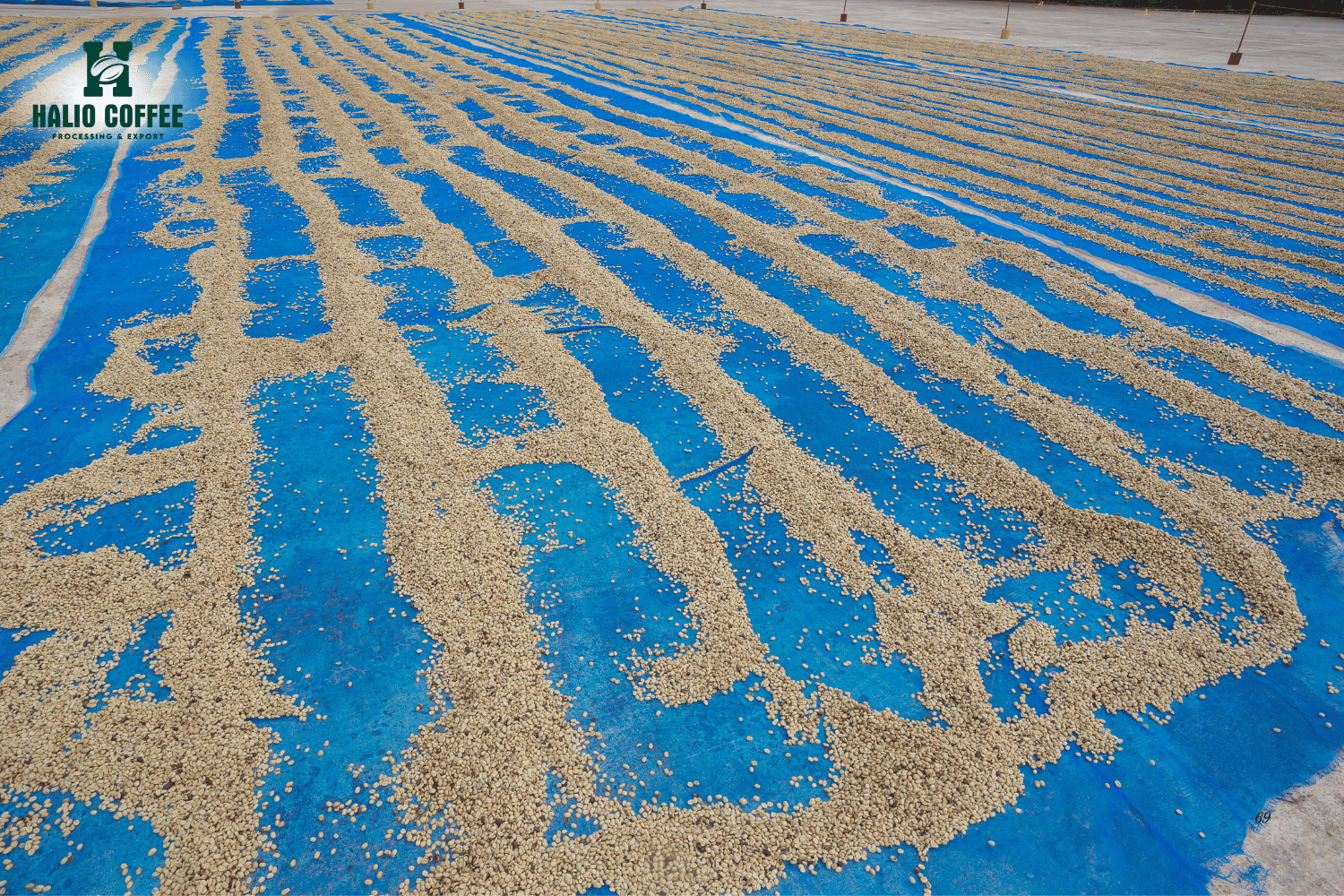
- The Control: They can “manufacture” the best unroasted coffee beans by adjusting the sorter sensitivity to reject 99.9% of defects. They control the drying patio, ensuring the moisture curve is gradual.
- The Partner: Companies like Halio Coffee exemplify this model, offering the traceability and physical control necessary for premium contracts.
The Commercial Trader
- The Risk: Buys “FAQ” (Fair Average Quality) from collectors and blends it.
- The Danger: In a year with an 18% price drop, traders are incentivized to blend in old, woody stock to recover margins. This is the antithesis of the best unroasted coffee beans.
Logistics and Preservation: Protecting the Asset
Once you have identified the best unroasted coffee beans, you must protect them. The journey from the tropics to the roastery is the most dangerous phase of the bean’s life.
GrainPro and Ecotact
- The Standard: Jute bags are breathable and allow moisture ingress.
- The Requirement: The best unroasted coffee beans must be shipped in hermetic liners (GrainPro or Ecotact). This creates a modified atmosphere that prevents oxidation and stabilizes water activity.
Bulk Container Liners
- The Volume Solution: For larger contracts, use 21-ton bulk liners.
- The Benefit: Thermal inertia. A bulk mass of 21 tons resists temperature fluctuations better than individual bags, reducing the risk of thermal shock and condensation.
Checklist: Red Flags When Buying Unroasted Coffee Beans
Even when searching for the best unroasted coffee beans, buyers must be vigilant against scams and malpractice.
- 🚩 The “Past Crop” Discount: If a supplier offers beans at a massive discount, inspect them under UV Light. Old beans fluoresce; fresh beans do not. The “best” price is often a trap for dead inventory.
- 🚩 The “Negative Differential”: If a supplier offers a price below the terminal replacement cost, they are likely selling high-moisture coffee (selling water).
- 🚩 The “Region Washing”: Selling low-altitude beans as “Highland” stock. Perform a “Cut Test.” High-grown beans have a closed, crooked center cut. Low-grown beans have an open, straight center cut.
Summary: The Strategic Selection
The search for the best unroasted coffee beans in Q1 2026 is an exercise in strategic arbitrage. It requires you to look past the marketing of “origin romance” and focus on the hard metrics of value, consistency, and compliance.
By leveraging the 18% price correction in Vietnam to secure high-grade, Wet Polished Robusta, and by rigorously auditing your Arabica sources for EUDR compliance, you can build a inventory position that is defensible against the volatility of the global market. The best unroasted coffee beans for your business are the ones that keep your margins healthy while delivering a clean, consistent cup to your customer.
You have now defined the asset. The final step is to understand the financial instruments available to lock in these prices before the market turns.
- The Definitive Guide to How to Buy Green Coffee Beans Direct from the Source
- The Evolving Landscape of Vietnamese Arabica Green Coffee Beans: A Comprehensive Guide for Global Buyers
- Coffee Prices Today, Nov 12: Arabica and Robusta Continue Mixed Performance; What Are the Causes?
- What Makes a “Specialty Coffee Sourcing Agent” Different?
- Coffee Prices Today: Sharp Declines Amid Supply Optimism and Potential U.S. Tariff Exemptions