Mastering the Procurement of Raw Coffee Beans for Roasting
Jan
In the high-stakes world of global coffee production, the roast profile is often celebrated as the artistic peak of the industry. However, for the professional roaster—whether operating a specialty boutique or an industrial-scale facility—the true foundation of success is laid months before the drum ever begins to turn. In the opening weeks of 2026, the global coffee landscape is defined by extreme divergence, structural scarcity in the Americas, and record liquidity in Asia. Navigating this terrain requires an expert-level understanding of how to select and secure raw coffee beans for roasting that satisfy both the sensory requirements of the consumer and the fiscal requirements of the balance sheet.
As of January 9, 2026, the New York Arabica market remains fraught with “structural vulnerability,” with ICE futures hovering near 372.35 US cents/lb. This historic pricing is driven by an unprecedented 29.5% production drop in Colombia during Q4 2025 and ongoing drought fears in Brazil’s Cerrado region. Conversely, the Vietnamese Robusta market has entered a period of healthy liquidity, with domestic prices correcting by approximately 18% to trade between 97,500 and 98,300 VND/kg.
In this environment, the procurement of raw coffee beans for roasting has evolved into a discipline of risk management and thermodynamic analysis. This guide provides a comprehensive framework for the professional roaster to vet origin partners, analyze bean density, and ensure compliance with the now-binding EU Deforestation Regulation (EUDR).
The Technical Anatomy of Premium Raw Coffee Beans for Roasting
To achieve a “Clean Cup” and consistent development during the roast, one must first deconstruct the physical and chemical state of the green coffee. Not all raw materials are created equal; the cellular structure of the bean determines its thermal inertia and flavor potential.
1. Thermodynamic Stability: Density and Cell Structure
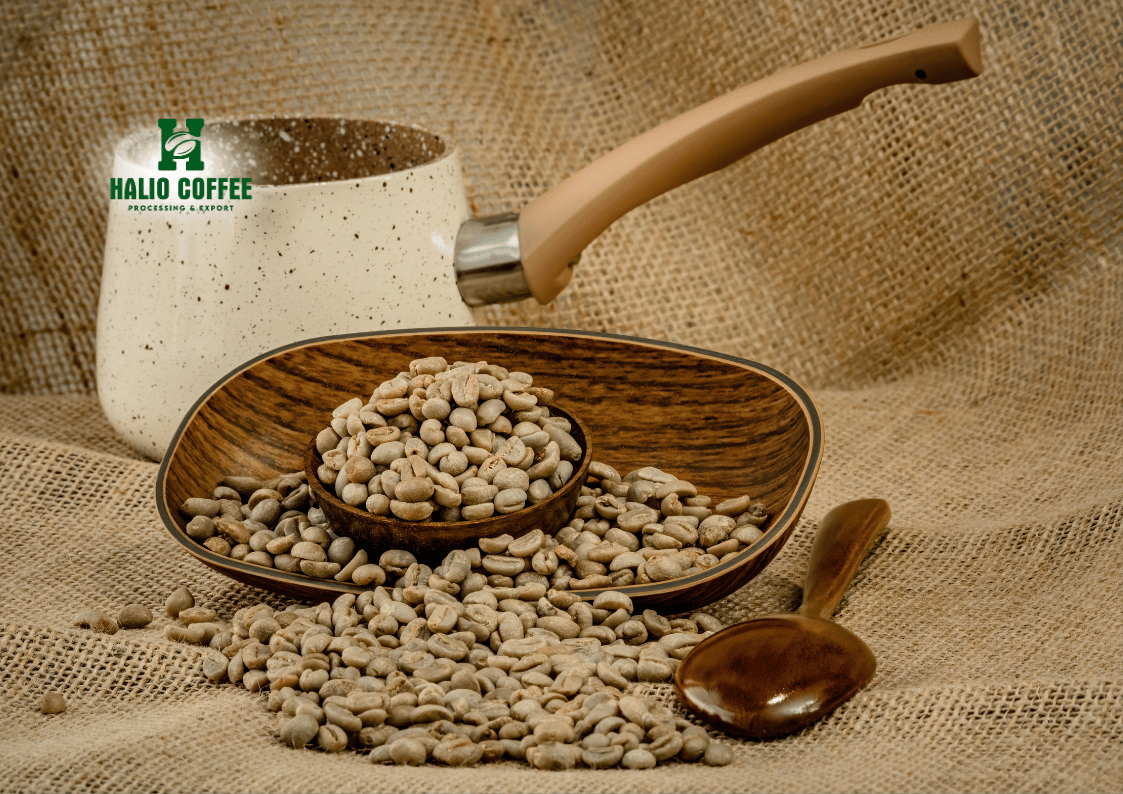
The density of raw coffee beans for roasting is perhaps the most critical variable for a head roaster. High-density beans (grown at altitudes above 1,400 MASL) possess a tighter cellular matrix. This allows the bean to withstand higher charge temperatures without scorching, facilitating a more efficient Maillard reaction.
- Hard Bean (HB) vs. Strictly Hard Bean (SHB): Professional procurement teams must verify the screen retention and density metrics. A high-density bean has more “potential energy” stored in its sugars and lipids, leading to more complex acidity post-roast.
- The Sieve Analysis: For bulk operations, roasters should demand Screen 18 (7.1mm) with a minimum 90% retention rate. Inconsistent screen sizes lead to uneven heat distribution, where smaller beans reach the “first crack” and potentially char while larger beans remain underdeveloped at the core.
2. Moisture Content and Water Activity (aw)
In early 2026, the industry has shifted its focus from simple moisture percentages to the more nuanced metric of Water Activity (aw).
- Moisture Content: The standard for raw coffee beans for roasting is 11.0% to 12.5%. Beans above 13% risk mold development (Ochratoxin A) and rapid “aging” (the degradation of lipids into a woody taste).
- Water Activity (aw): This measures the energy status of water in the bean. For long-term stability, aw should be kept below 0.60. If aw>0.62, the bean remains biologically active, leading to enzymatic browning and the loss of the “fresh” enzymatic notes before the coffee ever reaches the port.
The Processing Revolution: Wet Polished Robusta as an Arabica Hedge
With Arabica prices holding at the 372.35 cents/lb level, roasters are desperately seeking high-quality substitutes to maintain their price points at the retail level. This has catalyzed a revolution in the processing of raw coffee beans for roasting in Southeast Asia.
The Rise of “Wet Polished” Grades
Wet polishing is no longer a niche industrial process; it is a strategic tool for flavor modification.
- The Process: High-pressure water friction is used to remove the silverskin and any residual mucilage from the Robusta bean.
- The Result: This process strips away the “earthy,” “woody,” and “rubber” notes traditionally associated with Robusta. It creates a neutral, high-body cup profile that can be blended into Arabica-based products at a ratio of 30-50% without consumer detection.
- Thermal Benefit: Polished beans possess a smoother surface area, allowing for more uniform convection during the roast.
Greenhouse and Controlled Drying
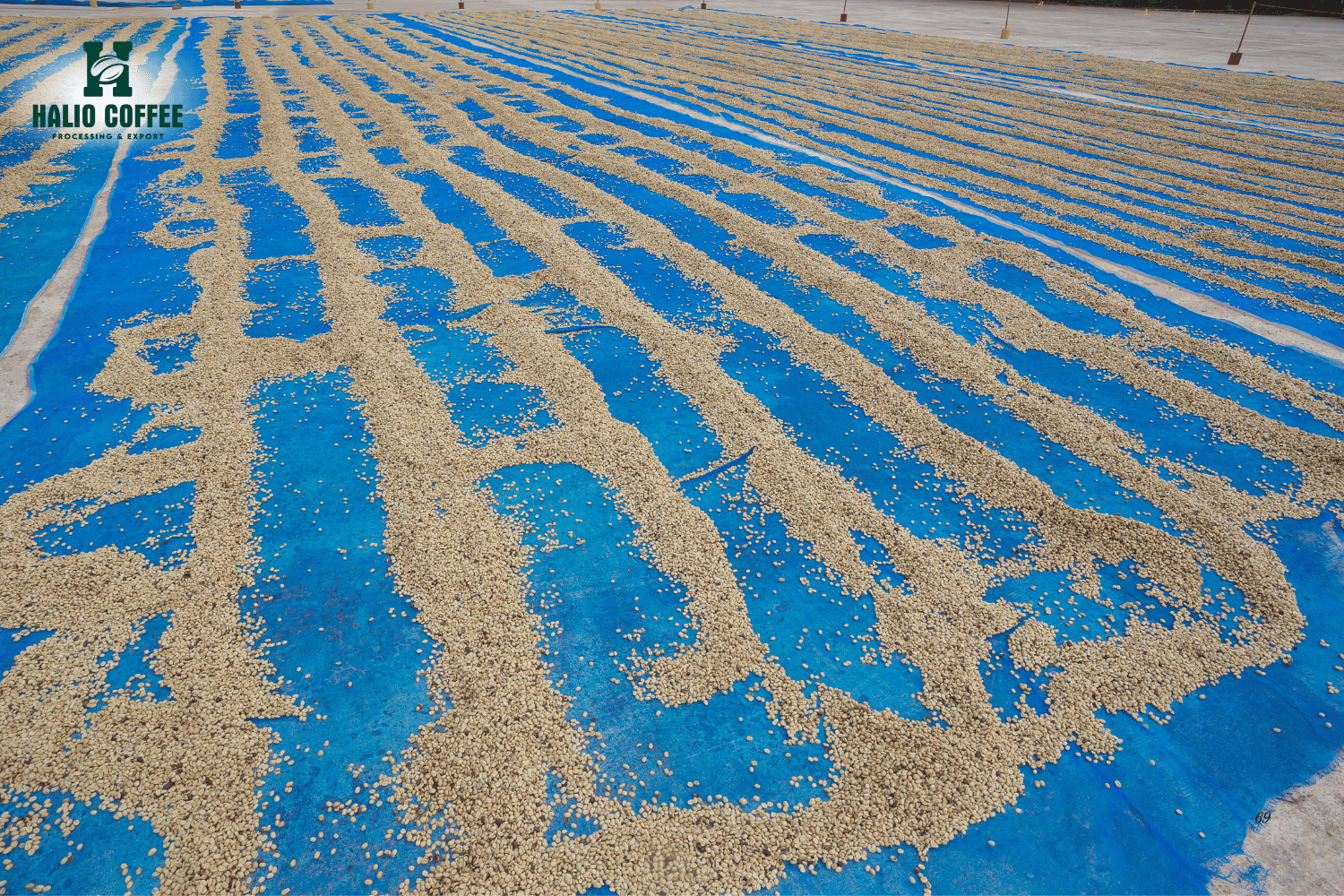
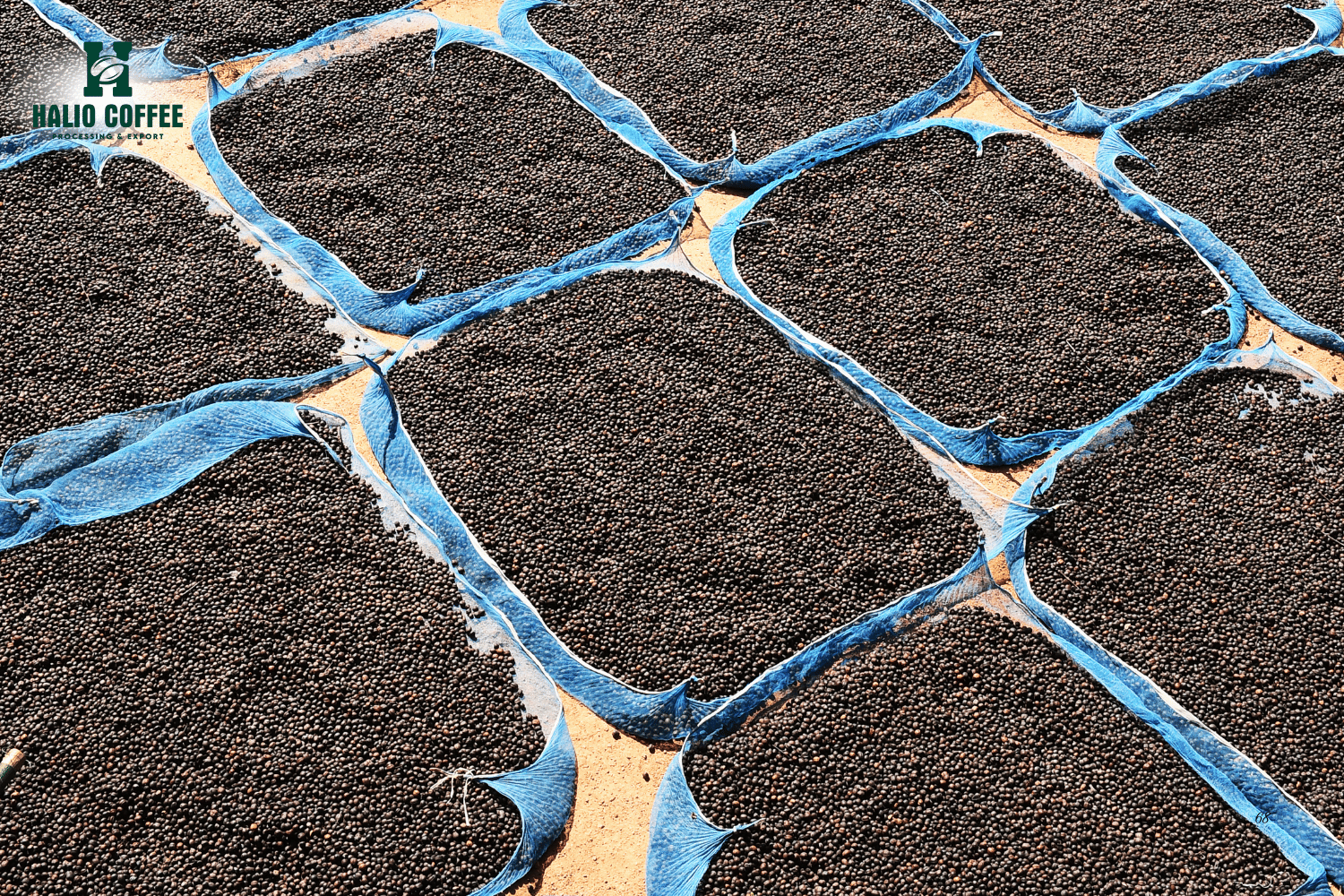
As climate change introduces unpredictable rainfall during the harvest (as seen in Colombia’s recent 29.5% decline), leading exporters are moving away from traditional patio drying. Professional roasters should prioritize raw coffee beans for roasting that have been dried in polyethylene tunnel dryers (greenhouses). This ensures a linear moisture-loss curve, which prevents “moisture bounce”—a condition where the bean’s surface dries too fast while the core remains wet, leading to internal rot and sour defects.
Risk Mitigation Strategies: Evaluating Raw Coffee Beans for Roasting
Procuring volume in a volatile market requires a rigorous due diligence framework. The 2026 market is rife with opportunistic behavior, including the dumping of “Past Crop” inventory during price corrections.
The “Past Crop” UV Test
With new crop Vietnamese Robusta prices correcting by 18%, there is a significant financial incentive for traders to mix in old, faded beans from the 2024 harvest.
- The Detection: Use a UV (Ultraviolet) light on the pre-shipment sample (PSS). Fresh raw coffee beans for roasting will appear dark and absorb the light. Old, degraded beans will fluoresce, showing bright spots or a whitish-blue glow. This indicates the breakdown of cell walls and the oxidation of lipids—coffee that will taste like straw and cardboard once roasted.
The EUDR Compliance Mandate
If you are importing into the European Union or supplying to global retailers, the “Data Pack” is now as important as the bean.
- The Requirement: Every container of raw coffee beans for roasting must be linked to specific GPS polygons of the production plots.
- The Audit: Ask your exporter for a sample of their digital farm registry. If they cannot produce the geolocation data for the specific farm cluster contributing to the lot, that coffee is a “stranded asset” that cannot be legally sold in Europe.
Supply Chain Realities: The Case for Vietnam in 2026
While Latin America remains the home of premium Arabica, Vietnam has become the global anchor for volume. The first two months of the 2025-2026 crop year saw Vietnam export 2.63 million bags, a massive 51.9% increase year-on-year.
The Logistics Advantage
Unlike the congestion seen in previous years, the current logistics flow from Ho Chi Minh City to Rotterdam and Long Beach is at peak efficiency. For roasters, this means “Fresh Arrivals.”
- Current Inventory: The aggressive selling by farmers before the Lunar New Year (Tet) means that exporters are currently flush with cash and stock.
- Buying Strategy: For buyers seeking raw coffee beans for roasting, now is the tactical window to lock in “Outright” pricing. With the US Dollar (DXY) strengthening to a 4-week high, your purchasing power in Vietnam is maximized before the post-harvest “Hoarding Season” begins in late Q1.
Professional Quality Control Checklist
Before finalizing a contract for raw coffee beans for roasting, ensure your lab completes the following “Expert Vetting” protocol:
| Parameter | Specification | Expert Note |
| Moisture | 11.5% – 12.5% | Use a calibrated Sinar or Dickey-John meter. |
| Water Activity (aw) | ≤ 0.60 | Prevents enzymatic “flavor fade” during transit. |
| Screen Size | 90% > S18 | Ensures thermodynamic uniformity in the drum. |
| Black/Broken | ≤ 0.1% | Requires Optical Color Sorters (Buhler/Sortex). |
| UV Fluorescence | Zero | Detects “Past Crop” mixing and mold precursors. |
| Cut Test | Zero Discoloration | Slicing 50 beans to check for internal fermentation. |
Expert Red Flags: Signs of Malpractice
In a market where prices have corrected by 18%, beware of the following “too good to be true” offers:
- 🚩 The “Negative Differential” Trap: If an exporter offers a price significantly below the replacement cost (London Terminal + Differential), they are likely planning to ship high-moisture coffee to “sell water,” or they are planning a default if the market rallies.
- 🚩 The “Mystery Origin” Blend: Be wary of lots labeled as “Asian Blend” or “Regional Mix.” These are often used to hide beans from non-EUDR compliant farms or to blend in lower-grade screen sizes.
- 🚩 The Lack of Pre-Shipment Sample (PSS): Never commit to a multi-container contract for raw coffee beans for roasting without a PSS drawn from the actual lot intended for shipment.
Strategic Synthesis: Navigating the Year Ahead
The procurement of raw coffee beans for roasting in 2026 is an exercise in balancing sensory excellence with logistical agility. The “Divergence” between Arabica and Robusta markets has created a unique opportunity for roasters to leverage high-grade Vietnamese liquidity as a hedge against South American scarcity. By focusing on technical parameters like Water Activity (aw), demanding “Wet Polished” quality, and enforcing strict EUDR compliance, a roastery can maintain its margins even in a hyper-inflationary environment.
The window for the 18% price correction in Vietnam is finite. As farmers settle their pre-holiday debts and the structural shortage in Colombia continues to tighten global stocks, the baseline for coffee prices is expected to move higher in Q2 2026. The time to lock in your raw material foundation is now.
- Unroasted Robusta Coffee Beans
- The Collective Power: A 2026 Strategic Analysis of Coffee Cooperatives
- Coffee Prices Today Jan 9: Slight Decline Amidst Strengthening USD
- Halio Coffee – Trusted Vietnam Fresh Coffee Bean Supplier
- The Commercial Playbook: Mastering the Purchase of Wholesale Arabica Roasted Coffee Beans from Vietnam