Professional Guide to Raw Green Coffee Beans Supply in Vietnam
Dec
In our previous strategic analysis of organic unroasted coffee beans, we explored the pinnacle of agricultural purity. We deconstructed the rigorous certification regimes (USDA, EU) that define the organic market and the premiums required to support that ecosystem. But the vast majority of the global coffee trade does not carry an organic seal. It operates on a foundation of scale, consistency, and commercial value.
This brings us to the bedrock of the industry: raw green coffee beans.
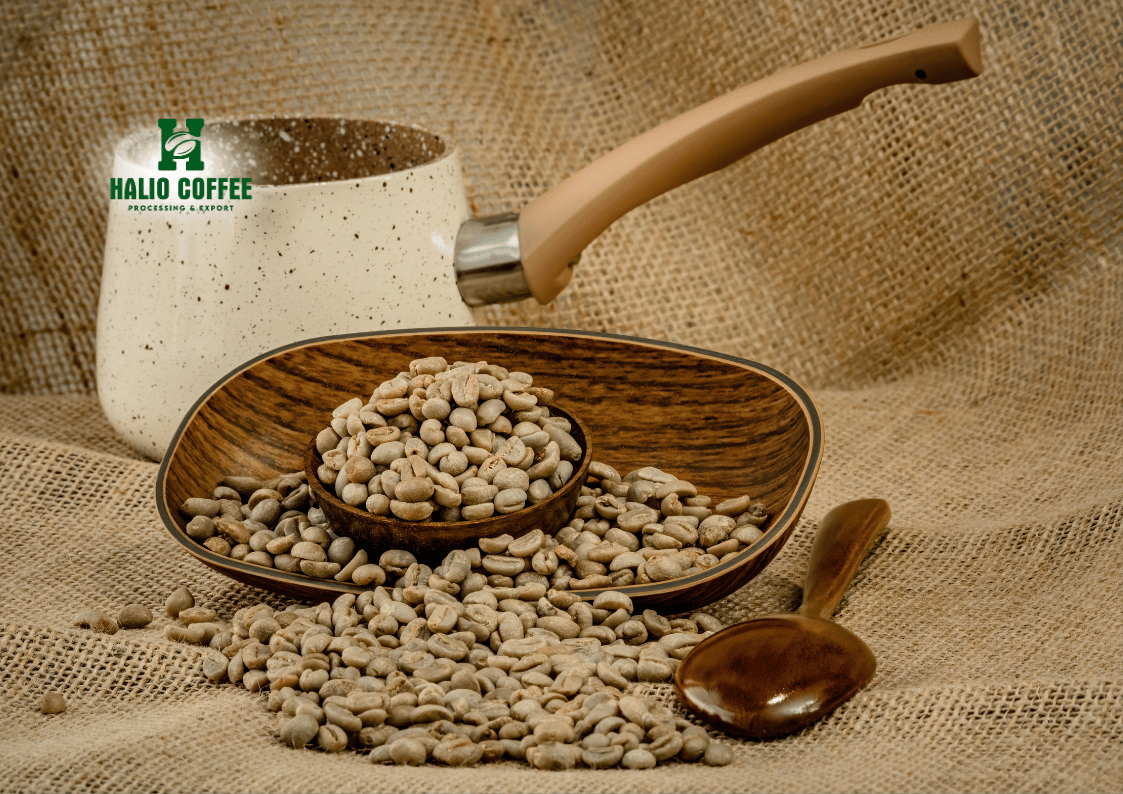
This term refers to the foundational commodity of the trade—the unroasted seed of the coffee fruit, processed, dried, and graded for export, but not necessarily bound by the strictures of organic certification. For the high-volume roaster, the instant coffee manufacturer, or the commercial blend specialist, mastering the sourcing of conventional raw green coffee beans is the key to profitability.
This guide is your expert manual for navigating this high-volume landscape. We will dissect the critical differences between “commercial” and “specialty” raw beans, analyze the processing methods that define value at scale (like “Wet Polished”), and provide a rigorous framework for quality assurance that ensures consistency across hundreds of containers. This is about sourcing the engine room of your business with precision and intelligence.
Defining the Asset: What Are Raw Green Coffee Beans in a Commercial Context?
To source effectively, you must strip away the romance and look at the specifications. In the B2B context, raw green coffee beans are an industrial ingredient defined by three primary variables: Species, Grade, and Process.
1. The Species Split: Robusta vs. Arabica
While specialty coffee obsesses over Arabica, the commercial world runs on Robusta.
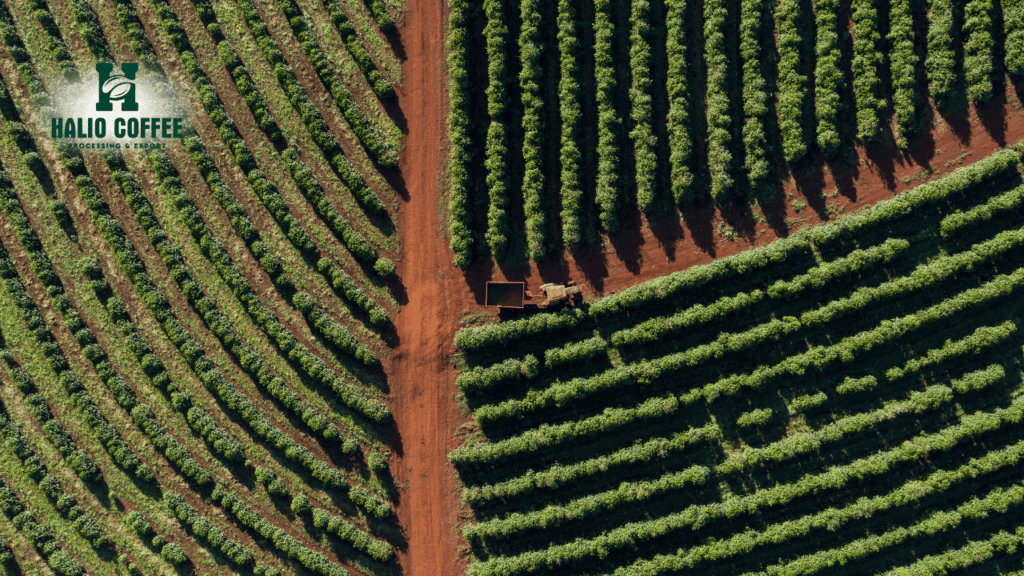
- Robusta (Vietnam’s Powerhouse): Grown in the Central Highlands (Dak Lak, Gia Lai), Robusta is the caffeine-heavy, full-bodied anchor of the industry.
- Value Proposition: High yield, disease resistance, and a bold profile perfect for soluble coffee and espresso blends.
- Key Product:
Robusta Clean (Grade 1). This is the industry standard for a defect-free, consistent commercial bean.
- Arabica (The Flavor Driver): Grown in the highlands (Lam Dong, Son La).
- Value Proposition: Acidity, aromatics, and complexity. Used to add “top notes” to a blend.
2. The Grading Hierarchy (TCVN / ISO)
As we’ve discussed, raw green coffee beans are sold by grade.
- Grade 1 (Special Export): The gold standard. Max 2% Black/Broken beans. This is what a professional roaster buys to ensure a clean cup.
- Grade 2 (Standard Export): Max 5% Black/Broken. Often used for instant coffee where visual defects matter less.
3. The Processing Variable
This is where value is added at the mill.
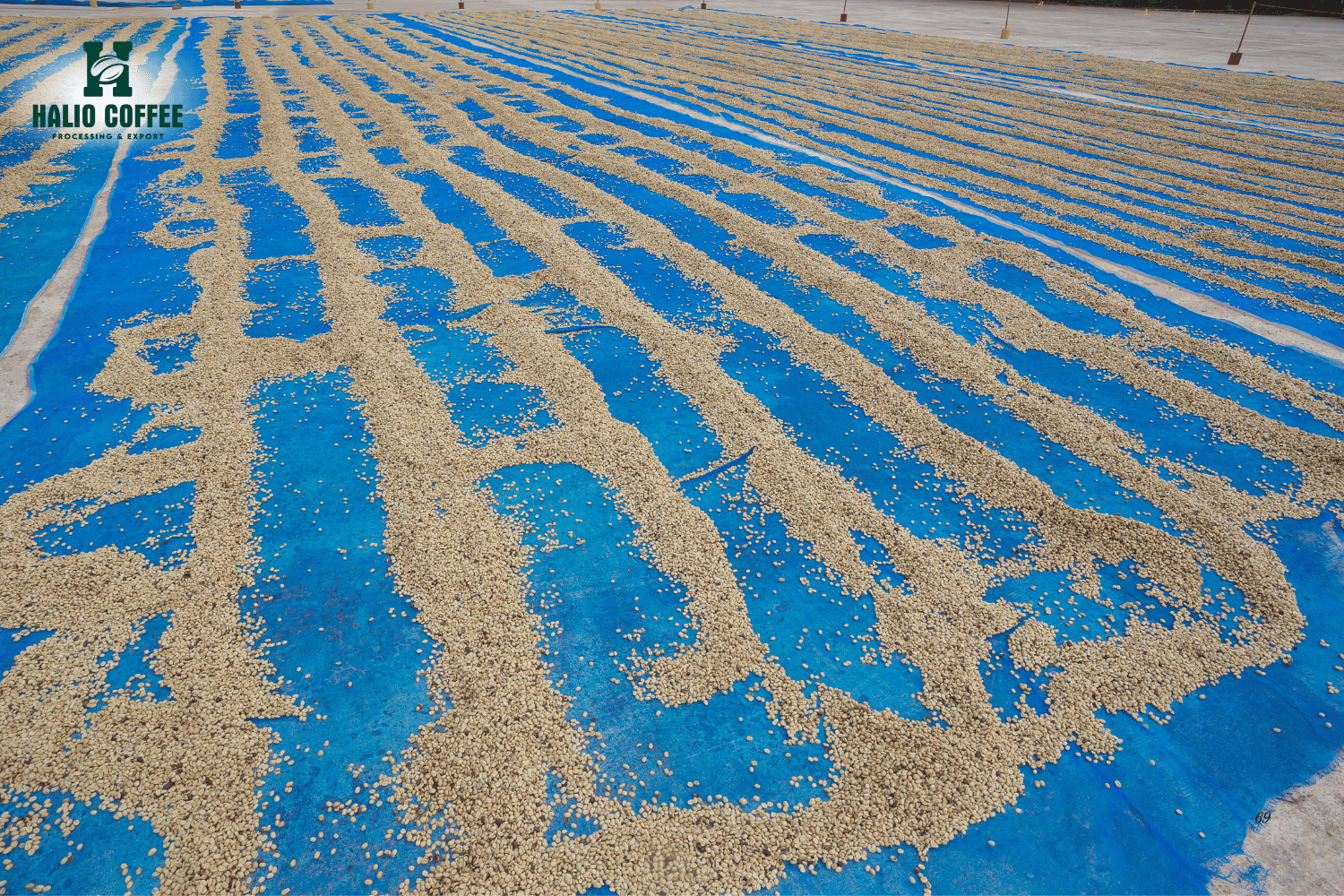
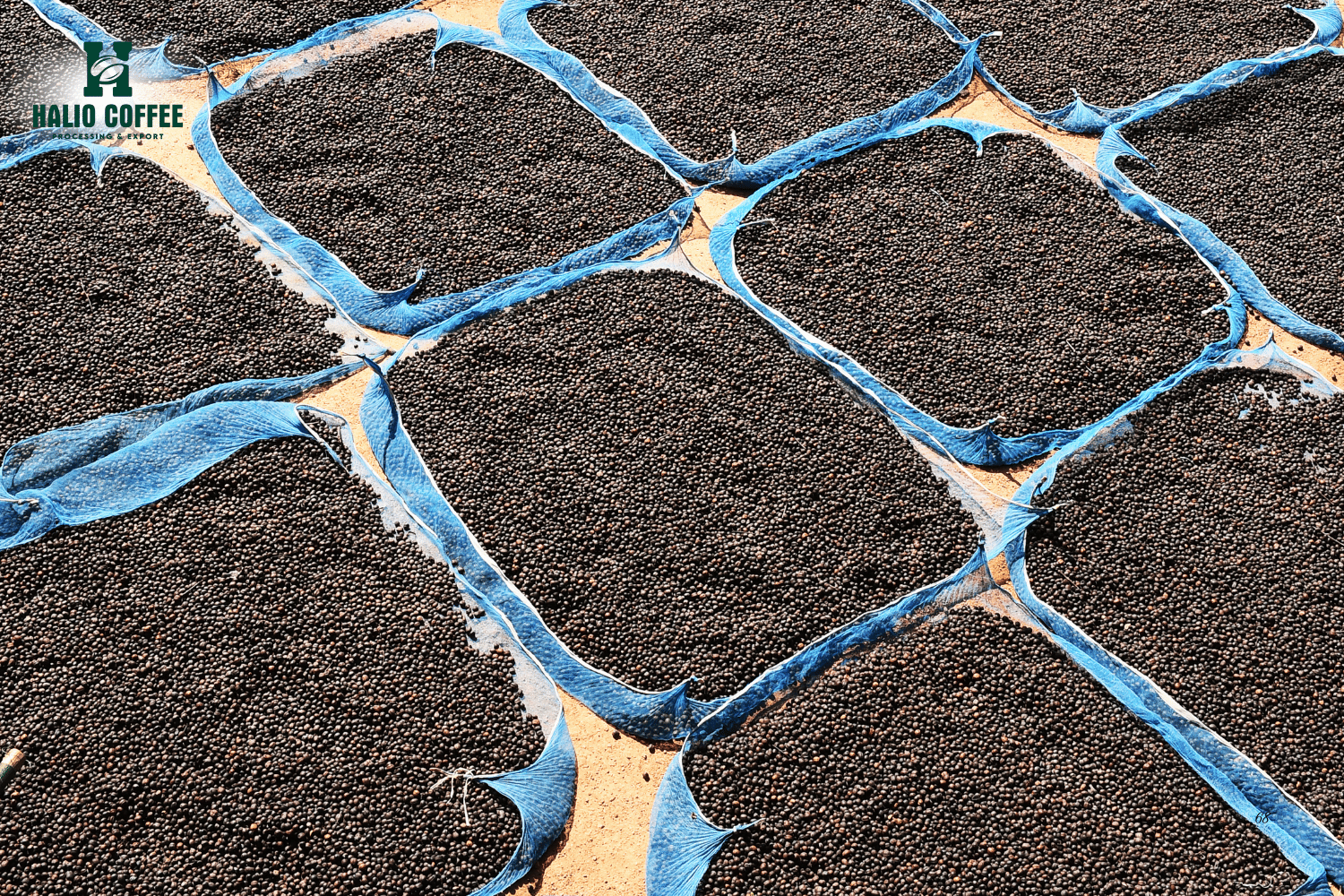
- Natural (Unwashed): The default for Robusta. Sun-dried cherry. High body, earthy/chocolate notes.
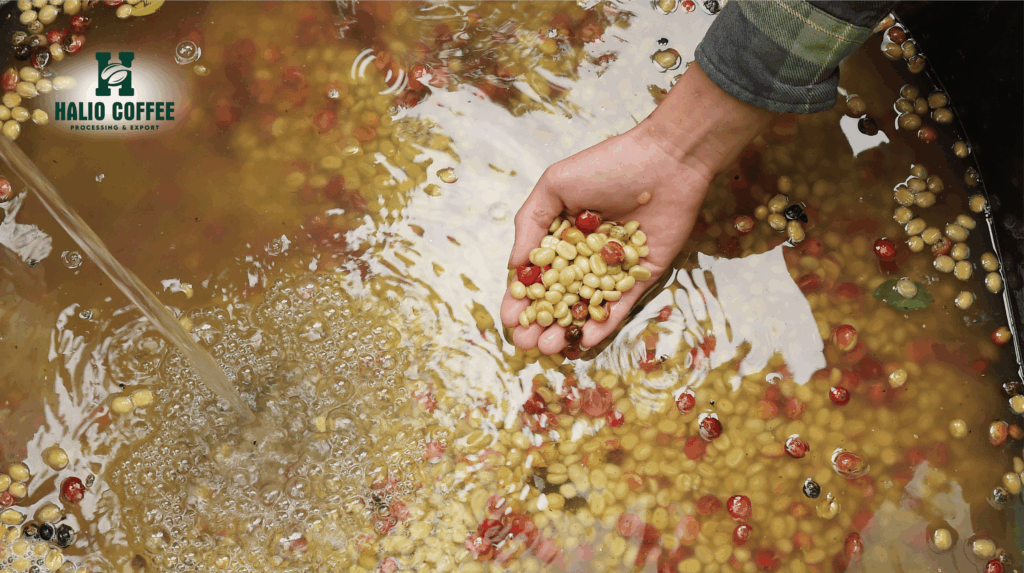
- Wet Polished: A critical value-add for raw green coffee beans. The beans are friction-cleaned with water to remove the silver skin.
- The Benefit: “Shinier appearance, smoother surface, cleaner cup quality”. This process upgrades a standard Robusta into a premium blend component.
The Economics of Conventional Sourcing
Why source conventional raw green coffee beans instead of certified organic? The answer is simple: Scale and Price.
The Yield Advantage
Conventional agriculture uses synthetic fertilizers (NPK). This allows Vietnamese farmers to achieve some of the highest yields in the world (3-4 tons per hectare). This efficiency drives down the cost per pound.
The Price Structure
Without the “Organic Premium” (certification fees, lower yields), conventional raw green coffee beans trade closer to the C-Market floor.
- Cost Basis: Farm Gate Price + Processing + Margin.
- The Buyer’s Win: You get a reliable, consistent product at a price that allows for competitive retail pricing on “Breakfast Blends” or “Espresso Roasts.”
Strategic Sourcing: Finding the Right Partner for Raw Green Coffee Beans
In the conventional market, the risk is not “purity” (as with organic); the risk is consistency. A commodity trader might blend low-grade beans from 1,000 different farms and call it “Grade 1.” A strategic partner manufactures consistency.
The Manufacturer Model vs. The Trader Model
We revisit the critical distinction.
- The Trader: Buys “FAQ” (Fair Average Quality) from collectors. They don’t control the drying. They don’t control the sorting. You get a “mixed bag.”
- The Manufacturer: A company like Halio Coffee Co., Ltd owns the infrastructure.
- Infrastructure: They have the density tables and optical color sorters to actively remove defects.
- Capability: They can produce a
Robusta Wet Polishedlot because they own the polishing machinery. A trader cannot do this.
The Sourcing Rule: When buying raw green coffee beans, always partner with the entity that owns the machinery. They control the quality.
A Technical Audit Checklist for Raw Green Coffee Beans
When you receive a sample of commercial-grade raw green coffee beans, you are not cupping for “notes of blueberry.” You are cupping for defects and uniformity. Use this checklist.
1. The “Cut Test” (Physical)
Slice 50 beans in half.
- Look for: Brown centers (fermentation die-back) or hollows (insect damage).
- Why: These internal defects don’t show up on a color sorter, but they ruin the cup. A high-quality supplier manages this at the farm level.
2. The “Screen Retention” Test
You ordered “Screen 18.”
- The Test: Shake 100g through a size 18 sieve.
- The Standard: Min 90% retention. If 20% falls through, you are paying a premium price for small beans. This is a common “inflation” tactic by poor suppliers.
3. The “Clean Cup” Protocol
Roast the sample to a medium-dark level (typical for commercial use).
- The Test: Cup 5 bowls.
- The Fail: If one bowl tastes like dirt, mold, or medicine (phenol), the lot fails. Consistency is key.
- The Pass: A cup that is “Neutral,” “Clean,” “Woody,” or “Nutty.” In commercial sourcing, “boring but clean” is a victory.
Red Flags: Identifying “Junk” Coffee
The commodity market is a dumping ground for mistakes. Watch out for these:
- 🚩 The “Polished” Disguise: Polishing can make old, faded coffee look shiny and new.
- The Check: Smell the green beans. If they smell like old wood or burlap, they are “past crop,” regardless of how shiny they are.
- 🚩 The High Moisture Trap: A supplier sells you coffee at 13% moisture. It weighs more (you pay more), but it will mold in transit.
- The Check: Always demand Max 12.5% moisture in the contract.
- 🚩 The “Bait and Switch”: The sample is Screen 18. The container is Screen 16.
- The Defense: A rigorous Third-Party Inspection (SGS/CafeControl) at the port of loading.
Conclusion: The Backbone of the Industry
Sourcing raw green coffee beans is the art of managing the baseline. It is about securing the high-volume, reliable foundation upon which the rest of the industry is built. By partnering with a capable, vertically integrated manufacturer like Halio Coffee, you ensure that even your “commercial” beans meet a standard of excellence that sets your brand apart.
You have now mastered the spectrum, from the certified purity of organic to the commercial power of raw commodity beans. But there is a final category that sits between these two worlds. It is the category of coffee that is organic by nature but perhaps uncertified in name, or specific micro-lots that require a different lens.
It is time to look at the specific niche of organic raw coffee beans.
- Coffee Prices Today, October 8th: Continue to Decline on Optimistic Signals from US-Brazil Trade Talks
- Optimizing Your Cafe Green Bean Portfolio in 2026
- Sustainable Vietnamese Robusta — Strategic Guide for Producers, Distributors, and Roasters
- Strategic Sourcing for “Green Coffee Beans Wholesale Near Me” in 2026
- A Consultant’s Guide to Visiting Coffee Farms in Vietnam