Strategic Horizons: Mastering Annual Planning with Your Coffee Supplier for Supply Chain Resilience
Dec
In our previous exploration of Coffee supplier transparency and reporting, we dismantled the “black box” of commodity trading. We established that data—regarding farm gate prices, quality logs, and inventory aging—is the lifeblood of a modern, ethical supply chain. We proved that transparency allows you to look backward and verify exactly what happened to your coffee.
But looking backward is only half the equation. The true power of data lies in its ability to help you look forward.
If transparency is the rearview mirror, annual planning with your coffee supplier is the GPS.
For the professional coffee buyer, the days of “spot buying” based on immediate need are over. The volatility of the C-Market, the unpredictability of climate change (El Niño/La Niña), and the logistical bottlenecks of global shipping require a shift from reactive purchasing to proactive strategy. You cannot build a stable brand on unstable supply.
This guide is your executive manual for constructing a robust, 12-month procurement strategy. We will move beyond simple volume forecasting to explore the integrated disciplines of Sales & Operations Planning (S&OP), harvest synchronization, and risk hedging. We will demonstrate how to align your business cycle with the agricultural rhythm of a Vietnamese green coffee beans supplier, ensuring that you secure not just beans, but a competitive advantage for the fiscal year ahead.
The Strategic Shift: Why “Just-in-Time” Fails in Coffee
In manufacturing, “Just-in-Time” (JIT) is a celebrated efficiency model. in agriculture, it is a liability.
Coffee is an annual crop. It is harvested once a year. If you miss the window for high-quality “Fine Robusta” in Vietnam (which peaks in December/January), you cannot simply order the factory to “make more” in July. You are left fighting for the fading leftovers of the harvest.
Effective annual planning with your coffee supplier solves three critical existential threats:
- Quality Fade: By planning your shipments, you can instruct the supplier to store coffee in parchment (husk) and mill it only before shipping, preserving freshness.
- Price Volatility: By forecasting volume, you can use hedging tools to smooth out the violent spikes of the London futures market.
- Supply Security: When the market runs short (as seen in the 2023/24 deficit), suppliers prioritize partners with forecasted contracts. Spot buyers are the first to be cut.
Phase 1: Synchronizing with the Vietnamese Harvest Cycle
The first rule of annual planning with your coffee supplier is that your fiscal year likely does not match the coffee year. You must align your buying calendar with the phenology of the coffee tree in the Central Highlands.
The Vietnam Crop Year (October to September)
Vietnam is the world’s largest Robusta producer. Understanding its rhythm is non-negotiable.
- Q4 (Oct – Dec): The Harvest Begins.
- Action: This is when you must finalize your “Type Samples.” Early crop coffee arrives. It is often high moisture.
- Planning Focus: Securing the “First Pick” for high-end lots.
- Q1 (Jan – Mar): The Peak & Processing.
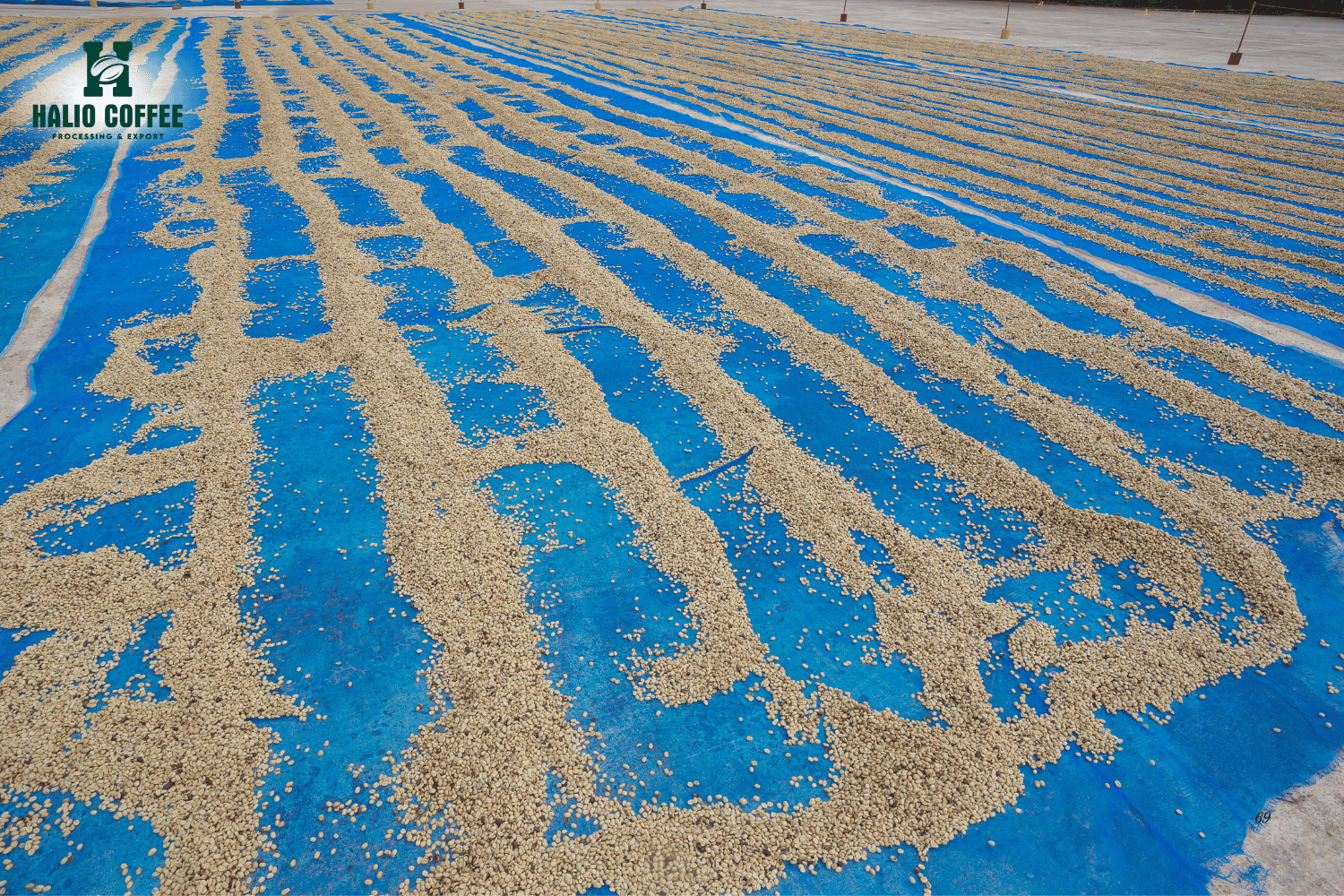
- Action: The bulk of the harvest is dried and processed. This is the time to lock in your full annual volume.
- Risk: The Tet Holiday (Lunar New Year) shuts down logistics for 2 weeks. You must plan shipments around this gap.
- Q2 (Apr – Jun): The Shipping Window.
- Action: Moving volume before the rainy season creates high humidity risks in warehouses.
- Q3 (Jul – Sep): The Lean Season.
- Action: Stocks run low. Differentials (premiums) usually rise. If you haven’t planned by now, you are paying a penalty.
Consultant’s Tip: Do not send your Annual Plan in January. By then, the best lots are allocated. The ideal time to conduct annual planning with your coffee supplier in Vietnam is August/September, just before the new crop flowering is confirmed.
Phase 2: The S&OP Process (Volume Forecasting)
A forecast is not a guess; it is a math problem. To provide your Vietnamese green coffee beans supplier with actionable data, you must calculate your “Green Bean Equivalent” (GBE) requirement.
1. Calculating the Roast Loss
You sell roasted coffee, but you buy green coffee.
- The Math: Green coffee loses 15% to 20% of its weight during roasting (moisture loss + organic compound volatilization).
- The Formula: Green Requirement=(1−Roast Loss %)Projected Roasted Sales
- Example: If you plan to sell 100,000 kg of roasted coffee and your loss is 18%, you need: 100,000/0.82=121,951 kg of green coffee.
2. The Safety Stock Buffer
Supply chains break. The Red Sea crisis or a typhoon in Hai Phong can delay a ship by 4 weeks.
- The Buffer: Build a “Days on Hand” (DOH) buffer into your annual plan. A standard for importers is 45-60 days of inventory.
- The Planning: Your annual volume request to the supplier should include: Sales Forecast+GBE Buffer−Current Inventory.
3. The Growth Factor
Are you launching a new product? Are you expanding into a new supermarket chain?
- Communication: Share your growth targets with your supplier. If you plan to grow 20%, they need to reserve 20% more farm output. If you surprise them mid-year, they may not have the physical coffee to support your growth.
Phase 3: The “Type Sample” Calibration
Annual planning with your coffee supplier is the time to redefine quality. Do not just say “Same as Last Year” (SALY). Tastes change.
The “Calibration Cupping”
Before the harvest starts, send your Head Roaster to Vietnam (or engage in a remote calibration) with the supplier.
- The Goal: Define the “Type Sample” for the upcoming year.
- The Innovation: Ask your supplier: “What new experiments are you running?”
- Example: Halio Coffee Co., Ltd (Dak Lak) might be experimenting with a new “Anaerobic Fermentation Robusta.”
- The Plan: Allocate 5% of your annual volume to this experimental micro-lot to create a “Limited Edition” offering for your customers. This keeps your brand fresh.
The Specification Review
Review the physical specs from the previous year.
- Did we have issues with foreign matter? -> Tighten the defect spec in the new plan.
- Did the screen size vary? -> Move from “Screen 16” to “Screen 18” for better roasting consistency.
Phase 4: Logistics and the “Spread Shipment” Strategy
You do not want 10 containers arriving on January 15th. You will have a cash flow crisis and a storage nightmare. You need to map out a “Spread Shipment” schedule.
The Storage Decision: Origin vs. Destination
Where should the coffee sit for the 12 months?
Option A: Store at Destination (Your Warehouse)
- Pros: You have physical control. Zero shipping delay risk.
- Cons: High storage cost. Coffee ages faster in non-climate-controlled Western warehouses.
Option B: Store at Origin (Supplier’s Warehouse)
- Pros: Cheaper storage. Supplier can keep coffee in parchment (husk) to preserve freshness.
- Cons: Shipping delays. Counterparty risk.
The Hybrid Solution: Use a “Stock-and-Release” agreement.
- The Plan: You contract the full 12 containers. The supplier processes and ships 1 container every month.
- The Preservation: For the containers shipping in months 8-12, mandate the use of GrainPro/Ecotact liners or instruct the supplier to hold in parchment until T-minus 30 days.
Consultant’s Tip: When annual planning with your coffee supplier, explicitly discuss “Carry Costs.” If the supplier holds your coffee for 6 months, they are financing that inventory. Expect to pay a monthly financial charge (interest + storage) for later shipments. Negotiating this upfront prevents hidden fees later.
Phase 5: The Financial Budget (Cash Flow Planning)
Your annual plan is a purchase order for the future. It has massive financial implications.
Currency Exposure (VND vs. USD)
While you pay in USD, the Vietnamese cost base is in VND.
- The Discussion: Ask your supplier for their view on the USD/VND exchange rate.
- The Strategy: If the VND is expected to weaken, you might delay fixing the price. If it is strengthening, you might want to fix early.
Cash Flow Timing
Map out your “Cash Out” events.
- Pre-Financing: Do you need to send a deposit in December to secure the crop?
- Payment Terms: If you are increasing volume, use the annual planning meeting to renegotiate terms. “Since I am doubling my volume to 20 containers, I need to move from CAD (Cash Against Documents) to Net 30 Days.”
Case Study: Strategic Alignment with Halio Coffee Co., Ltd
How does annual planning with your coffee supplier work when the partner is a vertically integrated expert like Halio Coffee Co., Ltd (193/26 Nguyen Van Cu, Tan Lap Ward, Dak Lak)?
1. The “Farm-to-Forecast” Model: Because Halio works directly with farm clusters, they need your forecast in September.
- Why? They need to tell Farmer Mr. Hung: “Don’t sell your cherry to the local trader. We have a commitment for it.”
- The Benefit: By giving Halio your plan early, they can ring-fence specific high-altitude farms for your brand, ensuring you get the best terroir.
2. The Processing Pivot: If your plan indicates a shift toward “Espresso Blends” (which need body) rather than “Drip” (which needs acidity), Halio can adjust their fermentation times during the harvest to accentuate body. This is only possible if they know your plan before the harvest starts.
3. The Inventory Transparency: Halio provides “Stock Aging Reports” as part of the annual review. You can look at the performance of last year’s lots to decide which drying protocols worked best, using that data to refine the specs for the new year.
The “Pre-Mortem”: Risk Management Checklist
A good plan assumes things will go wrong. Include a risk section in your annual strategy.
- Climate Risk: What if El Niño reduces the Vietnam crop by 20%?
- Plan: “We have a ‘First Right of Refusal’ clause for supply priority.”
- Quality Failure: What if a container arrives moldy?
- Plan: “We have a pre-agreed 20% buffer stock at origin that can be air-freighted or expedited.”
- Market Crash: What if the C-Price drops $500 below our contract price?
- Plan: “We are using a ‘Min-Max’ pricing structure (which we will discuss in the next article).”
The Meeting Agenda: Conducting the Annual Review
Don’t just email a spreadsheet. Schedule a formal Annual Strategy Summit (video call or in-person).
Agenda Template:
- Performance Review (Last Year):
- Volume shipped vs. contracted.
- Quality score average (PSS vs. Arrival).
- Claims and resolution speed.
- Market Outlook (Supplier Presentation):
- Vietnam crop forecast (Quantity/Quality).
- Local regulatory changes (EUDR updates).
- The Ask (Buyer Presentation):
- Volume forecast for Next Year.
- New product development needs.
- Logistics schedule requirements.
- Commercials:
- Discussion of pricing mechanism (Fixed vs. Differential).
- Warehousing and carry costs.
- Action Items:
- Timeline for sample submission.
- Deadline for contract signing.
Red Flags: Signs of a Flawed Plan
- 🚩 The “Hockey Stick” Forecast: Projecting massive growth in Q4 without any historical data to back it up. Suppliers hate this; it forces them to hold stock you might not buy.
- 🚩 Ignoring the Carry: planning to ship coffee in September but expecting to pay the January price. This is financial illiteracy.
- 🚩 The “One-Bucket” Approach: Treating all 12 months as one giant block. You must break it down by month/season.
Strategic Synthesis: From Plan to Price
Annual planning with your coffee supplier is the architectural blueprint of your business. It determines the shape, size, and stability of your structure. It transforms the supplier relationship from a series of stressful, reactive transactions into a calm, proactive partnership.
When you hand your Vietnamese green coffee beans supplier a detailed annual plan, you are giving them the gift of certainty. In exchange, they will give you their best coffee, their best service, and their loyalty during shortages.
However, a plan is only a forecast until it is priced. You know how much you need and when you need it. Now, the final and most complex piece of the puzzle remains: How do you pay for it? Do you fix the price now? Do you float with the market? Do you use options?
To execute your annual plan without bankrupting your margin, you must master the financial instruments of the trade.
Read Next: Wholesale coffee beans pricing models
- Coffee Prices Today, Nov 26: Both Markets Rally Strongly; Robusta Surges Over $100/Ton
- Coffee Prices Today, August 29: Prices Reverse as Concerns Grow Over Consumer Demand
- Coffee Price Today: Domestic Vietnam Market Hits Nearly 100,000 VND/kg, Despite Global Weakness
- Identifying and Vetting Raw Coffee Beans Suppliers
- Coffee Prices Today, Dec 4: Robusta Falls for 3rd Straight Session, Hovering Around $4,300/Ton