The 2026 Procurement Strategic Guide: How to Source Green Coffee from Vietnam
Jan
In the high-stakes architecture of the global coffee trade, the decision to source green coffee from Vietnam has evolved from a tactical cost-saving measure into a strategic necessity. As we navigate the opening weeks of 2026, the global market is defined by a sharp divergence. While the Arabica markets of Latin America are grappling with “structural vulnerability” due to climate shocks, Vietnam—the world’s undisputed Robusta powerhouse—is currently the market’s liquidity engine.
For the professional roaster and importer, the current landscape offers a rare and lucrative opportunity. Domestic prices in Vietnam have corrected by approximately 18% compared to the highs of 2025, creating a “Buyer’s Window” that allows for significant margin recovery. However, accessing this value requires more than just sending a Purchase Order. It demands a sophisticated understanding of agronomy, processing technology, and the evolving regulatory landscape of 2026, particularly regarding the EU Deforestation Regulation (EUDR).
This guide is your executive manual. We will move beyond the basics to provide a rigorous, analytical framework for sourcing. We will dissect the market data, analyze the rise of “Wet Polished” processing, and provide a due diligence checklist to ensure that when you source green coffee from Vietnam, you are securing not just a commodity, but a competitive advantage.
Market Dynamics: Why Source Green Coffee from Vietnam Now?
Why is Q1 2026 the optimal moment to execute your procurement strategy in Vietnam? The answer lies in the hard data. The market is currently experiencing a decoupling of price and volume that favors the buyer.
The “Liquidity Event” and Price Correction
The primary driver for the decision to source green coffee from Vietnam right now is the price.
- The Data: As of January 7, 2026, fresh green coffee prices in the Vietnamese domestic market are trading between 97,500 and 98,300 VND/kg.
- The Delta: This represents a significant decrease of 18% (approx. 21,000 VND/kg) year-on-year.
- The Driver: This correction is not due to a lack of global demand (which is at a record high of 169–170 million bags). Rather, it is a localized “liquidity event.” Farmers and agents are engaging in “aggressive selling” to clear warehouse space and generate cash flow before the Lunar New Year (Tet).
The Volume Guarantee
While other origins are “sold out” or facing logistical paralysis, Vietnam is delivering physical goods at record speeds.
- Export Velocity: In the first two months of the 2025-2026 crop year alone, Vietnam exported 2.63 million bags, a massive 51.9% increase compared to the same period in the previous season.
- Risk Mitigation: By choosing to source green coffee from Vietnam now, you are hedging against the supply deficits in Indonesia (where floods are cutting exports by 15%) and the potential yield losses in Brazil due to heatwaves.
Understanding the Regional Terroir
To source green coffee from Vietnam effectively, one must treat the country not as a monolith, but as a diverse archipelago of micro-climates. Each province plays a distinct role in the blending matrix.
1. Dak Lak: The Robusta Capital
Centered around Buon Ma Thuot, this province accounts for the lion’s share of Vietnam’s output.
- Terroir: Characterized by flat, basaltic plateaus at 500–800 meters above sea level (MASL).
- The Bean: This is the home of the classic, bold Robusta used in instant coffee and high-caffeine espresso blends.
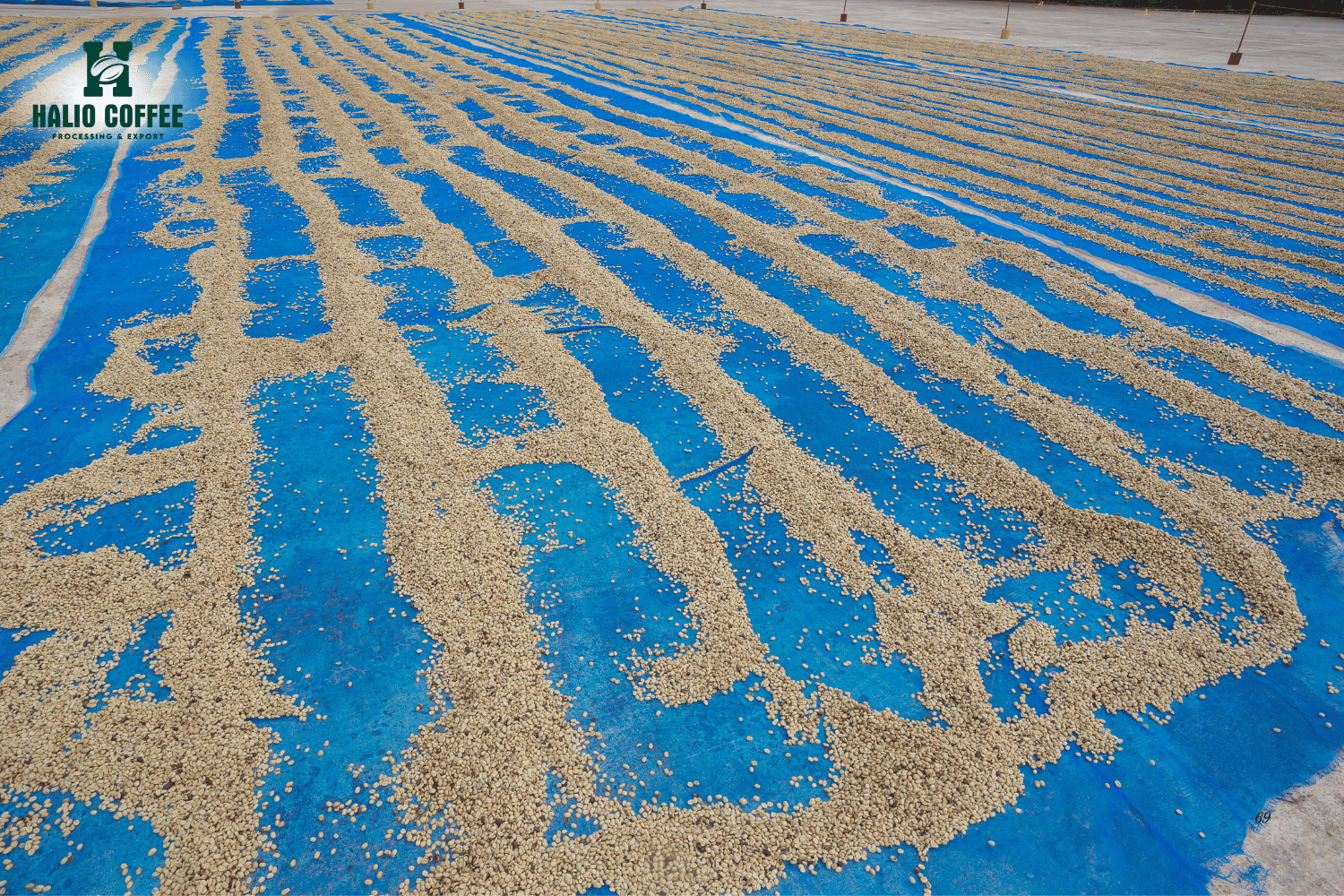
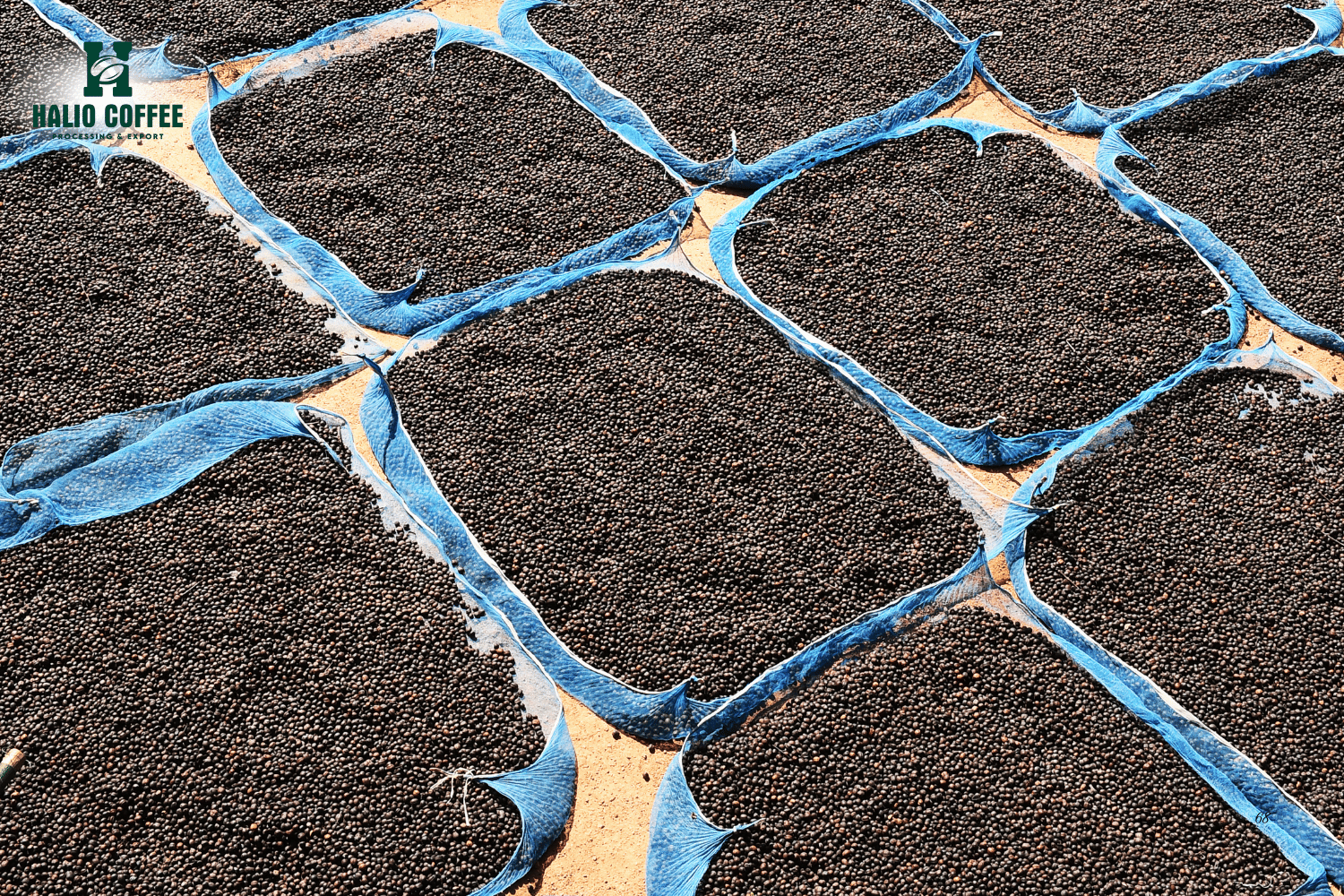
- 2026 Status: The weather here has been exceptionally favorable. Dry and sunny conditions in early January are allowing for optimal sun-drying, ensuring that the massive volume currently hitting the market is of stable moisture content.
2. Lam Dong: The Arabica Enclave
Situated at a higher elevation (800–1,600 MASL), Lam Dong (specifically Dalat and Cau Dat) is the only scalable source if you wish to source green coffee from Vietnam that is of the Arabica species.
- The Arabica Factor: As we discussed in our analysis of the “Lam Dong Arabica” sector, this region provides the acidity and complexity that Dak Lak lacks. With global Arabica prices rising due to Brazilian climate risks, Lam Dong is becoming a strategic alternative.
- The Robusta: Lam Dong also produces high-yield Robusta (Di Linh district), which tends to be slightly denser and more acidic than Dak Lak beans due to the cooler nights.
3. Gia Lai and Dak Nong: The Expansion Zones
These provinces are the frontiers. Often offering slightly lower farm-gate prices than Buon Ma Thuot, they are the engines of volume expansion.
- Gia Lai: Known for large-scale industrial farms and a drier climate, producing beans with low moisture and high screen retention.
- Dak Nong: Leveraging its proximity to Ho Chi Minh City ports, this region is a logistics hub.
The Technical Evolution: Beyond “FAQ”
Historically, buyers would source green coffee from Vietnam under the label “FAQ” (Fair Average Quality)—a euphemism for inconsistent, distinctively earthy beans. In 2026, the narrative has shifted to “Fine Robusta” and value-added processing.
The Wet Polished Revolution
To compete with low-grade Arabicas, manufacturers in Dak Lak and Gia Lai have invested heavily in polishing technology.
- The Process: High-pressure water friction removes the silverskin and mucilage residues.
- The Result: A cleaner, brighter cup with reduced bitterness. This “Robusta Wet Polished” is now a standard requirement for premium espresso blends in Europe and Japan.
- Strategy: If you are blending for espresso, prioritize Wet Polished beans. They allow you to increase the Robusta percentage in your blend (lowering costs) without the consumer detecting the “roughness” typically associated with the species.
Honey and Natural Process
Driven by the demand for “Fine Robusta,” we are seeing a rise in Honey and Natural processed lots. By leaving mucilage on the bean during drying, producers are unlocking sweetness and fruit notes (jackfruit, banana, cacao) previously thought impossible in Coffea canephora.
A Step-by-Step Framework to Source Green Coffee from Vietnam
The mechanism of trade is as important as the product itself. In 2026, the market is professionalizing, but risks remain. Here is your procedural framework.
Step 1: Partner Selection (Manufacturer vs. Trader)
When looking to source green coffee from Vietnam, the most critical distinction is between a “Trader” and a “Manufacturer.”
- The Trader: Acts as a broker. They buy parchment from collectors and sell to you. They often lack control over the final sorting quality.
- The Manufacturer: A vertically integrated entity (like Halio Coffee) that owns the dry mill, the density tables, and the optical color sorters.
- The Rule: Always contract with the Manufacturer. In a year where prices have dropped 18%, traders are under margin pressure and may be tempted to cut corners on quality (e.g., blending in Grade 2 beans). Manufacturers focus on volume and plant efficiency, ensuring consistent adherence to “Grade 1” standards.
Step 2: Defining the Specification
Do not just order “Grade 1.” Define the parameters strictly.
- Moisture: Max 12.5% (non-negotiable).
- Black & Broken: Max 2% (or 0.1% for premium).
- Screen Size: Min 90% retention on Screen 18 (7.1mm).
- Crop Year: Must specify “Crop Year 2025/2026” to avoid old stock.
Step 3: Contract Terms
- Incoterms: FOB (Free On Board) Ho Chi Minh City is the preferred term for professional buyers. It gives you control over the ocean freight and insurance. You nominate the forwarder, ensuring you get the best rates and visibility.
- Pricing: Consider PTBF (Price To Be Fixed) contracts. This allows you to lock in the differential (premium/discount against London) now while the physical coffee is available, and fix the terminal price later.
The 2026 Compliance Landscape: EUDR and Traceability
If you are based in Europe, or if you re-export to Europe, the decision to source green coffee from Vietnam in 2026 is governed by the EU Deforestation Regulation (EUDR).
The Requirement
You cannot import coffee without proof that it was produced on land that has not been deforested since 2020. This requires geolocation coordinates (polygons) for every farm contributing to the lot.
The Execution
Before signing a contract, audit the supplier’s traceability system.
- The Audit: Ask to see the map of their supply shed.
- Red Flag: If they offer a general “Regional Certificate” or a list of communes, they are non-compliant.
- Solution: Leading Vietnamese exporters are now using satellite data and digital farm registries to verify these claims. Ensure your contract stipulates that “EUDR Data Pack” is a required document for payment release.
Logistics and Risk Management
Once you have secured the contract to source green coffee from Vietnam, the logistics of moving it from the Central Highlands to your warehouse are the final hurdle.
Packaging: The GrainPro Standard
- The Issue: Jute bags are breathable. In a humid container crossing the equator, green coffee can re-absorb moisture, leading to “baggy” flavors or mold.
- The Solution: Specify GrainPro or Ecotact hermetic liners for all shipments. The small premium (cents per pound) pays for itself by preserving the freshness and water activity of the beans. For large volume, Bulk Container Liners (21 tons) are efficient but require specialized unloading gear.
Timing the Shipment
- The Constraint: The Tet Lunar New Year often shuts down logistics in Vietnam for two weeks.
- The Strategy: With exports currently surging, ensure your bookings are confirmed well before the holiday window to avoid your cargo getting stuck at the port of Ho Chi Minh City.
Risk: The “Past Crop” Blend
With new crop prices trading 18% lower than last year’s carryover stock, some suppliers may attempt to blend old, woody beans with fresh harvest to clear their dead stock.
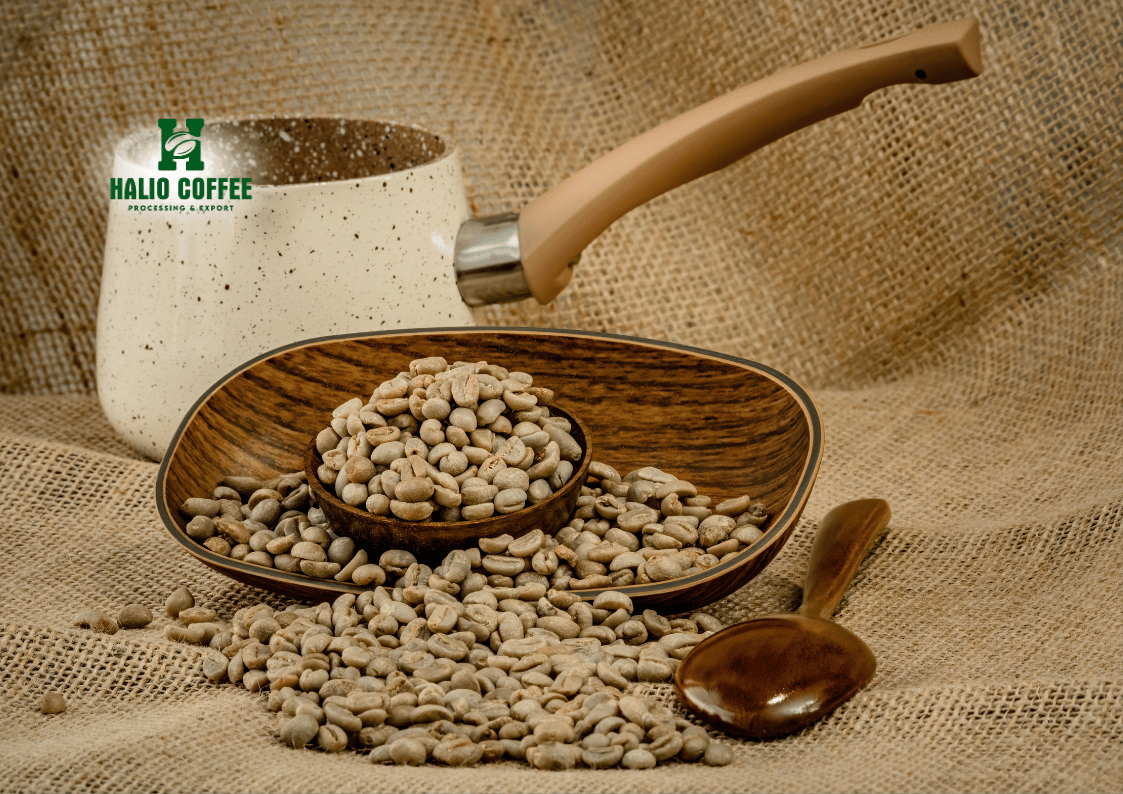
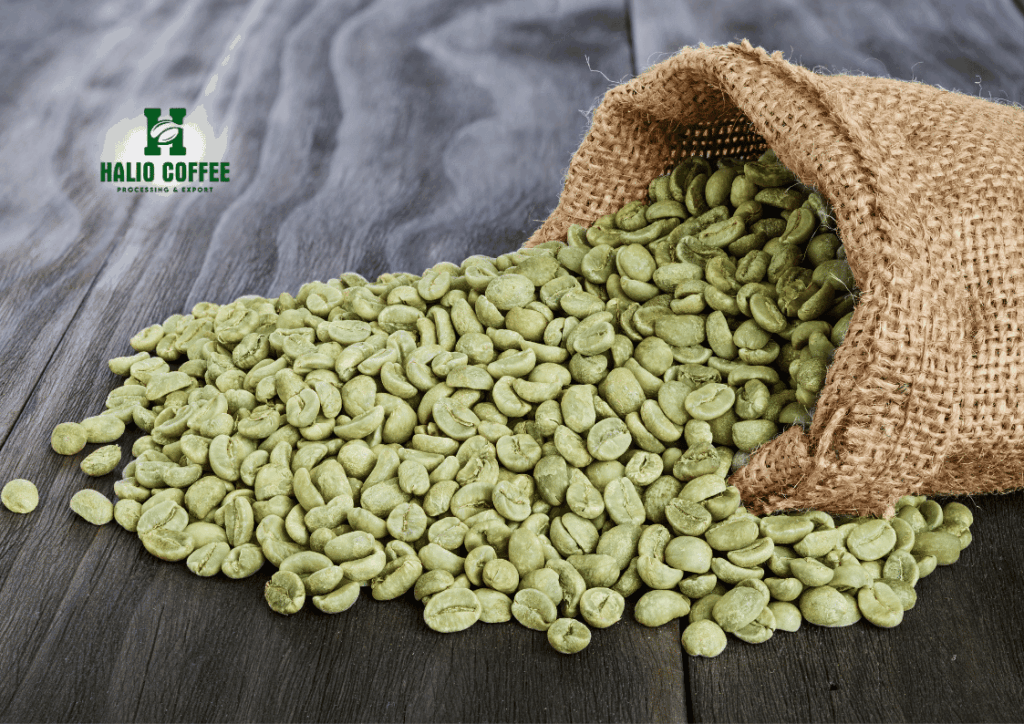
- Detection: Use the “Visual and Olfactory” test on the Pre-Shipment Sample (PSS). Fresh green coffee is blue-green and smells grassy/vegetal. Old crop is pale/whitish and smells like straw, wood, or burlap.
Quality Control Checklist
When you receive a Pre-Shipment Sample (PSS) after deciding to source green coffee from Vietnam, use this professional audit checklist.
- The “Cut Test” (Physical Analysis): Take 50 beans from the sample and slice them in half. Look for brown centers (fermentation die-back) or hollows (insect damage). These internal defects do not always show up on a color sorter.
- The “Screen Retention” Test: Shake 100g of the sample through a standard size 18 sieve. If more than 10g falls through, you are paying a premium price for small beans.
- The Moisture Audit: Must be between 10.0% and 12.5%. Above 12.5% risks mold; below 10.0% means flavor fade.
- The “Clean Cup” Protocol: Roast to Agtron 55. Cup 5 bowls blindly. If one bowl tastes like dirt, mold, or phenol (medicine), the entire lot fails. In commercial sourcing, consistency is the primary metric.
Summary: Capitalizing on the Buyer’s Window
The decision to source green coffee from Vietnam in early 2026 is one of the most mathematically sound strategies available to a procurement manager. You are accessing the world’s most robust supply chain at a price point that has corrected by 18%, effectively allowing you to lower your Weighted Average Cost of Goods (WACOG) while the rest of the market struggles with Arabica volatility.
However, this window is finite. The current “aggressive selling” phase will end as the harvest concludes and farmers become sufficiently capitalized. Domestic stocks will move into strong hands, and prices will likely firm up. The strategic move is to lock in your core volume now—prioritizing “Wet Polished” grades and EUDR compliance—before the market dynamic shifts back in favor of the seller.
You have now secured the physical asset. The final piece of the puzzle is determining the optimal financial structure for these contracts to protect your margin against currency shifts and market rallies.
- Single Origin Robusta Natural: Vietnam’s Contribution to Global Coffee Excellence
- The Metrics of Value: Decoding the Vietnam Coffee Grading System (e.g., TCVN 4193:2014) for Global Buyers
- A Strategic Guide to Sourcing Cheap Green Coffee Beans in 2026
- The Organic Premium: A Deep Dive into the Vietnam Organic Green Coffee Price EU
- Coffee Prices Today, September 25: Prices Rebound Sharply as Inventories Hit Multi-Month Lows