The Hidden Jewel of the Highlands: A Strategic Sourcing Guide to Lam Dong Arabica

Jan
In the global coffee narrative, Vietnam has long been typecast as the titan of Robusta. For decades, the conversation centered on the caffeine-rich, high-yield beans of Dak Lak. However, as we navigate the complex market dynamics of 2026—defined by “structural vulnerability” in traditional Arabica origins like Brazil and record-breaking consumption demand—a new protagonist has emerged on the strategic sourcing map: Lam Dong Arabica.
Situated in the mist-shrouded peaks of the Central Highlands, Lam Dong province (specifically the districts of Dalat, Lac Duong, and Cau Dat) represents the apex of Vietnamese coffee agriculture. For the professional roaster facing rising Arabica costs on the New York exchange—which closed 2025 up approximately 9%—Lam Dong Arabica offers a critical solution. It provides a flavor profile of increasing sophistication, fully traceable supply chains, and a price-to-quality ratio that is currently unrivaled in the Pacific Rim.
This guide serves as your technical manual for integrating this origin into your 2026 procurement strategy. We will dissect the terroir, analyze the processing revolution that has elevated its cup score, and provide a rigorous vetting framework to ensure you source only the finest lots.
Decoding the Terroir: Why Lam Dong Arabica Matters in 2026
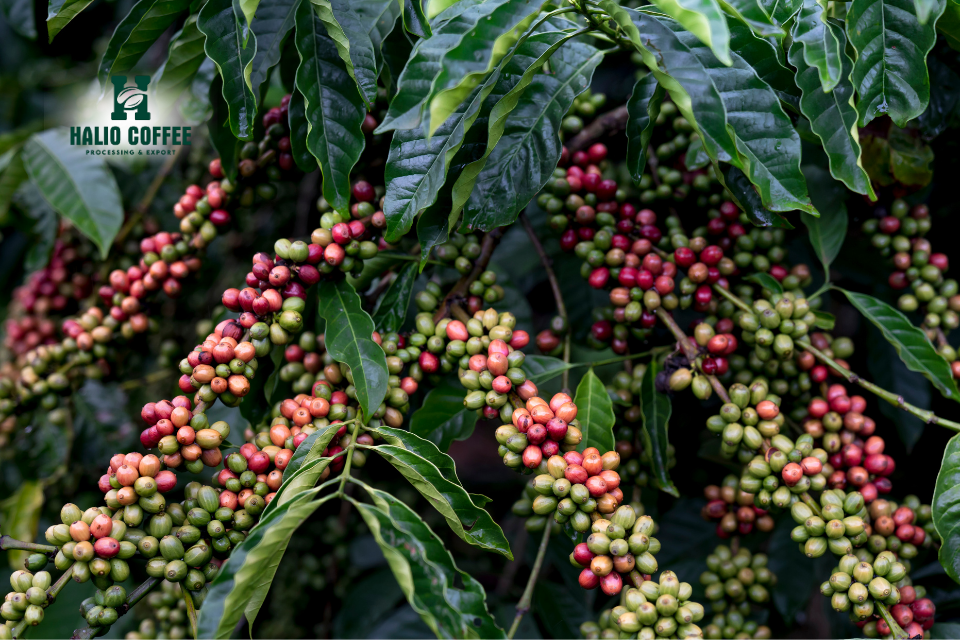
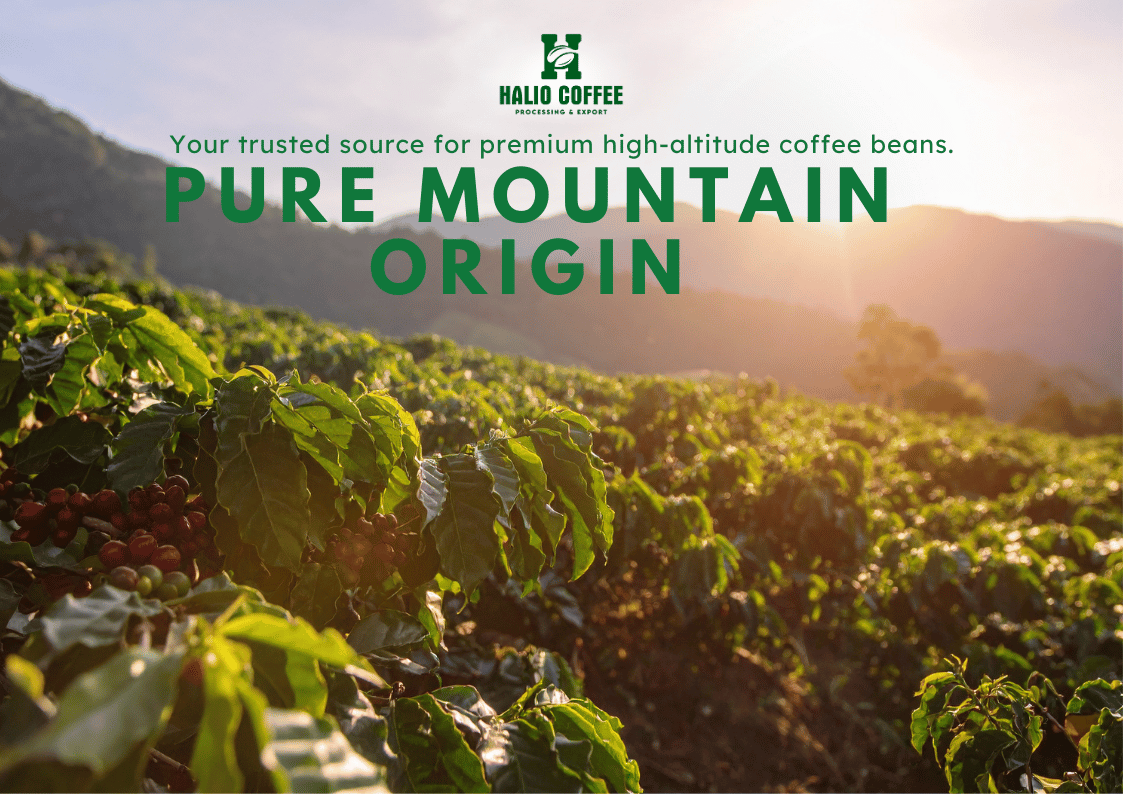
To understand the asset, one must understand the geography. While the rest of Vietnam swelters, the plateaus of Lam Dong, sitting at elevations ranging from 1,450 to 1,650 meters above sea level (MASL) , enjoy a microclimate often compared to the “Eternal Spring.”
The “Catimor” Backbone and the Quality Shift
Historically, Lam Dong Arabica was dominated by the Catimor variety—a hybrid chosen for its rust resistance and high yield. In the past, this led to a reputation for low acidity and herbal notes. However, 2026 marks a turning point.
- The Varietal Evolution: Progressive farms in Cau Dat are now successfully cultivating Typica, Bourbon, and various Sarchimor lines.
- The Catimor Refinement: Even the ubiquitous Catimor has been transformed. Through better canopy management and soil nutrition, the modern Lam Dong Catimor delivers a cup characterized by clean nuttiness, chocolate depth, and a balanced, medium acidity that serves as the perfect “body builder” for espresso blends.
The Strategic Hedge Against Brazil
The relevance of Lam Dong Arabica is directly tied to the volatility of the global market.
- The Brazil Factor: As noted in recent market reports, Brazil is currently facing intense heatwaves threatening the fruit set of the 2026 crop, and export volumes of Arabica dropped 18.3% in late 2025 due to logistical and climate issues.
- The Vietnam Solution: In contrast, Vietnam’s logistics are recovering fast, with total coffee exports surging 51.9% in the early 2025-2026 season. Sourcing Arabica from Lam Dong diversifies your risk portfolio, insulating your supply chain from the climate shocks affecting Latin America.
The Processing Revolution: How Lam Dong Arabica is Redefining Quality
The true value of Lam Dong Arabica in 2026 is not just in the cherry, but in the mill. The era of “semi-washed” commercial grades is being supplanted by precision manufacturing.
1. Fully Washed (The Clean Standard)
For the commercial and premium tiers, the “Fully Washed” process is the standard.
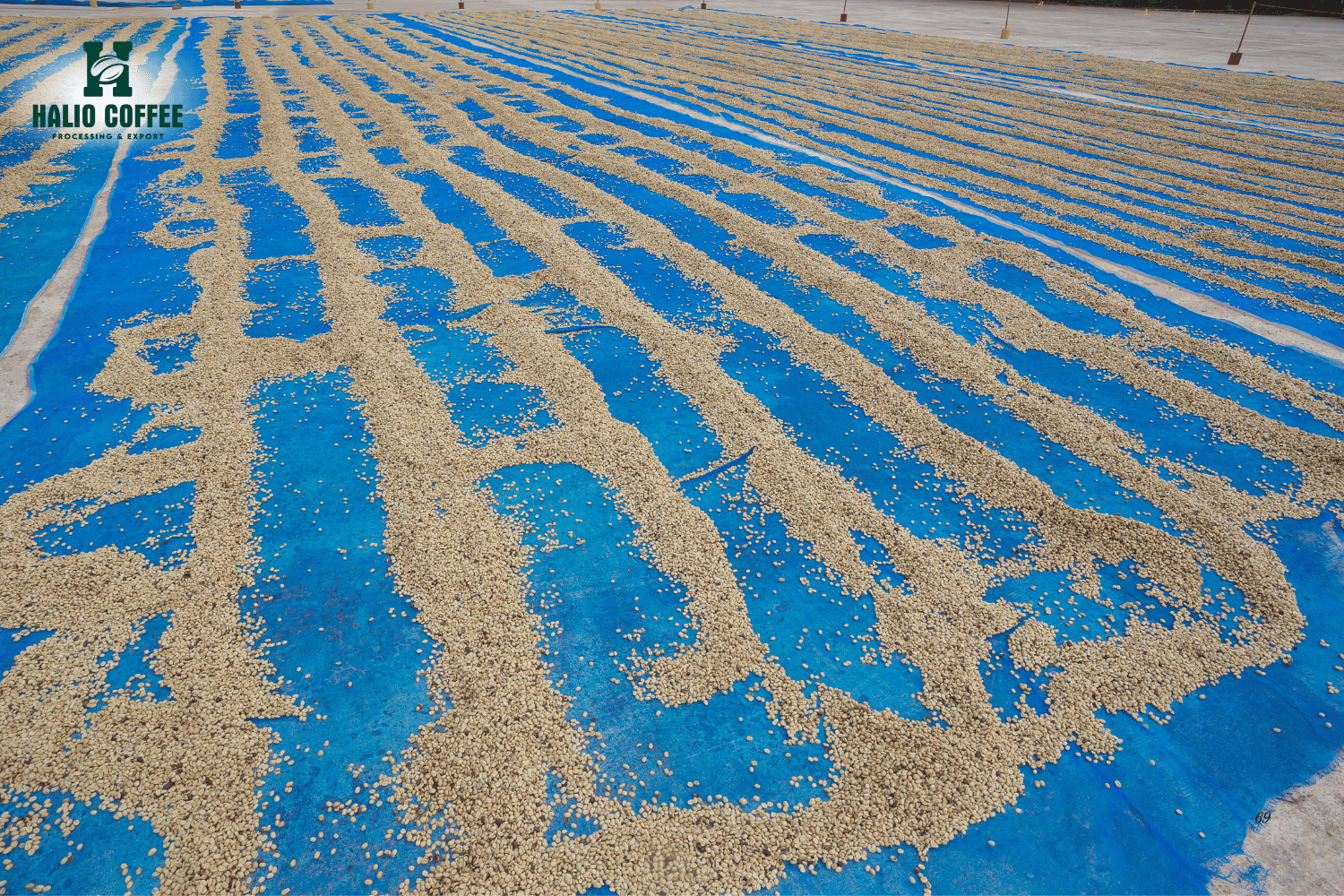
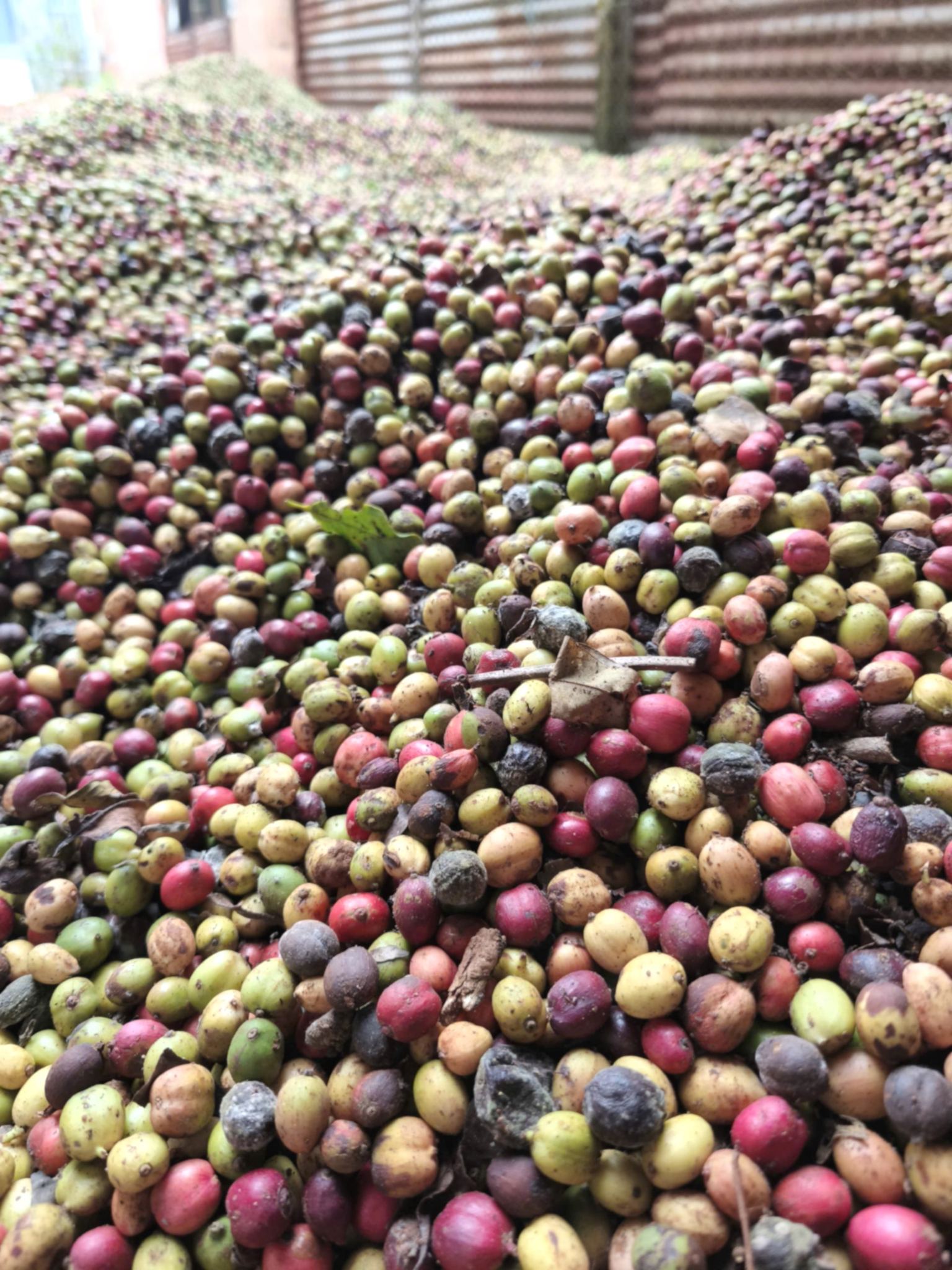
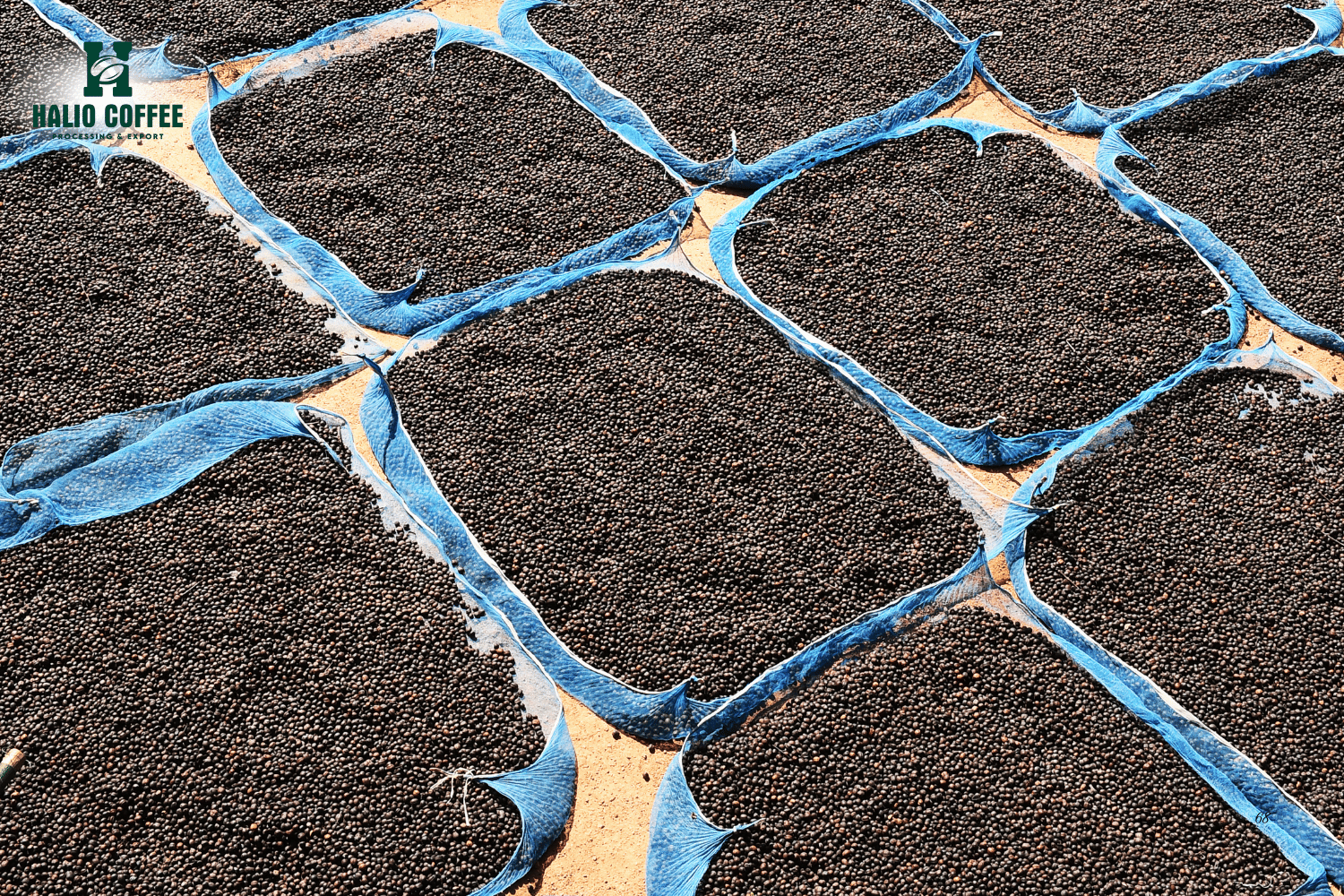
- The Method: Cherries are pulped, fermented (12-24 hours) to break down mucilage, washed, and dried.
- The Profile: This yields the “Vietnam Arabica Grade 1” standard. It is clean, consistent, and free from the “earthy” defects of the past. It competes directly with Central American High Grown (HG) coffees as a blend component.
2. The Honey and Natural Movement
Driven by the demand for “Fine Robusta” and specialty grades, Lam Dong producers have adapted these techniques to Arabica .
- Red/Black Honey: By leaving a specific percentage of mucilage on the bean during drying, producers are unlocking intense sweetness and fruit notes (stone fruit, molasses) in Lam Dong Arabica.
- Anaerobic Fermentation: Select micro-lots are undergoing anaerobic fermentation in sealed tanks, creating exotic flavor profiles (winey, berry-forward) that score 84+ on the SCA scale.
Market Analysis: The Economics of Lam Dong Arabica
In 2026, the financial argument for sourcing from Lam Dong is compelling. While we have seen a general 18% price correction in the Vietnamese domestic market (primarily driven by Robusta), the pricing for Arabica follows a different logic, pegged closer to the New York “C” market but with a favorable differential.
The “Blender’s Math”
- New York “C” Benchmark: Arabica futures are trading high, around 348.75 US cents/lb.
- The Differential Advantage: Lam Dong Arabica typically trades at a discount to the “C” price or a slight premium depending on the grade, but crucially, it is often more cost-effective than comparable grades from Colombia or Costa Rica due to Vietnam’s lower freight costs to Asian and US West Coast markets.
- Waived Tariffs: With the US recently removing the 40% additional tariff on certain green coffees, the landed cost of Vietnamese Arabica has become even more competitive for American roasters.
Inventory and Availability
While global certified stocks remain low, Vietnam’s export engine is firing. November 2025 exports surged 39.1%. This means that physical availability of Lam Dong Arabica is high right now, unlike the “sold out” signs often seen in African origins.
Sourcing Checklist: Vetting Lam Dong Arabica Suppliers
Sourcing Lam Dong Arabica requires a distinct set of quality control protocols compared to sourcing Robusta. Use this checklist to audit your suppliers.
1. The Physical Audit (Grade 1 Standard)
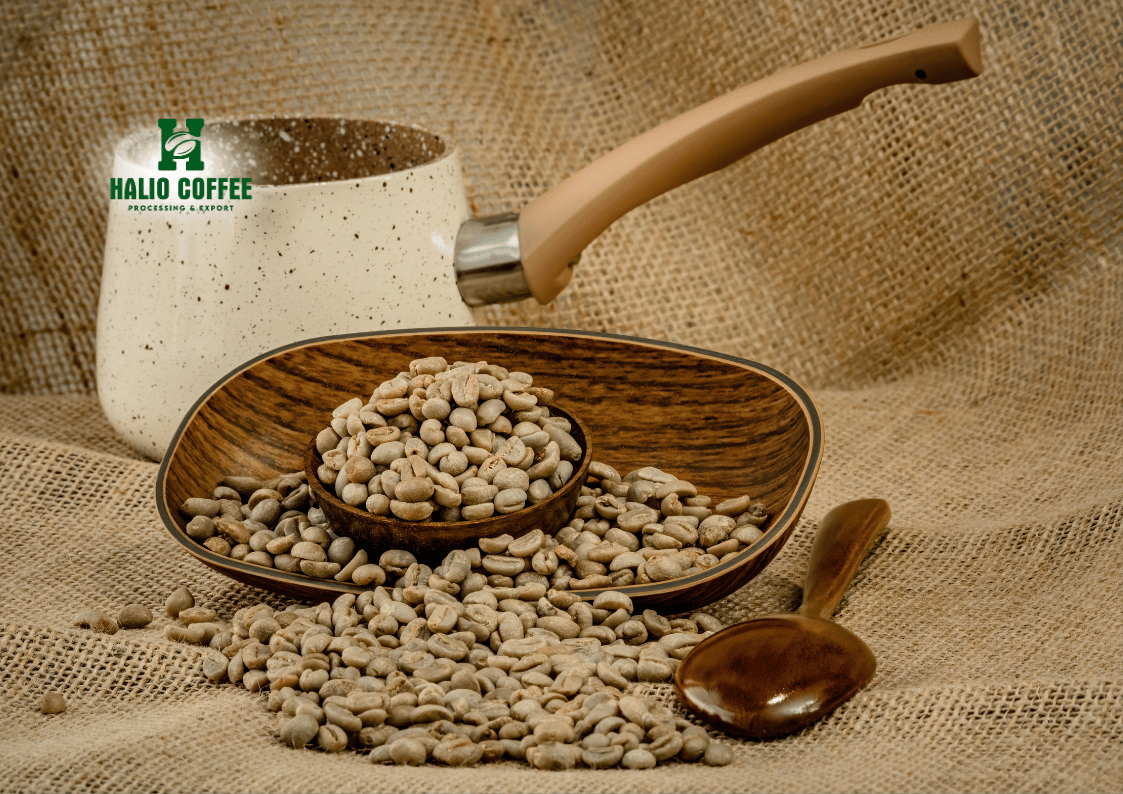
- Screen Size: Demand Screen 16/18. While Robusta standard is S18, Arabica is often slightly smaller. S16 is the “sweet spot” for density and roast uniformity.
- Defect Count: Strict adherence to Max 1.5% – 2% defects.
- Cut Test: Crucial for identifying “quakers” (immature beans) which are common in Catimor if not harvested selectively. Slice 50 beans; if you see pale/undeveloped centers, reject the lot.
2. The Sensory Audit (The Cup)
- Acidity Check: You are looking for “bright but balanced.” If the cup is “flat” or “wood-like,” it is old crop or dried too slowly.
- Cleanliness: Zero tolerance for “ferment” or “phenolic” notes. Lam Dong Arabica should be pristine.
3. Traceability Audit (EUDR)
- The Mandate: As of 2026, full traceability regarding origin is a standard market requirement.
- The Check: Can the supplier provide the GPS coordinates of the specific farm clusters in Lac Duong or Cau Dat? General “Lam Dong” origin certificates are no longer sufficient for compliance with the EU Deforestation Regulation.
Red Flags: Signs of Commercial Malpractice
When negotiating contracts for Lam Dong Arabica, be vigilant against these common risks:
- 🚩 The “Blend” Trap: Unscrupulous traders may blend high-grade polished Robusta with Arabica and sell it as “100% Arabica.”
- Detection: Use the visual check (Robusta beans are rounder with a straight center cut; Arabica are oval with a curved cut) and the sensory check (Robusta adds a distinct rubbery/earthy note).
- 🚩 “High Altitude” Claims without Proof: Everyone claims “1,600m.” Demand farm data. Coffee grown at 1,000m in Lam Dong is commercially viable but lacks the density and acidity of true high-grown Lam Dong Arabica.
- 🚩 Moisture Manipulation: Selling beans at 13% moisture to increase weight. Demand a max of 12.5% to prevent mold during transit, especially given the current logistical surges.
Strategic Sourcing: The Path Forward
Lam Dong Arabica has graduated. It is no longer a localized curiosity but a global strategic asset. For the modern roaster, it offers a way to maintain quality and margin in a year where the “C” market is volatile and traditional origins are struggling with climate shocks.
By pivoting part of your Arabica procurement to Lam Dong, you tap into a supply chain that is professionalizing rapidly, delivering record volumes, and offering a stability that is increasingly rare in the coffee belt.
However, securing the beans is only the first step. The next challenge lies in structuring the financial contract to protect your gains against currency fluctuations and market shifts.
Would you like to explore “Wholesale coffee beans pricing models” to determine the optimal hedging strategy for your 2026 Arabica contracts?
- Coffee Prices Today, October 9th: Markets Reverse Course with a Strong Rebound
- Coffee Prices Today, September 24: Sharp Decline on Hopes of U.S.-Brazil Trade Talks
- What Makes a “Specialty Coffee Sourcing Agent” Different?
- Coffee Prices Today, October 24th: Sharp Reversal Lower, Robusta Plunges Nearly 4%
- Deconstructing the Deal: An Insider’s Guide to the Vietnam Green Coffee Beans Price