The Roaster’s Playbook 2026: A Strategic Analysis of Sourcing Green Coffee Beans for Roasting
Jan
For the professional roaster, the decision to buy green coffee beans for roasting is the single most critical determinant of profitability. As we begin 2026, the market presents a complex “divergence” scenario: while the cost of Arabica is rising due to climate stress, the cost of Robusta has corrected significantly, creating a unique blending and procurement opportunity.
This analysis synthesizes market data from late 2025 and early 2026 (Jan 2) to provide a strategic roadmap for roasters navigating this volatile landscape.
1. Market Analysis: The “Tale of Two Coffees”
As of January 2, 2026, the pricing dynamics for green coffee have split into two distinct directions, forcing roasters to rethink their blend compositions.
The Robusta Opportunity (Buy Now)
- Price Correction: In Vietnam, the world’s largest Robusta source, new crop prices are currently trading between 97,500 and 98,300 VND/kg.
- The Discount: This represents an 18% decrease compared to the same time last year.
- Global Context: On the London exchange, Robusta futures ended 2025 down approximately 14.5%.
- Supply Flow: The supply chain is healthy. Vietnam’s exports surged 51.9% in the first two months of the crop year, and dry weather is currently supporting the harvest.
The Arabica Challenge (Hedge Now)
- Price Inflation: Conversely, Arabica futures on the New York exchange closed 2025 up approximately 9%, trading around 348.75 US cents/lb.
- The Risk: This rally is driven by climate fear. Intense heatwaves in Brazil are threatening the 2026 fruit set, and widespread floods in Indonesia are expected to cut exports by 15%.
Strategic Analysis: For roasters, the 18% dip in Robusta prices offers a window to lower the Weighted Average Cost of Goods (WACOG). Roasters should consider increasing the percentage of high-quality Robusta in their blends to offset the rising cost of Arabica.
2. Sourcing Strategy: Quality Over Commodity
In 2026, sourcing green coffee beans for roasting is moving beyond simple commodity trading. With global consumption projected to hit a record 169–170 million bags, consumers are demanding quality even at mass-market scales.
The Rise of “Roaster-Ready” Robusta
To bridge the gap between expensive Arabica and affordable Robusta, roasters are sourcing value-added specifications:
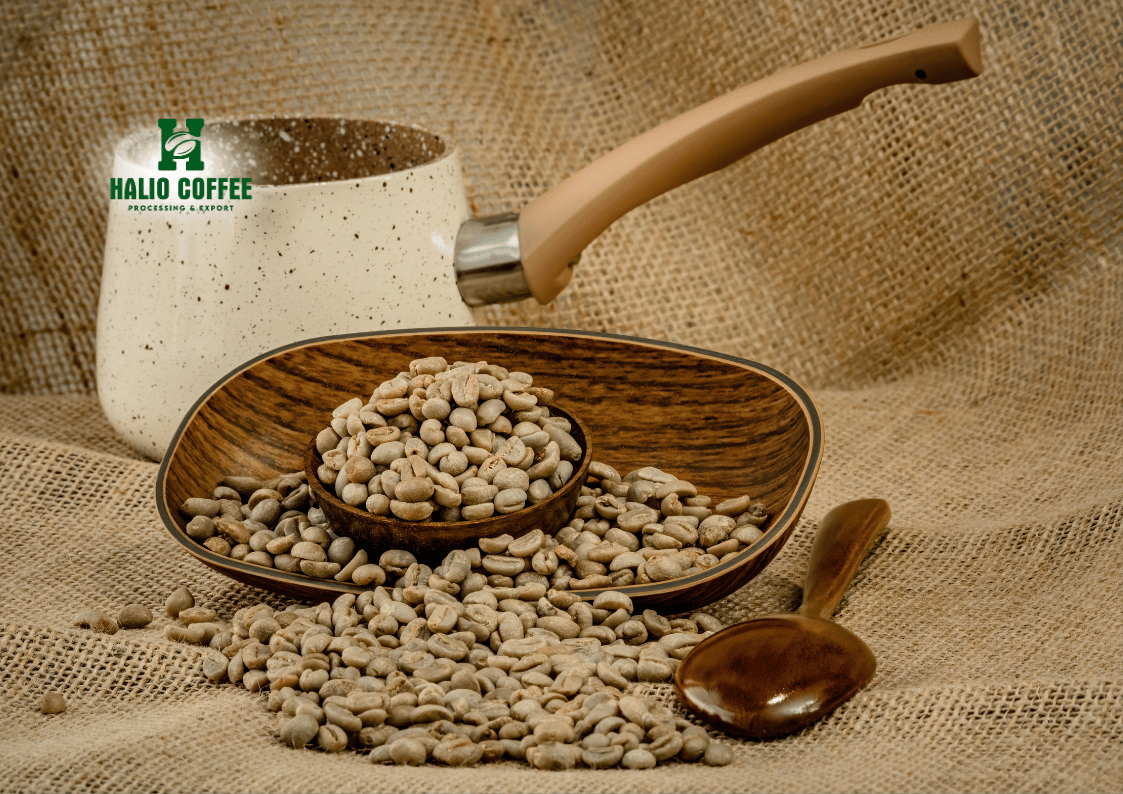
- Wet Polished / Clean: Suppliers are investing in processing to deliver Grade 1 beans (Max 2% black/broken) that provide a neutral, clean cup profile suitable for espresso blends.
- Traceability: Transparency is no longer optional. With the market prioritizing traceability regarding origin, roasters must demand geolocation data from their suppliers to ensure compliance with regulations like the EUDR.
Structural Vulnerability
Despite the current liquidity from Vietnam, the market remains “structurally vulnerable”. Production potential in traditional regions is declining, and inventory levels for certified Arabica remain low at 456,477 bags.
- Implication: Roasters cannot rely on “Spot” availability indefinitely. The current low prices in Vietnam may be temporary as domestic stocks tighten post-harvest.
3. Procurement Checklist for Roasters
When issuing purchase orders for green coffee beans for roasting in Q1 2026, use this checklist to secure quality and margin:
| procurement Step | Action Item | Rationale |
| 1. Volume Locking | Contract Core Robusta Volume | Capitalize on the 18% price drop in Vietnam before the harvest ends. |
| 2. Origin Diversification | Monitor Brazil & Indonesia | Be cautious of Indonesian origins due to flood risks. Use Brazil for Arabica but hedge against heatwave risks. |
| 3. Quality Control | Verify Moisture (10-12.5%) | With logistic surges, ensure beans were dried properly to prevent mold during transit. |
| 4. Currency Hedging | Monitor USD/VND (~26,141) | Exchange rate fluctuations can impact your final landed cost. |
Conclusion: Adaptability is Key
The playbook for buying green coffee beans for roasting in 2026 is clear: Aggressively secure Robusta volume now while the Vietnamese harvest provides a discount, and strategically hedge Arabica needs to protect against climate shocks in Latin America.
The market has shifted from a period of universal high prices to a nuanced landscape of “winners and losers.” By understanding these divergences—and partnering with transparent suppliers who can deliver consistent quality—roasters can protect their margins in what promises to be another volatile year.
Next Step: To fine-tune your procurement budget, would you like to explore “Wholesale coffee beans pricing models” to understand how to structure Fixed Price vs. Differential contracts?
- Your Logistics Quarterback: A Consultant’s Guide to Choosing a Freight Forwarder for Coffee
- A 2026 Strategic Analysis of the Vietnam Coffee Price
- Coffee Prices Today, Nov 27: Market Cools Down as EU Agrees to Delay Deforestation Law
- Bulk Vietnamese Robusta Coffee Suppliers: Global Sourcing, Pricing, and Industry Insights
- Coffee Prices Today, October 24th: Sharp Reversal Lower, Robusta Plunges Nearly 4%