The Strategic Procurement of 2026: A Professional Guide to Buying Raw Coffee Beans
Jan
Navigating the global trade to buy raw coffee beans (green coffee) in 2026 requires more than a simple transaction; it demands a sophisticated understanding of market timing, technical specifications, and structural supply vulnerabilities. As the industry moves past the extreme volatility of 2024–2025, professional buyers are shifting from reactive “spot” purchasing to proactive, long-term strategic planning.
This analysis synthesizes current market data from the start of 2026 with expert procurement frameworks to provide a definitive guide for the modern coffee professional.
Market Dynamics: The 2026 “Strategic Window”
The early days of 2026 have presented a unique opportunity for those looking to buy raw coffee beans, particularly in the Robusta sector.
- Vietnam’s Price Correction: As of January 2, 2026, new crop prices in Vietnam—the world’s Robusta powerhouse—are trading between 97,500 and 98,300 VND/kg.
- The 18% Opportunity: This represents a notable 18% decrease compared to the same period in 2025.
- A Divergent Market: While Robusta ended 2025 with a 14.5% decline on the London exchange, New York Arabica futures closed the year up approximately 9% due to supply constraints in Latin America.
- Trade Policy Shifts: Global trade flows are normalizing following the U.S. executive order that removed a 40% additional tariff on Brazilian green coffee, facilitating the rebuilding of certified stocks.
The Technical Foundations of Quality
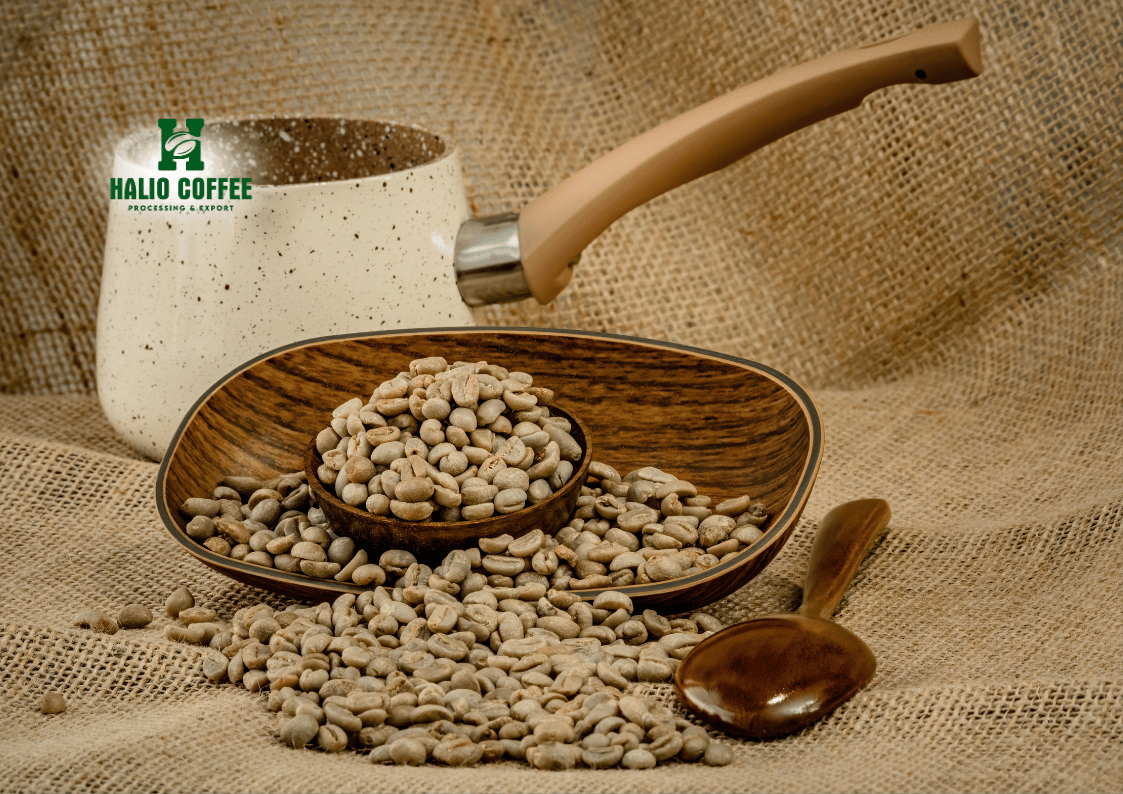
When you buy raw coffee beans, you are purchasing a biological asset with specific chemical and physical requirements. Professional procurement relies on these baseline metrics to ensure consistency:
1. Physical and Chemical Stability
- Moisture Content: Quality beans must be stabilized between 10.0% and 12.5%. Anything higher risks mold (Ochratoxin A); anything lower results in “flavor fade”.
- Water Activity (aw): To ensure long-term shelf life in the warehouse, water activity should ideally be below 0.60.
- Screen Size: For premium lots, uniformity is key. Buyers typically demand Screen 18 (7.1mm) with a minimum 90% retention.
2. Processing as a Value Driver
The method used to process the raw bean defines its primary flavor profile and market value:
- Wet Polished: Friction-cleaned with water to remove the silver skin, resulting in a cleaner cup and shinier appearance.
- Honey Process: Retains mucilage during drying, providing intense sweetness and body.
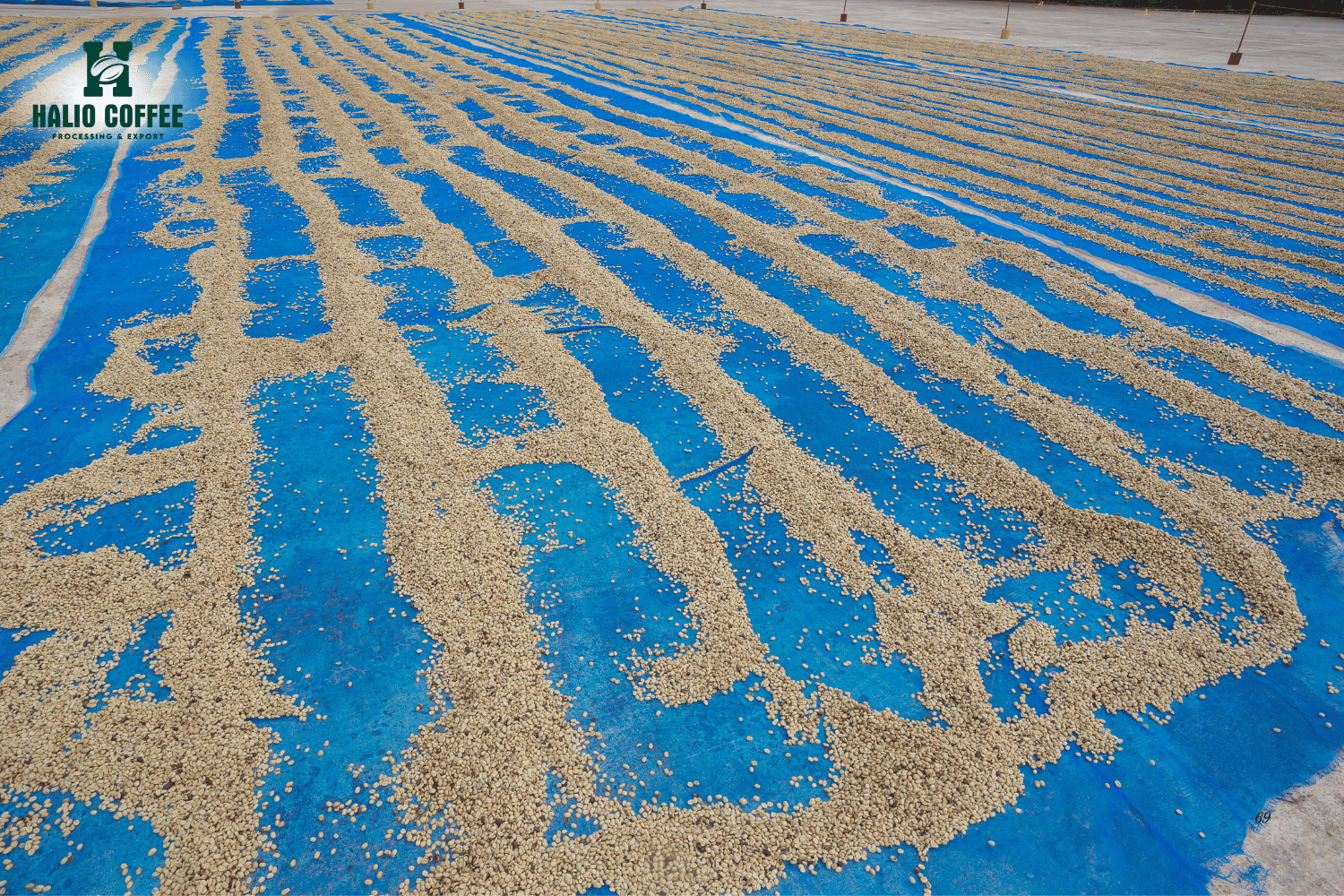
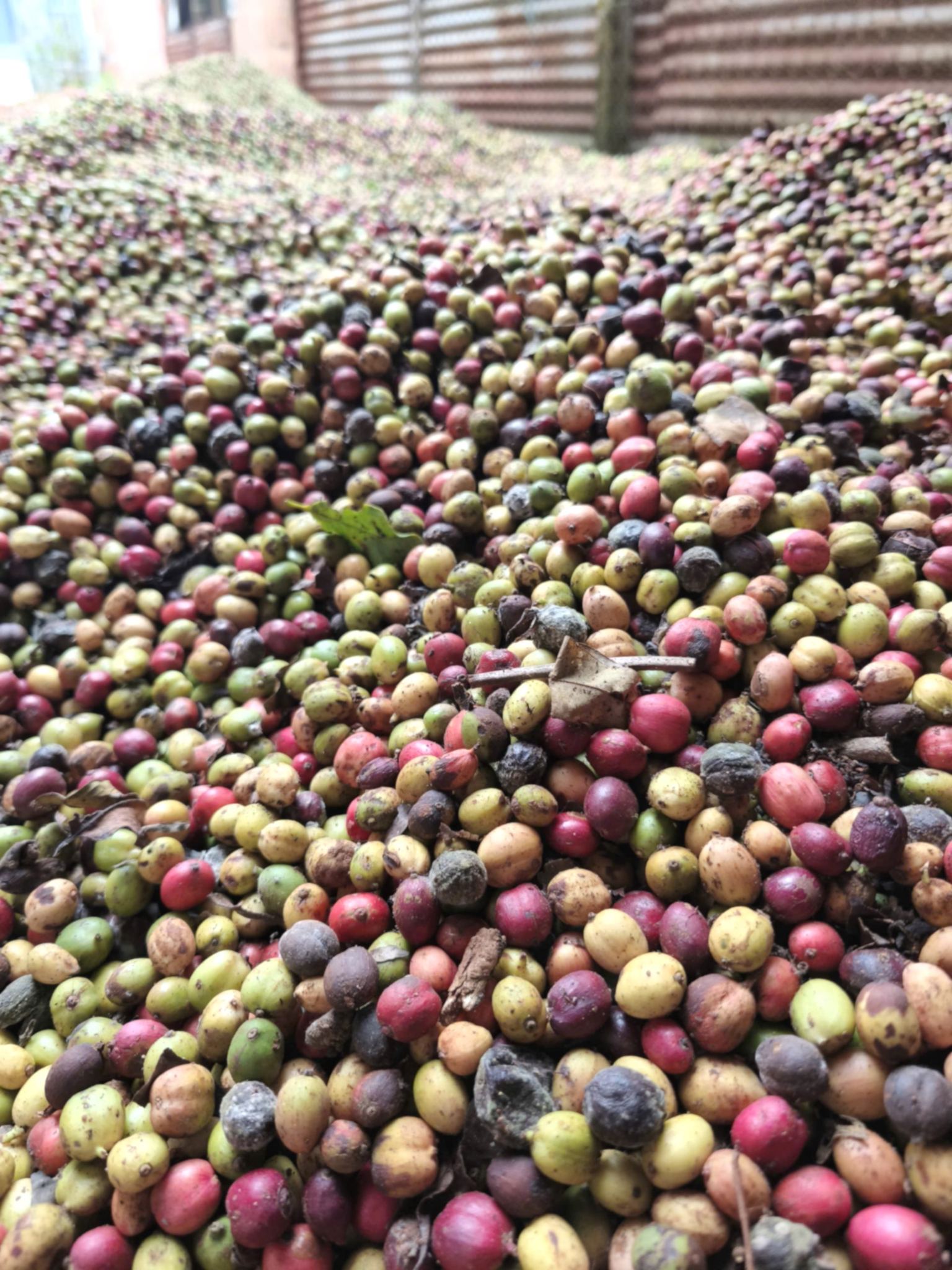
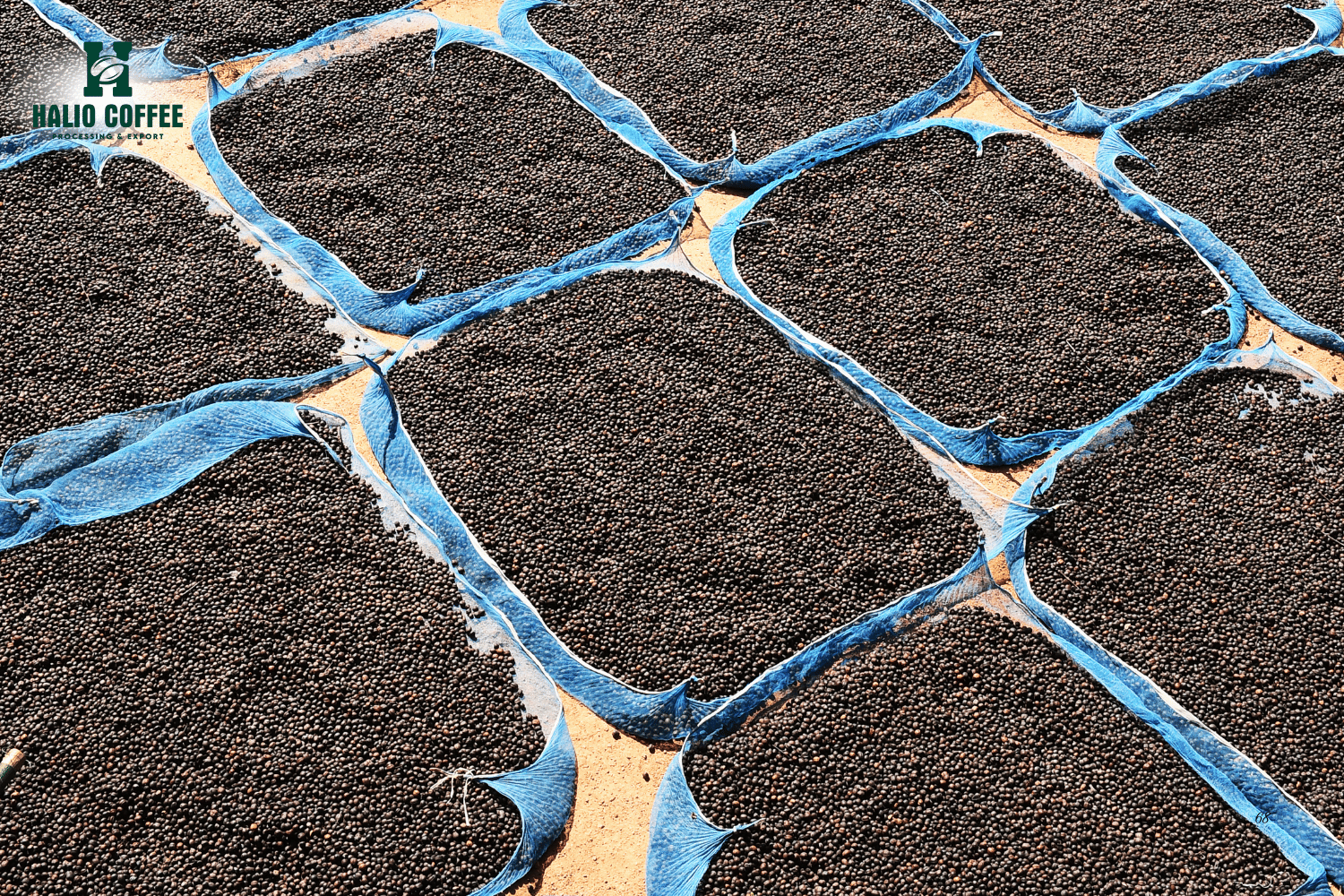
- Natural Process: Dried whole in the cherry, offering fruit-forward and winey characteristics.
Vetting the Source: Sellers vs. Suppliers
A critical distinction for any professional looking to buy raw coffee beans is the difference between a transient seller and a strategic supplier.
- The “Seller” (Trader): Often an intermediary who buys pre-milled lots. They provide liquidity but offer limited control over the manufacturing process or traceability.
- The “Supplier” (Manufacturer): A vertically integrated entity, such as Halio Coffee, that owns the milling infrastructure and controls the process from the farm gate to the container.
- Infrastructure Requirements: A reliable supplier must possess optical color sorters and density tables to ensure Grade 1 standards (max 2% black/broken beans).
The 2026 Procurement Checklist
Before you execute an order to buy raw coffee beans, use this expert checklist to mitigate risk:
- [ ] PSS Approval: Never authorize a shipment without approving the Pre-Shipment Sample (PSS) drawn by an independent third party.
- [ ] Traceability & Compliance: Ensure the lot includes geolocation data and non-deforestation reports to comply with 2026 standards like the EUDR.
- [ ] Packaging Protocol: Demand GrainPro or Ecotact liners to protect the beans from moisture and sensory taints during transit.
- [ ] Inventory Aging: Verify the “Landing Date.” Avoid “Past Crop” beans unless they have been stored in climate-controlled environments.
Conclusion: Securing the Future
The current 18% correction in Vietnam provides a strategic opening for roasters to stabilize their 2026 margins. However, with global consumption expected to hit a record 169–170 million bags, the market remains structurally vulnerable to weather shocks in Brazil and Indonesia.
Buying raw coffee beans in this era is about building a “sustainable bridge” between the farm and the roaster. By leveraging the current local price dip to secure long-term, transparent, and professionalized agreements, you protect your brand from the next inevitable market fluctuation.
Would you like me to analyze the various “Wholesale coffee beans pricing models” to help you choose the best financial structure for your 2026 contracts?
- Coffee Prices Today: Arabica Rebounds While Robusta Faces Divergence
- The Procurement Playbook: Analyzing the Vietnam Green Coffee Price Per Ton Europe
- A Buyer’s Master Guide to Vietnam Green Coffee Beans
- Understanding the Role of Green Coffee Beans Manufacturers
- Deconstructing the Green Coffee Price: An Expert’s Guide for B2B Buyers